Foolproof Flan Recipe: 7 Easy Steps to Silky Caramel Custard

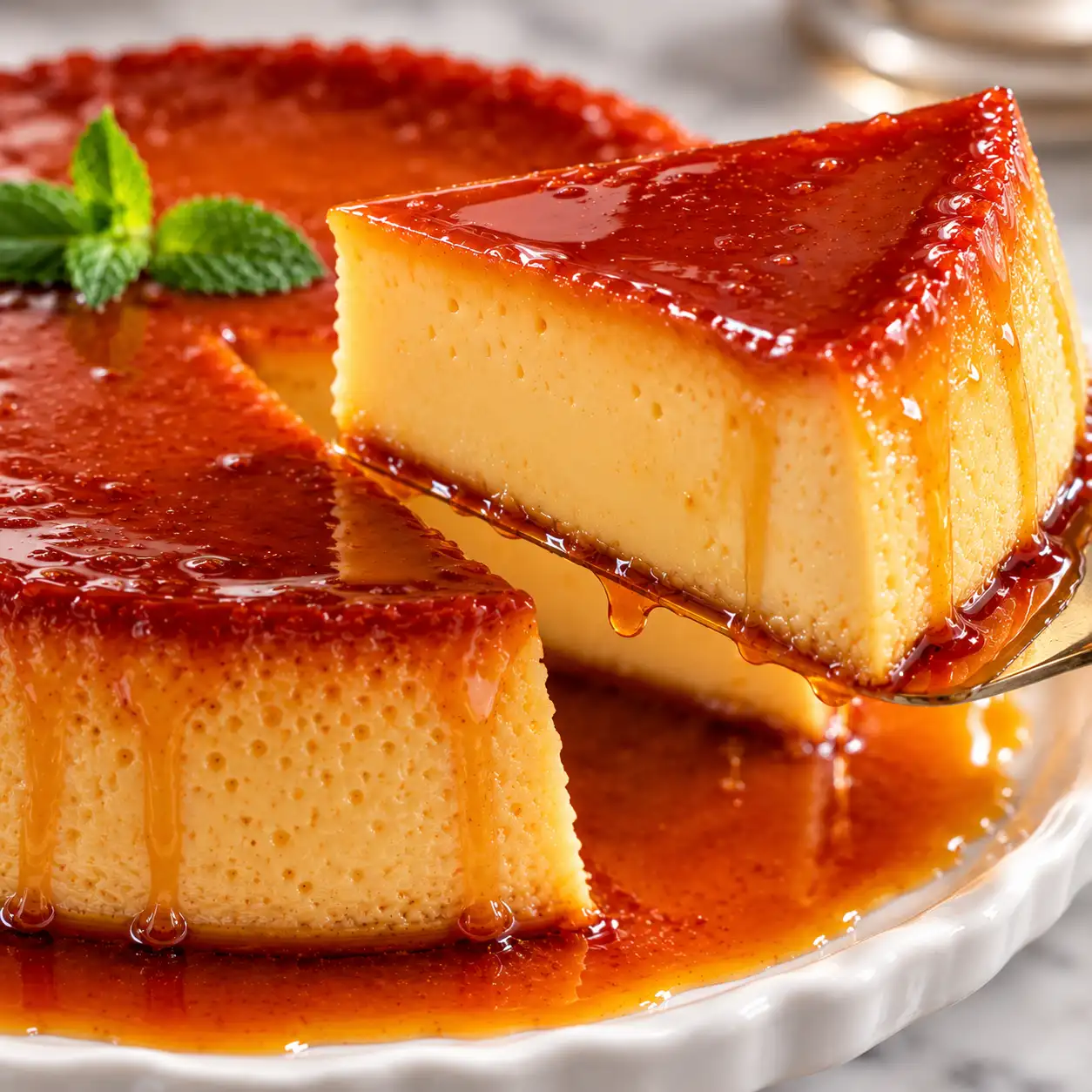
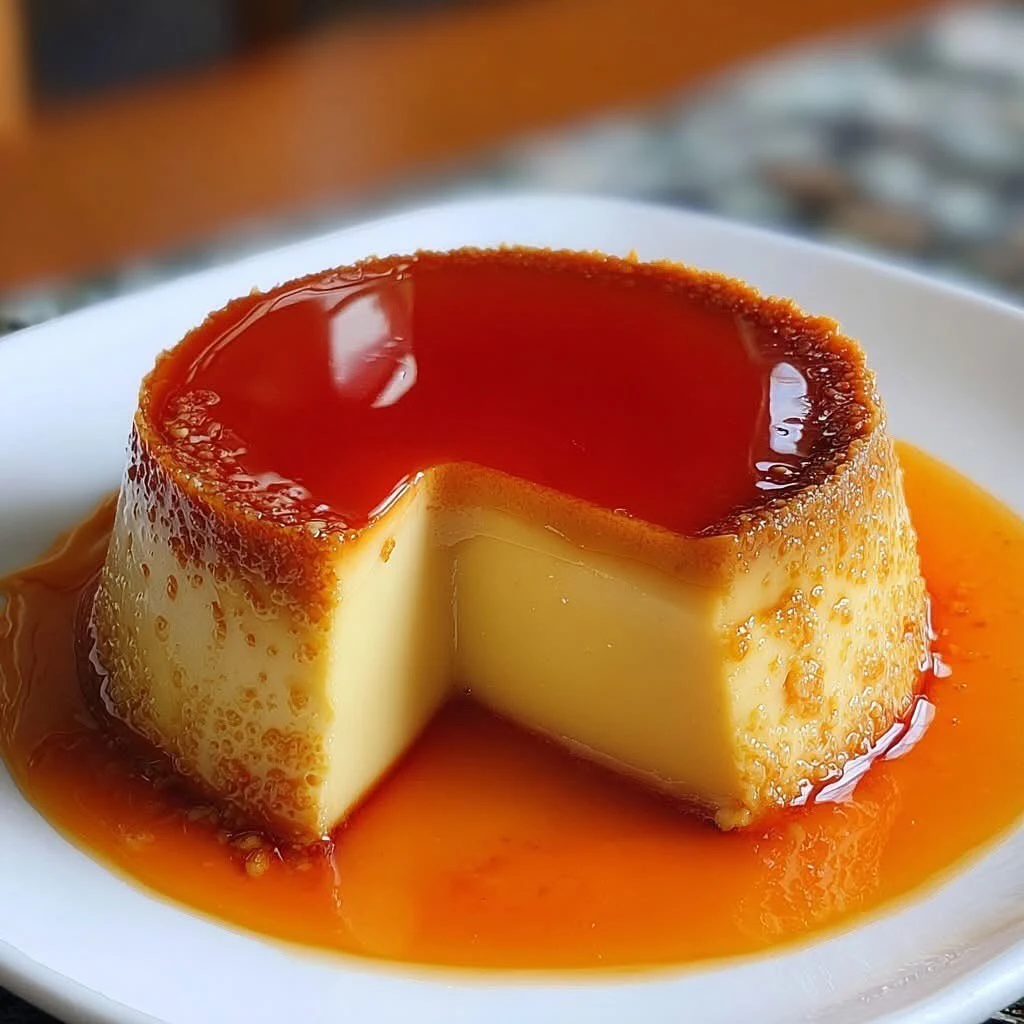
The first spoonful starts with a sound: a soft crack as caramel gives way, then a slow slide of cold, silky custard across your spoon. A well made flan should shiver on the plate when you tap it. The caramel should taste a little bitter, almost smoky, so the sweet custard has something to push against.
This flan recipe uses a blend of three milks, which gives a dense, creamy slice with no grainy bubbles and no rubbery bite. A gentle water bath and a quick blender step do the heavy lifting, so you do not need pastry skills. You spend about 30 minutes working, then the oven and fridge take over, for 8 hours total including the overnight chill. Even a first caramel batch comes out right if you follow the color cues below, and the finished dessert waits patiently until you are ready to flip it, which makes it a stress free choice for guests.
Why You’ll Love This Flan Recipe
- Only seven steps: Every step has one job, so you never juggle tasks while the caramel is on the stove.
- Made the day before: The custard needs a full night in the fridge, so dessert is finished before guests arrive.
- Pantry friendly ingredients: Canned milks, eggs, and sugar cover almost everything you need.
- Smooth every time: A quick blend and a pass through a sieve remove the air and egg threads that cause holes.
- Built in sauce: The caramel liquefies as it chills, so the plate gets a glossy sauce with no extra work.
- Feeds eight: One 9 inch pan gives you generous slices for a family dinner or a small party.
Read Also:
Ingredient Selection Tips
Check the dates on the cans and pick the freshest ones, since older condensed milk can darken and taste cooked. Buy large eggs, because the custard ratio is built around them and medium or jumbo eggs will shift the set. Choose plain white granulated sugar instead of raw or brown sugar, so you can watch the caramel change color clearly. If you buy vanilla bean paste, look for a jar with visible seeds, which tells you real vanilla is inside.
Recipe Snapshot
| Servings | Difficulty | Course | Cuisine | Prep Time | Cook Time | Rest Time | Total Time | Calories |
| 8 | Easy | Dessert | Latin American | 20 minutes | 1 hour 10 minutes | 6 hours 30 minutes | 8 hours | 380 per slice |
Ingredients
For the caramel:
- 1 cup (200 g) granulated sugar. Plain white sugar melts evenly and shows its color clearly, so you can judge doneness by eye.
- 1/4 cup (60 ml) water. It wets the sugar so it melts without scorching in one spot.
For the custard:
- 5 large eggs, at room temperature. They provide the structure, and room temperature eggs blend in smoothly without cooling the mixture.
- 1 can (14 oz or 397 g) sweetened condensed milk. It adds sweetness and a thick, creamy body that regular milk cannot match.
- 1 can (12 oz or 354 ml) evaporated milk. The concentrated milk proteins make the slice dense and help it hold clean edges.
- 1 cup (240 ml) whole milk. It loosens the mixture just enough for a tender, spoonable set.
- 2 teaspoons vanilla bean paste. The thick paste carries tiny seeds and a rounder vanilla flavor, and it does not thin the custard. Seeds scraped from 1 vanilla bean pod work as a swap.
- 1/4 teaspoon fine salt. It sharpens the sweetness so the custard tastes clean instead of flat.
For the water bath:
- About 6 cups (1.4 L) hot water.
Substitution notes: No evaporated milk? Use half and half in the same amount. The custard will taste just as rich.
Recipe Timing
Prep takes about 20 minutes, which covers blending the custard and setting up the roasting pan. The caramel needs 10 minutes on the stove and the bake runs about 60 minutes, so cook time lands at 1 hour 10 minutes. After baking, the flan sits 30 minutes on the counter and 6 hours in the fridge, giving a rest time of 6 hours 30 minutes. Your hands are busy for roughly 30 minutes out of the 8 hours total.
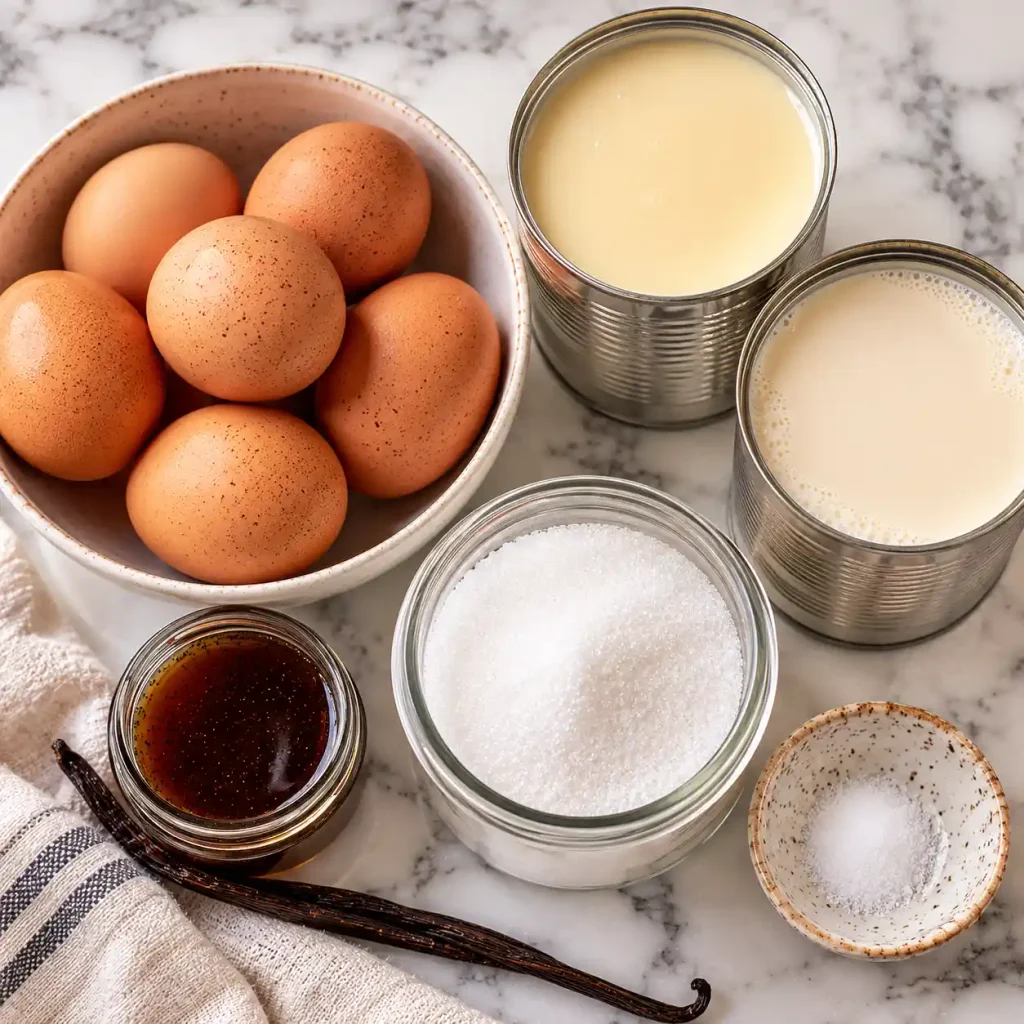
Quick tip: Measure every custard ingredient before you light the burner. Caramel waits for nobody once it starts to color.
Allergen and Dietary Notes
This flan contains dairy (condensed, evaporated, and whole milk) and eggs.
- Dairy: Swap in full fat canned coconut milk and sweetened coconut condensed milk. The flan will taste lightly of coconut and set a bit softer.
- Eggs: There is no reliable egg free swap for a baked custard. A stovetop cornstarch pudding is a better route for egg allergies.
Please check every label yourself, and talk to a doctor before serving this to anyone with a severe allergy. This recipe is not guaranteed safe for any specific allergy.
Equipment Needed
- Heavy bottomed light colored saucepan: The pale interior lets you see the caramel color shift, and the thick base prevents hot spots.
- 9 inch round metal cake pan, 2 inches deep: A solid bottom without a removable base keeps the caramel from leaking.
- Large roasting pan: It needs room for the cake pan plus a few inches of hot water around it.
- Blender: It mixes the custard in seconds, and low speed keeps air out.
- Fine mesh sieve: It catches egg threads and leaves the custard glass smooth.
- Instant read thermometer: It removes the guesswork from doneness.
Preparation
Pull the eggs out 30 minutes ahead so they lose their chill. Slide the oven rack to the middle and turn the oven on to 325°F (160°C). Fill a kettle with about 6 cups (1.4 L) of water and bring it to a boil. Have the dry cake pan, roasting pan, sieve, oven mitts, and a sheet of foil within arm’s reach of the stove. Measure the custard ingredients before the sugar goes on the heat.
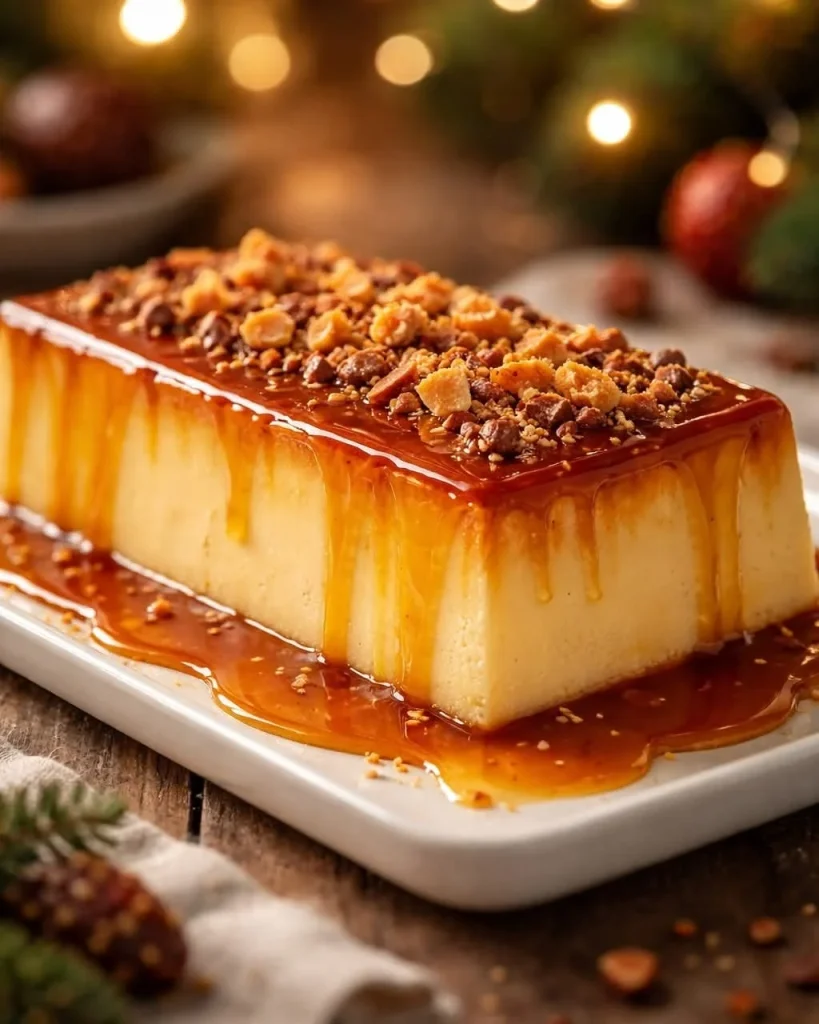
Step by Step Instructions
Step 1: Cook the caramel
Stir the sugar and water in the saucepan over medium heat just until the sugar dissolves. Stop stirring, then let it bubble for 8 to 10 minutes, swirling the pan now and then, until it turns the color of a dark copper coin and smells toasty.
Chef’s Note: Stirring after the sugar melts can knock crystals back into the syrup, which makes the caramel grainy. Swirling keeps the color even without that risk.
Step 2: Coat the pan
Pour the caramel into the cake pan right away, then tilt the pan so it spreads across the bottom and a little way up the sides. You have about 30 seconds before it stiffens. Hot sugar burns badly, so wear oven mitts and keep your hands clear.
[AI IMAGE PROMPT: Deep amber caramel swirling inside a round metal cake pan, being tilted to coat the bottom, thin glossy ribbons sliding along the edge, faint steam rising. A heavy light colored saucepan hovers above. Warm kitchen light, white marble table, low side angle at table level, no garnish.]
[IMAGE PLACEHOLDER | alt text: “Amber caramel being swirled across a round cake pan for flan” | filename: “flan-caramel-swirl-in-pan.jpg” | orientation: horizontal]
Step 3: Blend the custard
Add the eggs, condensed milk, evaporated milk, whole milk, vanilla bean paste, and salt to the blender. Run it on the lowest speed for 20 to 30 seconds, just until the mixture looks uniform and pale yellow. Wash your hands and the blender lid after handling the raw eggs.
Chef’s Note: Fast blending whips in air, and trapped air shows up later as bubbles and holes in the finished slice.
Step 4: Strain and fill
Pour the mixture through the fine mesh sieve into the caramel coated pan. Skim any foam off the surface with a spoon and pop leftover bubbles with a toothpick. Tap the pan once on the counter.
Step 5: Build the water bath
Place the cake pan inside the roasting pan and slide both onto the oven rack. Carefully pour in the hot water until it climbs halfway up the side of the cake pan. Tent the top loosely with foil to keep the surface from drying out.
Chef’s Note: The water around the pan holds the temperature near boiling instead of letting it climb higher, so the custard cooks gently and evenly. Pouring the water after the pan is on the rack also means nothing sloshes on the way to the oven.
[AI IMAGE PROMPT: Filled custard pan sitting in a large stainless steel roasting pan, hot water poured halfway up the sides, pale yellow custard smooth as silk beneath a thin sheen. A white ceramic pitcher pours steaming water. Warm kitchen light, white marble table, top down angle, no garnish.]
[IMAGE PLACEHOLDER | alt text: “Flan pan in a roasting pan with hot water poured halfway up the sides” | filename: “flan-water-bath-roasting-pan.jpg” | orientation: horizontal]
Step 6: Bake until the center wobbles
Bake for about 60 minutes. Nudge the pan: the outer 2 inches should look set while the middle trembles like soft jelly, and a thermometer in the center should read 170°F (77°C). Eggs in a baked custard need to reach at least 160°F (71°C) to be safe. If the middle still sloshes, give it 5 to 10 more minutes.
Chef’s Note: Custard keeps cooking from leftover heat, so a slight wobble at the oven door becomes a clean set in the fridge.
Step 7: Cool, chill, and flip
Lift the cake pan out of the water bath with oven mitts and cool it on a rack for 30 minutes. Cover it and refrigerate for at least 6 hours. To serve, trace a thin knife around the edge, rest the pan in 1 inch of hot water for 30 seconds, place a rimmed plate on top, and flip in one smooth motion.
Chef’s Note: The warm water softens the hardened caramel layer just enough that it slides out and turns into sauce.
[AI IMAGE PROMPT: Flan being flipped onto a white ceramic rimmed plate, glossy amber caramel cascading over pale golden custard, steam rising from the lifted round cake pan edge, tender wobble. A thin knife rests beside it. Warm kitchen light, white marble table, 45 degree angle, orange zest garnish.]
[IMAGE PLACEHOLDER | alt text: “Flan unmolded onto a white plate with caramel running down the sides” | filename: “flan-unmolding-on-plate.jpg” | orientation: vertical]
Read Also:
Expert Tips and Tricks
- Strain even if it looks smooth. Tiny bits of egg white leave threads that a sieve catches in seconds.
- Use a light colored pan for the caramel. You can judge the color far better against a pale surface than a dark one.
- Bake it the day before. The flavor deepens overnight and the slices cut cleaner, so you only flip it on serving day.
- Keep it in the pan until serving. Covered with plastic wrap, the custard stays moist and the caramel keeps softening into sauce.
- My early mistake: I once trusted the timer instead of the wobble test and pulled the pan at 45 minutes. The middle collapsed into a puddle on the plate. Now I always nudge the pan first.
- Save time with the kettle and blender. Boil the water while the caramel cooks, and skip whisking by blending the custard in under 30 seconds.
Common Mistakes and Troubleshooting
| Problem | Why It Happens | How to Fix or Prevent It |
| Holes or a spongy texture | The oven was too hot, the bake ran too long, or the water bath was skipped | Bake at 325°F (160°C), keep the water bath, and pull the pan while the center still wobbles |
| Runny center after chilling | Underbaked, or chilled for under 6 hours | Bake until the center reads 170°F (77°C), then chill overnight |
| Rubbery or curdled custard | Overbaked proteins squeezed out water | Start checking at 55 minutes and stop as soon as the center trembles |
| Bitter, burnt caramel | It cooked past dark amber | Take it off the heat at copper color, since the pan keeps cooking it |
| Grainy caramel | Stirring after the sugar melted, or crystals clinging to the pan sides | Stop stirring once dissolved and brush down the sides with a wet pastry brush |
| Caramel hardened before the pan was coated | I once left the pan on the counter while hunting for oven mitts | Keep mitts and cake pan beside the stove, and re-melt on low heat for a few seconds if needed |
Before you flip: A flan chilled for under 6 hours is the top reason for slumped slices. Tilt the pan gently first. The custard should move as one piece, not slosh.
Storage, Reheating, Freezing, and Make Ahead
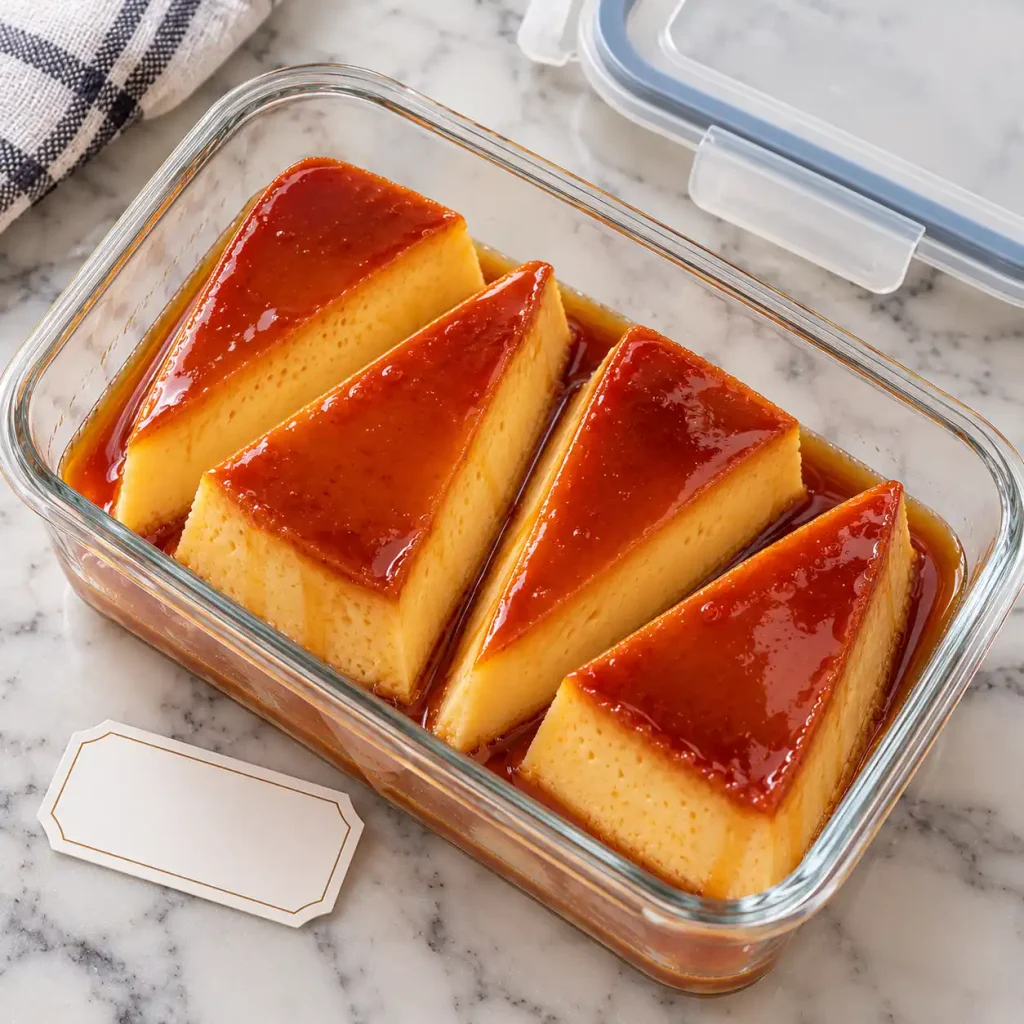
Refrigerator: Keep the flan covered in its pan for up to 4 days, or move slices to an airtight glass container.
Freezer: Freezing is not recommended, since thawed custard turns watery. If you must, wrap slices tightly and freeze for up to 1 month, then thaw overnight in the fridge and expect a looser texture.
Reheating: Serve it cold. If the caramel looks stiff, let the slice stand at room temperature for 10 minutes. Skip the microwave, which curdles the custard.
Make ahead: Bake it up to 2 days before serving and unmold on the day you plan to eat it.
Storage tip from my kitchen: Tape a small label with the bake date on the plastic wrap, because the pan looks identical on day one and day four.
Variations and Substitutions
- Cream cheese flan: Blend in 8 oz (225 g) of softened cream cheese for a denser, tangier slice. [INTERNAL LINK: cream cheese flan recipe]
- Coconut flan: Replace the whole milk with canned coconut milk and top with toasted coconut flakes.
- Coffee flan: Dissolve 1 tablespoon instant espresso in 2 tablespoons hot milk and blend it into the custard.
- Orange and cinnamon flan: Warm the whole milk with a cinnamon stick and a strip of orange peel for 5 minutes, then cool it before blending.
- Individual flans: Pour the custard into eight 6 oz ramekins and bake for 35 to 40 minutes, keeping the water bath.
Serving Suggestions
- Coffee: A small cup of strong black coffee cuts through the sweetness. [INTERNAL LINK: strong Mexican style coffee recipe]
- Fresh berries: Sliced strawberries or raspberries add a tart note.
- Whipped cream: A spoonful of lightly sweetened cream softens the caramel edge. [INTERNAL LINK: homemade whipped cream recipe]
- Flaky salt: A tiny pinch on the caramel makes the flavor pop.
- Drinks: Cardamom tea or a glass of cold milk suits it well.
- Meal pairing: After a spicy dinner like chicken tacos or biryani, the cold custard cools the palate.
Nutrition Information
Serving size: 1 slice (1/8 of the flan). Servings per recipe: 8.
| Nutrient | Amount |
| Calories | 380 kcal |
| Protein | 12 g |
| Carbohydrates | 59 g |
| Fiber | 0 g |
| Sugar | 56 g |
| Fat | 11 g |
| Saturated Fat | 6 g |
| Cholesterol | 135 mg |
| Sodium | 140 mg |
Notable micronutrients: calcium (about 250 mg), riboflavin, and vitamin B12. These numbers are estimates and can shift with different brands and how you measure.
Why This Flan Recipe Works
Egg proteins begin to firm up around 160°F (71°C) and keep tightening as the heat rises. A water bath holds the pan near the temperature of hot water, so the edges and center set at almost the same speed instead of the outside cooking first.
Evaporated and sweetened condensed milk are both milk with much of the water removed. That gives you concentrated milk protein and sugar without extra liquid, which makes a denser, creamier custard than regular milk and eggs alone and helps the slice hold clean edges.
The caramel cooks past 320°F (160°C), where sugar breaks down into toasty, slightly bitter compounds. That bitterness balances the sweet custard, which is why the amber color matters more than the clock.
Read Also:
Frequently Asked Questions
FAQ source note: these questions follow typical People Also Ask and forum question patterns. No live search was used.
How long does flan last in the fridge?
Flan keeps for up to 4 days in the refrigerator when it is covered. Leave it in its pan or move slices to an airtight container so the custard does not pick up fridge smells. The caramel slowly turns into sauce, which is normal and tasty. For the cleanest slices, unmold it the day you plan to serve it. Skip the freezer, because thawed custard turns watery and loses its smooth bite.
Why is my flan full of tiny holes?
Tiny holes come from heat that is too high or a bake that runs too long. When the proteins overheat, they trap steam and squeeze out water, so the texture turns spongy. Fix it with a water bath, a 325°F (160°C) oven, and a pull time when the center still wobbles. Straining the mixture and popping surface bubbles before baking also helps your flan come out smooth.
Can I make flan without evaporated milk?
Yes. Swap the evaporated milk for an equal amount of half and half, and the custard will taste just as rich. Use 12 ounces (354 ml) to match the can. Whole milk works too, but the flan sets a little softer and tastes lighter, so chill it a full night before slicing. Skip skim milk, since it lacks the fat that gives the slice its creamy feel.
How do I know when flan is done baking?
Look for set edges and a center that jiggles as one soft, jelly like mass when you nudge the pan. A thermometer in the middle should read about 170°F (77°C). A knife inserted near the center should come out with just a thin, creamy film, not liquid. The flan firms up as it chills, so pull it while the middle still trembles slightly.
Can I make flan dairy free?
You can, with a trade off in texture. Use full fat canned coconut milk in place of the evaporated and whole milk, and a can of sweetened coconut condensed milk for the condensed milk. The custard tastes lightly of coconut and sets a bit softer, so chill it overnight. Eggs still do the setting work here, so this swap does not help anyone with an egg allergy.
Why won’t my flan come out of the pan?
Hardened caramel is the usual reason. Chill the flan for at least 6 hours first, then run a thin knife around the edge. Set the pan in 1 inch of hot water for 30 seconds to loosen the caramel, then place a rimmed plate on top and flip in one quick, confident move. Give the pan a gentle shake before lifting it away./
Conclusion
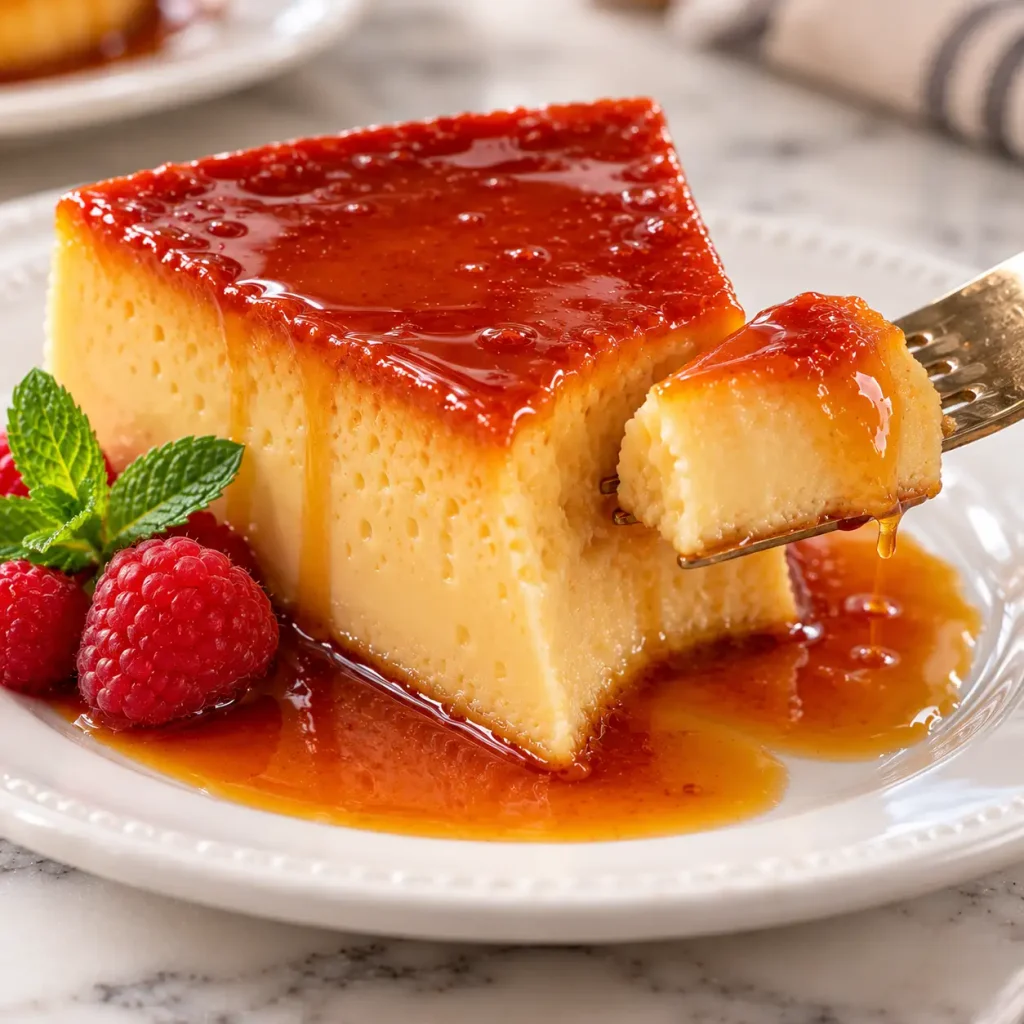
If you remember one thing, let the custard rest in the fridge for the full night. Patience is the quiet ingredient here, and it turns a good dessert into one that slices cleanly and tastes deeper. The first time I rushed a pan to the table after only three hours, the center slumped across the plate and the caramel sat in a hard disc on the bottom.
Make this flan the evening before guests arrive, and your only job at dessert time is flipping a pan and carrying it out. Pick a topping or keep it plain with just the caramel. Either way, that silky spoonful at the end of a long meal is worth the wait.
If you loved this recipe, save it to your dessert Pinterest board so you can find it easily later!
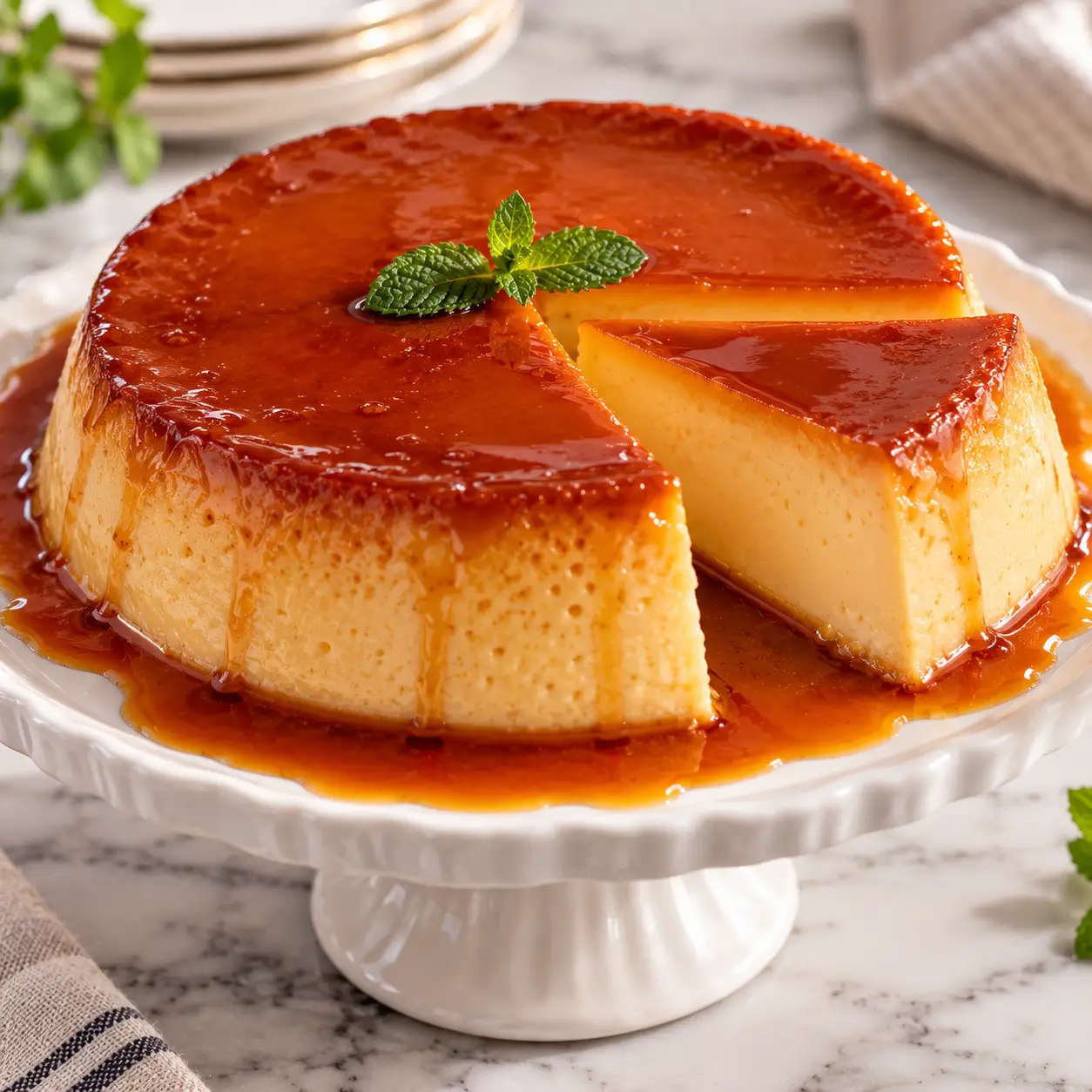
Classic Creamy Flan with Caramel
Ingredients
Method
- Instructions:
- Melt the sugar with the water over medium heat. Once dissolved, stop stirring and cook 8 to 10 minutes until deep copper.
- Pour the caramel into a 9 inch round cake pan and tilt to coat the base. Work fast, since it hardens in about 30 seconds.
- Blend the eggs, both canned milks, whole milk, vanilla bean paste, and salt on low for 20 to 30 seconds. Wash hands after touching raw eggs.
- Strain the mixture into the pan, skim off foam, and tap the pan once on the counter.
- Put the pan inside a roasting pan on the middle oven rack (325°F or 160°C). Add hot water halfway up the cake pan and tent with foil.
- Bake about 60 minutes, until the edges are set, the center jiggles, and a thermometer reads 170°F (77°C). Eggs must reach at least 160°F (71°C).
- Cool 30 minutes, then chill at least 6 hours. Loosen the edge, warm the pan briefly in hot water, and invert onto a rimmed plate.
Notes
- Chill at least 6 hours, and overnight for the cleanest slices.
- Half and half can replace evaporated milk in the same amount.
- Store covered in the fridge for up to 4 days. Freezing is not recommended.
- Seeds from 1 vanilla bean pod can replace the vanilla bean paste.