The Juiciest Classic Meatloaf Recipe – Easy, in (One)1- Bowl

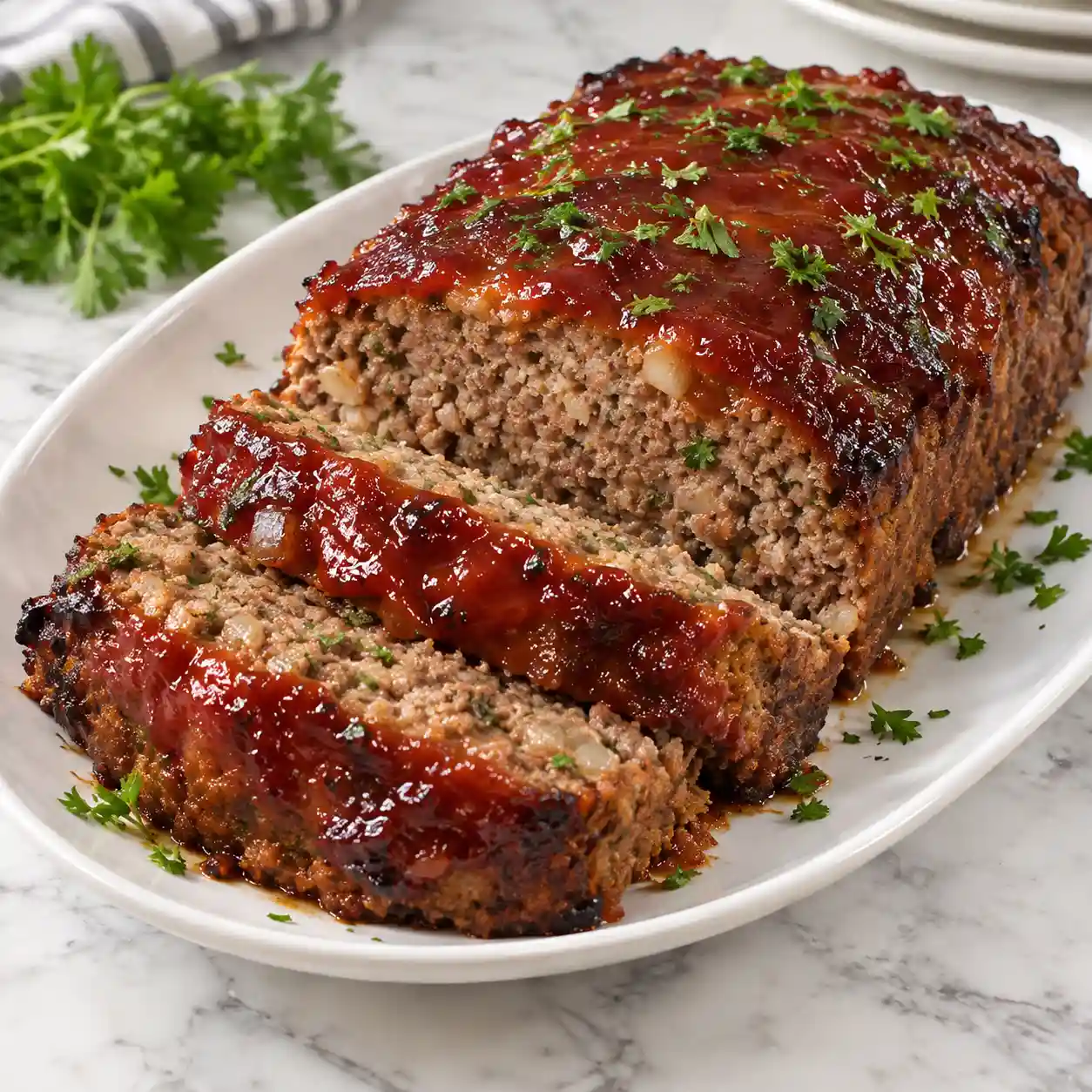
The center of a good meatloaf should look almost custardy when you slice it, not dry and crumbly like packed sawdust. That texture comes down to one thing: how much liquid the bread soaks up before it ever hits the oven.
This version leans on ground beef, a milk-soaked bread mixture called a panade, and a tangy glaze that caramelizes instead of just sitting on top. It takes about fifteen minutes to put together, an hour in the oven, and a short rest before you cut into it. If you have made dry meatloaf before, the panade is the fix.


Why You’ll Love This Recipe
- A panade instead of dry breadcrumbs. Bread soaked in milk keeps the loaf tender all the way through, even after an hour in the oven.
- A glaze that actually caramelizes. Brushing ketchup and brown sugar on twice, not once, builds a sticky, slightly charred crust instead of a wet layer.
- One bowl, minimal cleanup. Everything mixes in the same bowl you soak the bread in, so there is less to scrub afterward.
- Freezes well raw or cooked. You can shape it ahead and freeze it uncooked, or freeze leftover slices for later.
- Feeds six without much effort. One loaf pan, about fifteen minutes of hands-on work, and dinner is mostly hands off after that.
Ingredient Selection Tips
Look for ground beef that is 80 to 85 percent lean. Anything leaner tends to dry out in a loaf shape, since there is no fat cap or liquid braise to protect it the way there is in a stew. If your butcher grinds beef fresh, ask for a coarser grind. It holds its shape better than the fine grind sold pre-packaged.
Recipe Snapshot
| Servings | Difficulty | Course | Cuisine | Prep Time | Cook Time | Rest Time | Total Time | Calories |
| 6 | Easy | Main Course | American | 15 minutes | 60 minutes | 10 minutes | 85 minutes | 385 kcal |
Ingredients
For the meatloaf:
- 2 pounds (900g) ground beef, 80/20 blend — the fat keeps the loaf from drying out during the long bake
- 2 slices white sandwich bread, torn into small pieces — this is the base of the panade that keeps the crumb soft
- 3/4 cup (180ml) whole milk — soaks into the bread and releases slowly as the loaf cooks
- 2 large eggs — binds everything without making the texture rubbery
- 1 small yellow onion, finely diced — grate it if you want the pieces to disappear entirely into the mix
- 2 cloves garlic, minced
- 1/4 cup (25g) grated Parmesan cheese — adds a savory backbone without tasting cheesy
- 2 tablespoons Worcestershire sauce — check the label, most major brands are halal certified, but confirm before buying
- 1 teaspoon salt
- 1/2 teaspoon black pepper
- 1/2 teaspoon dried thyme
- 2 tablespoons fresh parsley, chopped
For the glaze:
- 1/2 cup (120g) ketchup
- 2 tablespoons brown sugar
- 1 tablespoon apple cider vinegar
- 1/2 teaspoon smoked paprika
Read Also: Beef Stew Recipe
Recipe Timing
Fifteen minutes covers dicing the onion, soaking the bread, and combining the mixture by hand. The oven does the rest for a full hour, and the loaf needs ten quiet minutes on the counter before you slice it, which lets the juices settle back into the meat instead of running out onto the cutting board.

Allergen & Dietary Disclosure
This recipe contains dairy (milk, Parmesan), egg, and gluten (bread). For a dairy-free version, swap the milk for unsweetened oat milk and skip the Parmesan. For a gluten-free version, use gluten-free bread in the panade and confirm your Worcestershire sauce is gluten-free, since some brands use malt vinegar. If anyone eating has a severe allergy, check every label yourself rather than relying on this list, since ingredient formulas change between brands.
Equipment Needed
- 9×5 inch loaf pan or a rimmed sheet pan — a loaf pan gives cleaner slices, while a free-form loaf on a sheet pan browns more on the sides.
- Instant-read thermometer — the only reliable way to know the center is done without cutting into it early.
- Large mixing bowl — soak the bread directly in it to save a dish.
- Wire cooling rack — set inside the loaf pan if you have one, so fat drains away from the meat instead of pooling underneath.
Preparation
Pull the ground beef out of the refrigerator about ten minutes before you start, since ice cold meat is harder to mix evenly. Preheat the oven to 350°F (175°C) and set a rack in the middle position. If you are using a loaf pan, no greasing is needed as long as you line the bottom with a strip of parchment for easy release later.
Step-by-Step Instructions
Step 1: Soak the bread Tear the bread into small pieces and drop them into the milk in your mixing bowl. Press down with a fork so every piece is submerged, then let it sit for five minutes until it turns into a soft, mushy paste. This paste is what keeps the finished loaf from turning dense.
Step 2: Build the base flavor Add the diced onion, minced garlic, eggs, Parmesan, Worcestershire sauce, salt, pepper, thyme, and parsley directly into the bread mixture. Stir it together with a fork first, before the meat goes in, so the seasoning distributes evenly instead of clumping in one spot.
Chef’s Note: Mixing the seasonings into the wet base first, rather than dumping everything on top of the meat at once, means you never end up with a bite that tastes like plain beef next to a bite that tastes like straight garlic.
Step 3: Add the beef Crumble the ground beef into the bowl in a few large pieces rather than one solid block. Use your hands to fold everything together, working from the outside toward the center. Food safety note: wash your hands thoroughly after handling raw beef, and keep the mixing bowl away from any surface you plan to use for finished food.
Step 4: Mix without overworking it Stop mixing as soon as you no longer see streaks of egg or loose bread. Overmixing pushes the fat and protein together too tightly, which is the difference between a tender slice and a bouncy, rubbery one.
Chef’s Note: If the mixture feels sticky and starts sticking to your fingers in ropes, that is the sign to stop immediately.
Step 5: Shape the loaf Turn the mixture into your prepared pan and press it into an even loaf, about 9 inches long and 2.5 inches tall. Round the top edges slightly rather than leaving sharp corners, since corners dry out first in the oven.
Step 6: Bake uncovered Slide the pan into the oven and bake for 40 minutes uncovered. At this stage the loaf firms up but has not yet built its crust, so resist the urge to open the oven door repeatedly, which lets heat escape and slows the whole process down.
Step 7: Glaze and finish baking Whisk together the ketchup, brown sugar, vinegar, and smoked paprika. Brush half of it over the top of the loaf, then return it to the oven for 15 more minutes. Brush on the remaining glaze and bake for a final 5 minutes, until the surface looks glossy and slightly darkened at the edges.
Chef’s Note: Two thin layers of glaze, applied at different points, caramelize into a proper crust. One thick layer at the start just steams and slides off.
Step 8: Check the temperature and rest Insert an instant-read thermometer into the thickest part of the loaf. It should read 160°F (71°C). Pull the pan out and let it rest for 10 minutes before slicing, uncovered, so the crust does not turn soggy.
[AI IMAGE PROMPT: Close-up 45 degree angle shot of hands brushing glossy red glaze onto a partially baked meatloaf still in its pan, visible steam, glaze dripping slightly down the side, on a white marble surface, warm kitchen light.] [IMAGE PLACEHOLDER — alt-text: “Brushing glaze onto meatloaf during baking” | filename: “meatloaf-glazing-step.jpg” | orientation: horizontal]
Read Also: Stuffed Shells
Expert Tips & Tricks
- Grate the onion instead of dicing it. I used to dice it small and still found raw-tasting bits in the finished loaf. Grating it disperses the moisture and flavor completely.
- Shape it a day ahead. You can form the raw loaf, wrap it tightly, and refrigerate it up to 24 hours before baking. This actually improves the texture, since the panade has more time to fully absorb.
- Use two forks to test doneness in a pinch. If you do not own a thermometer, press the center with a fork; it should spring back slightly rather than staying dented.
- Save the pan drippings. Strain them into a small saucepan, whisk in a spoonful of flour, and you have a quick gravy in under five minutes.
- Don’t skip the rest. Cutting into it straight from the oven is the single biggest reason people end up with a puddle of juice on the plate instead of in the meat.
- Leftover slices reheat better in a skillet than a microwave. A few minutes per side in a covered nonstick pan brings back the crust without drying out the center.
Common Mistakes & Troubleshooting
| Problem | Why It Happens | How to Fix or Prevent It |
| Loaf falls apart when sliced | Not enough binder, or beef mixed too briefly | Make sure both eggs are fully incorporated before shaping, and let the loaf rest the full 10 minutes before cutting |
| Dense, heavy texture | Overmixing compacted the proteins | Fold the mixture by hand only until combined, stopping the moment streaks disappear |
| Glaze slides off instead of sticking | Glaze applied too early, before a crust had formed | Wait until at least the 40 minute mark before the first glaze layer |
| Center still pink at 160°F | Thermometer placed near the edge instead of the thickest point | Always test in the very center of the loaf, at least an inch from any surface |
| Bottom sits in a pool of grease | No drainage under the loaf | Bake on a wire rack set inside the pan, or poke a few holes in a foil-lined sheet pan |
Storage, Reheating, Freezing, Make-Ahead
Refrigerator: Cooked leftovers keep for up to 4 days in an airtight container.
Freezer: Cooked slices freeze well for up to 3 months wrapped individually in plastic and stored in a freezer bag. Raw, shaped loaf can also be frozen unbaked for up to 3 months; thaw it fully in the refrigerator before baking.
Reheating: Warm slices in a covered skillet over medium-low heat for about 4 minutes per side, or in a 300°F oven for 15 minutes covered with foil.
Make-Ahead: Shape the raw loaf up to 24 hours in advance and keep it covered in the refrigerator until you are ready to bake.
A personal habit that has saved me more than once: I label the freezer bag with the date and whether it is raw or cooked, since a frozen meatloaf looks identical either way and that mistake ruins dinner plans fast.

Variations & Substitutions
- Spicy version: Add 1 teaspoon of cayenne and a diced jalapeño to the mixture, and mix a spoonful of hot sauce into the glaze.
- Mild, kid-friendly version: Skip the smoked paprika and use plain ketchup glaze without vinegar, which keeps the flavor sweet and simple.
- Turkey swap: Replace the beef with ground turkey; add an extra tablespoon of olive oil to the mixture since turkey has less natural fat.
- Vegetarian version: Substitute a mix of cooked lentils and finely chopped mushrooms for the beef, and add an extra egg to help everything hold together.
- Gluten-free version: Use gluten-free bread for the panade and confirm the Worcestershire sauce is labeled gluten-free.
Serving Suggestions
- Mashed potatoes with a spoonful of the reserved pan drippings whisked into a gravy
- Roasted green beans or a simple side salad to cut through the richness
- A slice tucked into a sandwich the next day with extra ketchup and a slice of cheese
- Easy BBQ Chicken Recipe
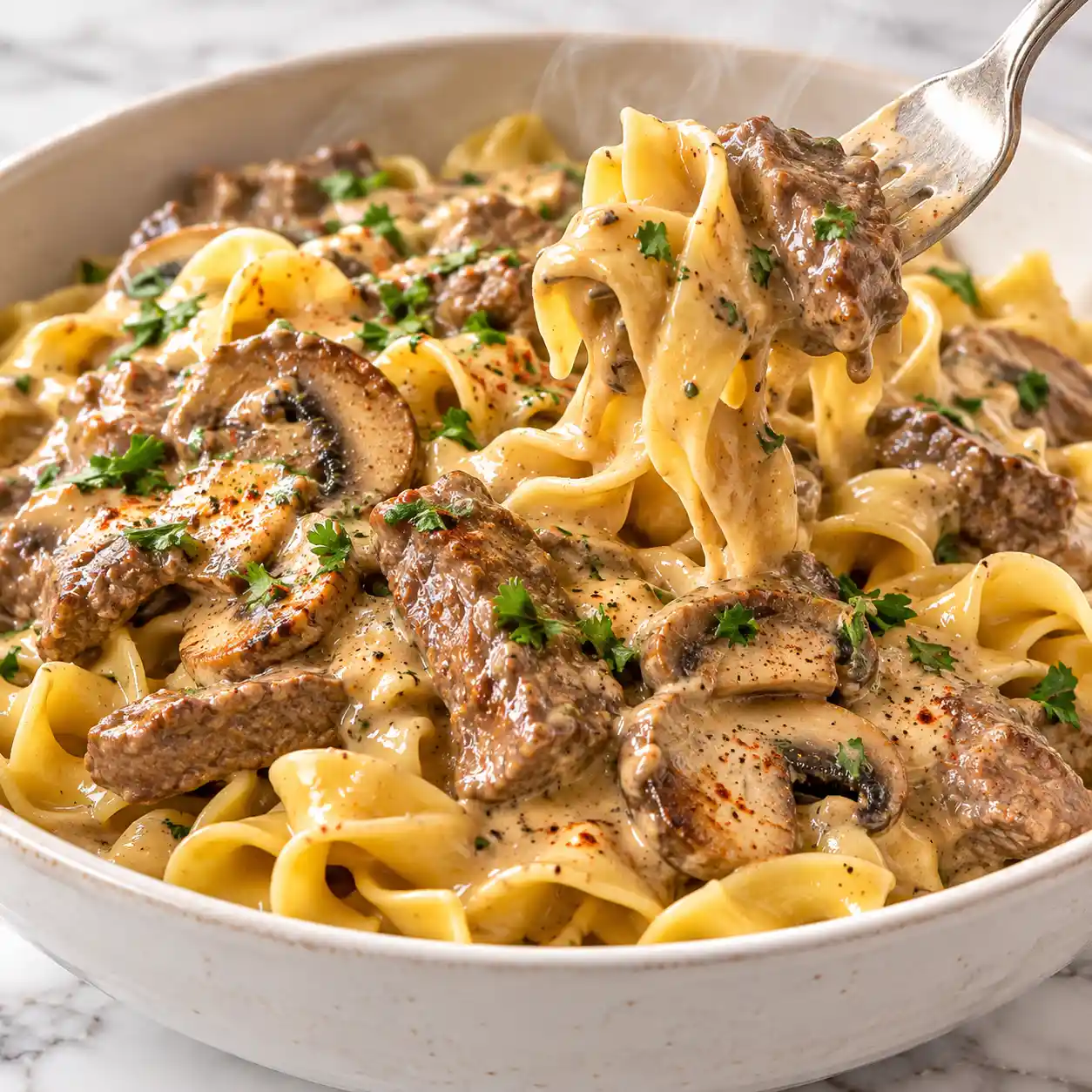
- Easy Beef Stroganoff
- A cold glass of iced tea or lemonade alongside dinner
Nutrition Information
Serving size: 1 slice (approximately 1/6 of the loaf). Servings per recipe: 6.
| Nutrient | Amount |
| Calories | 385 kcal |
| Protein | 27g |
| Carbohydrates | 14g |
| Fiber | 1g |
| Sugar | 8g |
| Fat | 24g |
| Saturated Fat | 9g |
| Cholesterol | 145mg |
| Sodium | 620mg |
This meal also provides a meaningful amount of iron and vitamin B12 from the beef. These figures are estimates only and will shift depending on the exact brands of beef, bread, and sauce you use, along with how you measure each ingredient.
Why This Recipe Works
The panade is doing most of the heavy lifting here. Bread soaked in milk swells and turns into a soft paste that coats the meat proteins as they cook, physically getting in the way of them binding too tightly to each other. That is why a loaf built on a panade stays tender through a full hour in the oven, while a loaf without one tightens up and squeezes out its own moisture.
The two-stage glaze works on a similar principle. Ketchup is mostly sugar and tomato liquid, and sugar caramelizes best once some of that liquid has already cooked off. Applying it in two thin coats, after the surface has had time to firm up, gives each layer a chance to reduce and darken instead of sliding off as a runny coating.
Resting the loaf after baking matters more than most people expect. As meat cooks, the muscle fibers contract and push juice toward the center. Give it ten minutes off heat and that juice redistributes evenly through the loaf instead of running out the moment a knife cuts through it.
Read Also: Mississippi Pot Roast
Frequently Asked Questions
FAQ Source Note: The questions below reflect typical search and forum patterns commonly seen around meatloaf recipes, based on general recurring themes rather than any specific live thread.
Can I make meatloaf ahead of time?
Yes. Shape the raw loaf, wrap it tightly, and refrigerate it up to 24 hours before baking, or freeze it raw for up to 3 months. Thaw a frozen loaf fully in the refrigerator before it goes in the oven, since baking straight from frozen leads to an uneven cook.
Why did my meatloaf fall apart?
This usually means the mixture needed a bit more egg or a longer rest before slicing. Cutting into a hot loaf right out of the oven, before the juices settle, is the most common reason it crumbles on the plate.
Can I use ground turkey instead of beef?
Yes, though turkey is leaner, so stir in an extra tablespoon of oil to keep the texture from drying out. The bake time stays about the same, but check the internal temperature reaches 165°F (74°C) for poultry rather than 160°F.
How do I know when meatloaf is fully cooked?
The most reliable way is an instant-read thermometer inserted into the thickest part of the loaf, reading 160°F (71°C) for beef. Visually, the surface should look set and glossy with no pink liquid pooling around the edges.
What can I use instead of ketchup in the glaze?
A mix of tomato paste, a splash of vinegar, and a spoonful of brown sugar gets you close to the same tangy sweetness if you are out of ketchup or prefer less sugar.
How long does leftover meatloaf keep in the fridge?
Cooked meatloaf keeps for up to 4 days in an airtight container in the refrigerator. Reheat slices in a covered skillet rather than a microwave for the best texture.
Does this meatloaf recipe work with gluten-free bread?
Yes, gluten-free sandwich bread works fine in the panade with no other changes needed. Just double check your Worcestershire sauce, since a few brands use malt vinegar, which contains gluten.

Conclusion
The panade is the one step people skip when they are in a hurry, and it is also the one step that decides whether the loaf turns out moist or dry. Once you make meatloaf this way a couple of times, going back to a recipe without it feels like a step backward.
This is the version I make when I want dinner to feel like an actual meal without spending the whole evening in the kitchen. If you loved this recipe, save it to your comfort food Pinterest board so you can find it easily later!
Classic Meatloaf
Ingredients
Method
- Instructions:
- Combine torn bread and milk in a bowl; let sit 5 minutes until softened.
- Stir in onion, garlic, eggs, Parmesan, Worcestershire sauce, salt, pepper, thyme, and parsley.
- Add ground beef and mix by hand just until combined.
- Shape into a loaf in a prepared 9×5 inch pan.
- Bake uncovered at 350°F (175°C) for 40 minutes.
- Brush with half the glaze; bake 15 more minutes.
- Brush with remaining glaze; bake a final 5 minutes.
- Check internal temperature reaches 160°F (71°C); rest 10 minutes before slicing.
Notes
- Shape the loaf up to 24 hours ahead and refrigerate before baking.
- Freezes well raw or cooked for up to 3 months.
- Reheat slices in a covered skillet rather than a microwave.
- Save pan drippings for a quick gravy.