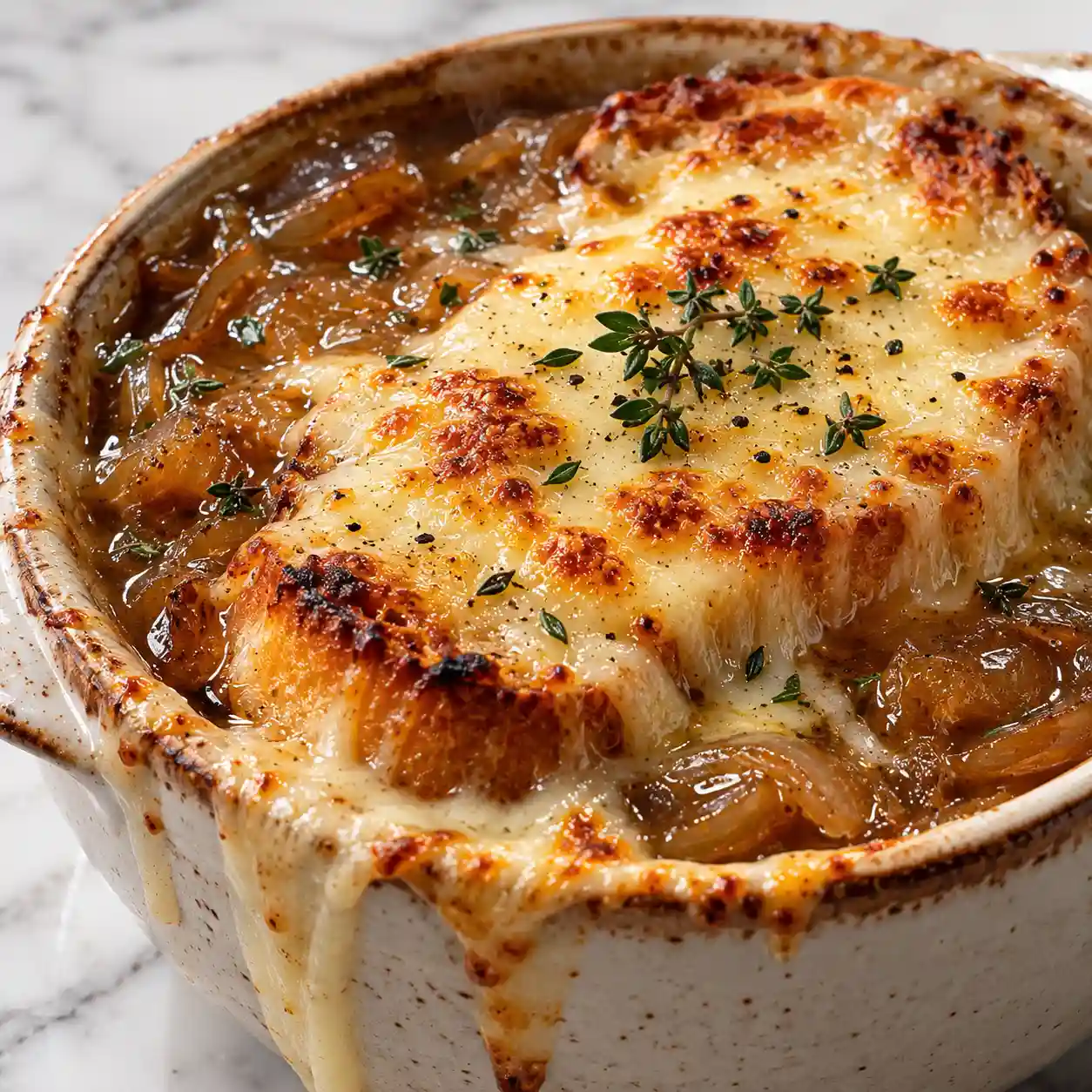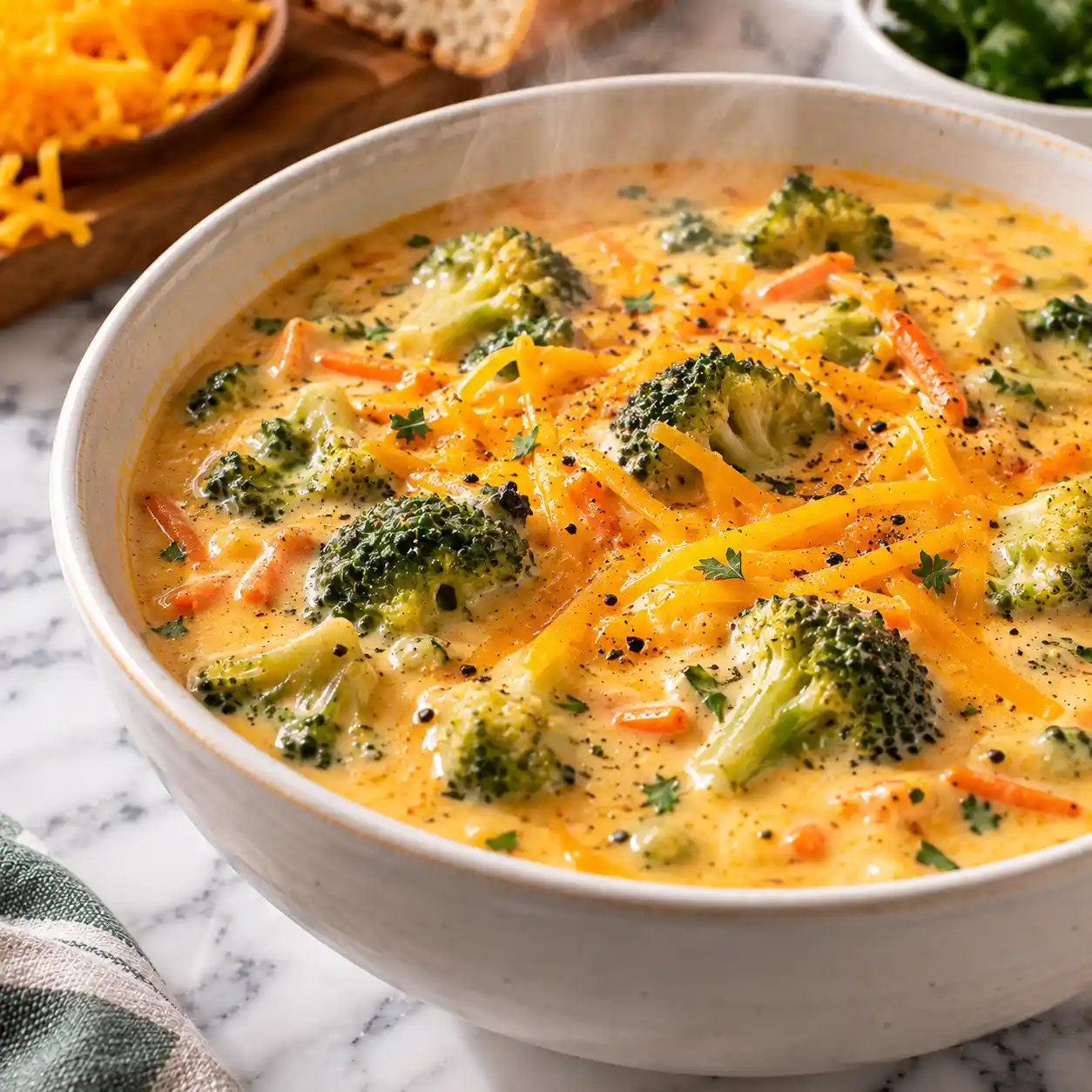
Best Chicken Soup in 1 Hour with 9 Simple Ingredients

Steam curls off the pot and the whole kitchen starts smelling like something good is about to happen. One spoonful of this chicken soup, hot and savory with a bright finish, and a cold gray evening feels a lot more manageable.
Most homemade versions either taste thin or swallow an entire afternoon. This one fixes both problems. You brown bone in chicken thighs first, build the flavor in that same pot, and simmer for only 22 minutes, so the broth tastes slow cooked without the long wait. Total time is 1 hour, and the recipe uses nine main ingredients plus water and pantry basics. Everything happens in one pot, so cleanup takes about two minutes. The result is a clear golden broth, juicy shredded chicken, and soft egg noodles that hold their shape instead of turning to mush. It is easy enough for a first time cook and good enough that people ask for the recipe.
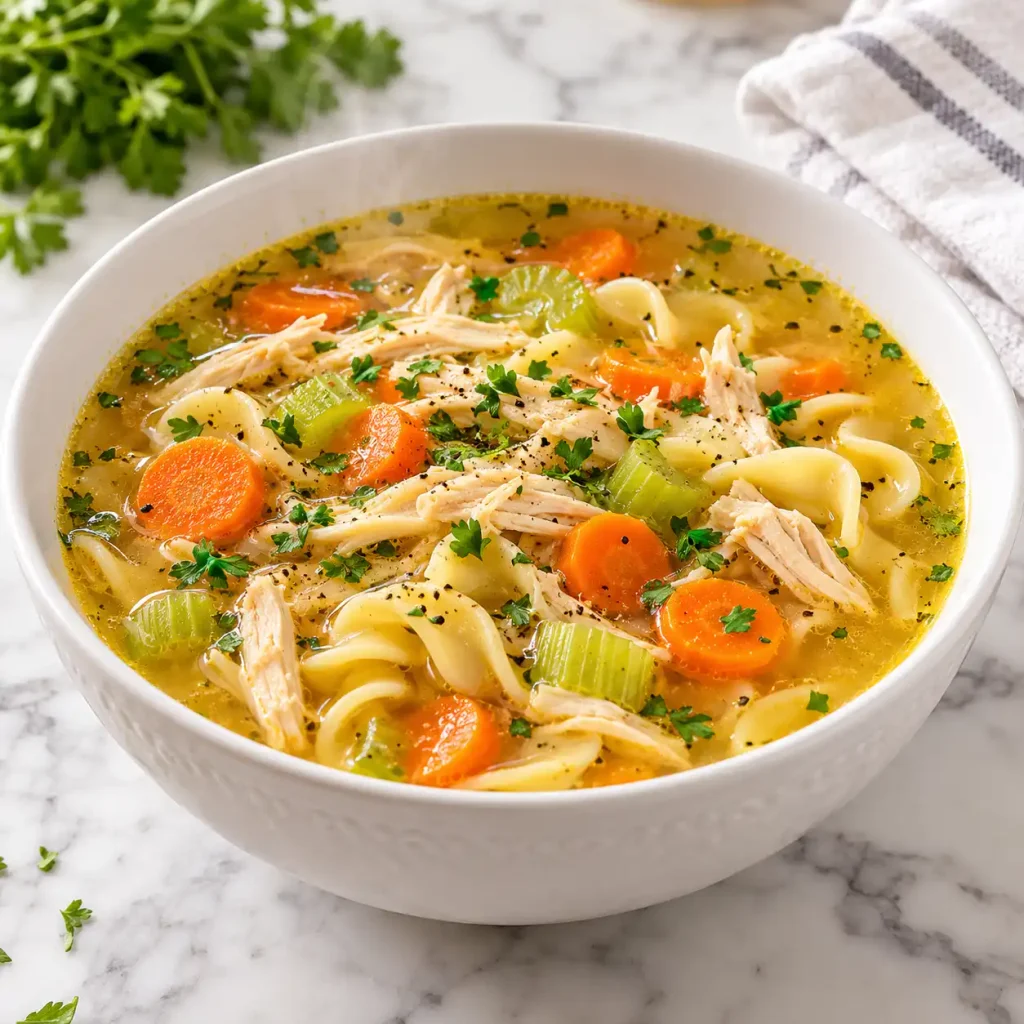
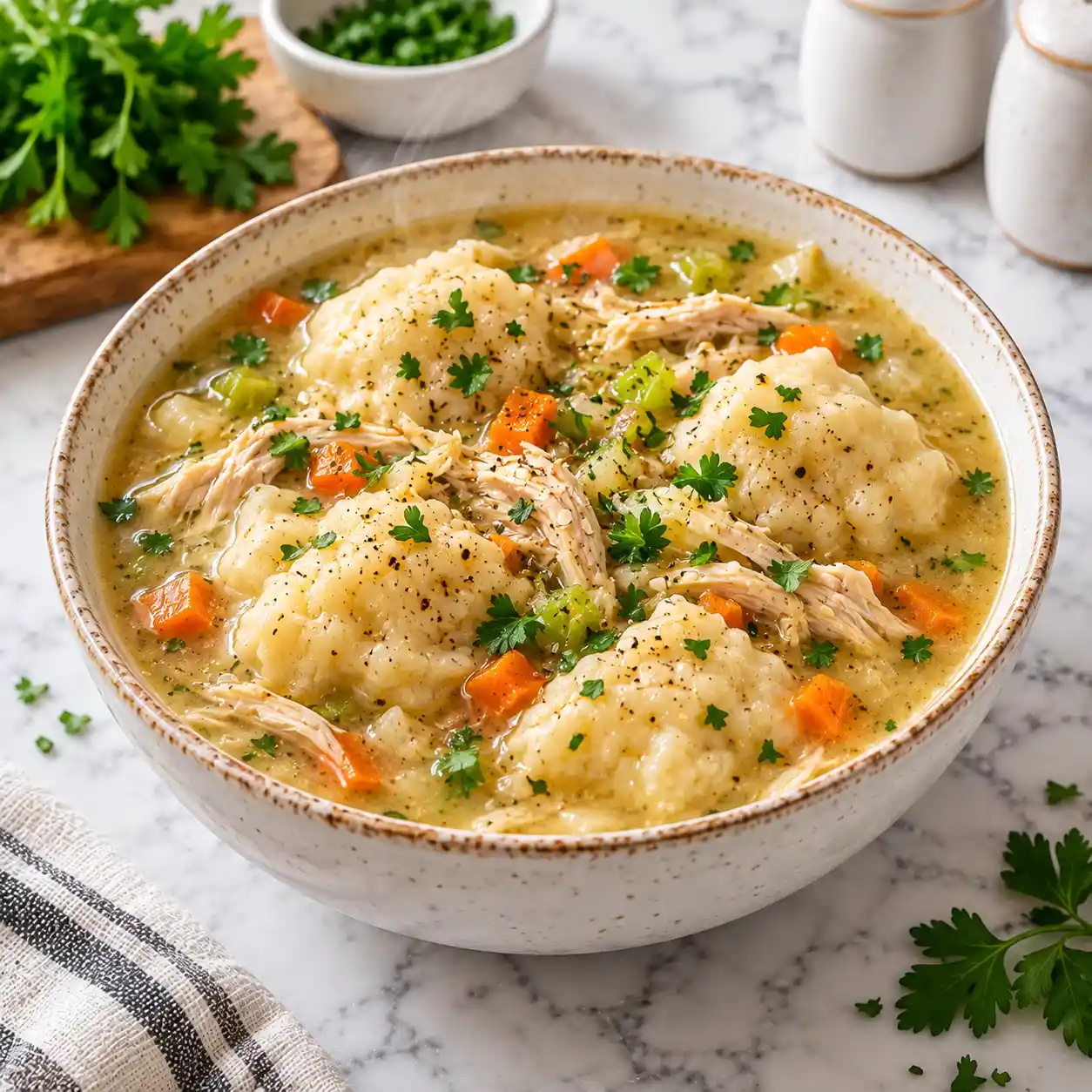
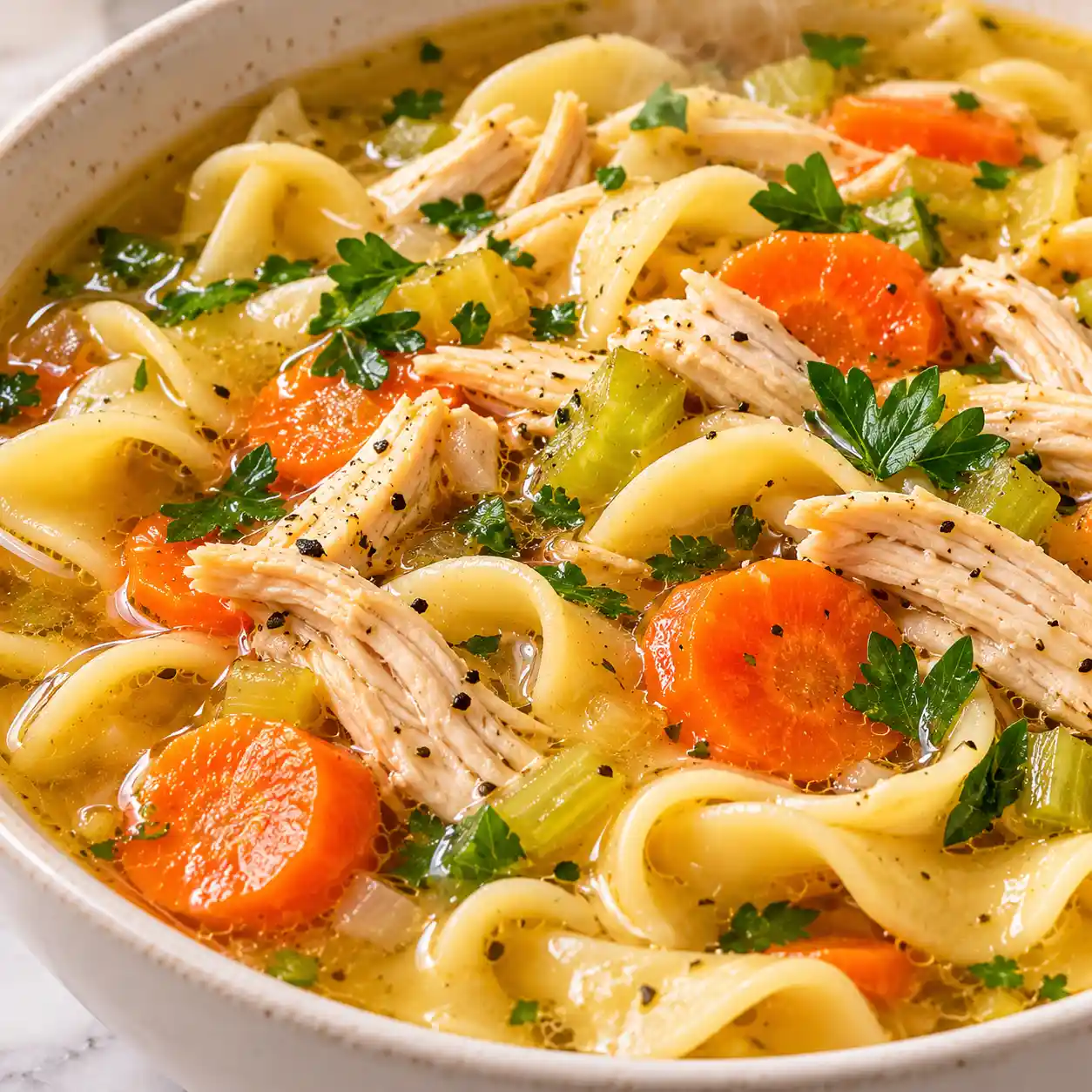
[AI IMAGE PROMPT: Steaming bowl of golden chicken soup in a white ceramic soup bowl, glossy broth with tender shredded chicken, orange carrot coins, celery slices and curly egg noodles, fresh green parsley on top, white marble surface, warm kitchen light, 45 degree food photography angle.] [IMAGE PLACEHOLDER | alt text: “Steaming bowl of homemade chicken soup with shredded chicken, carrots, celery, and egg noodles” | filename: “chicken-soup-hero-shot.jpg” | orientation: horizontal]
Why You’ll Love This Chicken Soup Recipe
- One pot cleanup: Browning, simmering, and cooking the noodles all happen in the same Dutch oven, so you wash one pot and one cutting board.
- Real flavor in 1 hour: Bone in thighs and a quick sear give the broth a body that boxed stock rarely matches in this little time.
- Forgiving timing: Thighs stay juicy even if the simmer runs a few minutes long, which is not true of chicken breast.
- Budget friendly: Thighs and everyday vegetables are cheap, and the pot feeds six people.
- Freezer ready: The base freezes well for up to 3 months, so a double batch pays off on the next sick day.
Ingredient Selection Tips
Pick thighs that are bone in and skin on, with pale pink meat, intact skin, and no sour smell. The skin is what browns and flavors the fat, and the bones make the broth taste rich. Choose carrots that feel firm and snap rather than bend, and celery stalks that stand stiff with fresh looking leaves. Flat leaf parsley has more flavor than the curly kind, and a lemon that feels heavy for its size has the most juice. For noodles, wide or medium egg noodles hold up best in hot broth.
Recipe Snapshot
| Servings | Difficulty | Course | Cuisine | Prep Time | Cook Time | Total Time | Calories |
| 6 | Easy | Soup | American | 10 minutes | 50 minutes | 1 hour | 320 per serving |
Ingredients
For the soup:
- 1 tablespoon olive oil: gives the skin a head start while it renders its own fat.
- 6 bone in, skin on chicken thighs (about 2 pounds / 900 g): the bones and skin give the broth body, and the skin gets removed later.
- 2 teaspoons kosher salt, divided: half seasons the chicken and half finishes the pot.
- 1/2 teaspoon black pepper
- 1 large yellow onion, diced (about 1 1/2 cups): turns sweet and mellow in the chicken fat.
- 3 medium carrots, sliced into 1/4 inch coins (about 1 1/2 cups): add color and a gentle sweetness.
- 3 celery stalks, sliced 1/4 inch thick (about 1 cup): brings a savory, slightly herbal edge.
- 4 garlic cloves, minced
- 2 bay leaves: a quiet herbal background note, removed before serving.
- 9 cups hot water (about 2.1 liters)
- 3 cups wide egg noodles (about 6 ounces / 170 g)
For the finish:
- 2 tablespoons fresh lemon juice (about 1 lemon): a little acid makes the broth taste brighter and less flat.
- 1/4 cup chopped fresh flat leaf parsley
Substitution notes: Boneless thighs work, but the broth tastes lighter, so replace 2 cups of the water with store bought chicken broth. Small pasta shells can stand in for the noodles. For an even deeper broth, swap 3 cups of the water for stock, such as your [INTERNAL LINK: homemade chicken stock guide].
Callout: Why thighs? Dark meat has more fat and connective tissue than breast meat, so it stays tender through a simmer and still tastes rich after shredding. Breast meat dries out fast in soup.
Recipe Timing
Chopping takes around 10 minutes if you cut the vegetables first. The cooking itself runs about 50 minutes, and 22 of those are a hands off simmer where you can wipe the counter or set the table. The few minutes while the broth climbs back to a boil double as shredding time, so nothing sits idle. There is no resting period, since you can ladle the soup straight into bowls.
[AI IMAGE PROMPT: Raw ingredients for chicken soup arranged on a white marble surface: bone in chicken thighs on a white ceramic plate, bright orange carrots, celery stalks, yellow onion, garlic bulb, lemon, dried egg noodles in a glass bowl, fresh parsley, soft natural daylight, top down flat lay.] [IMAGE PLACEHOLDER | alt text: “Raw ingredients for chicken soup on a white marble surface” | filename: “chicken-soup-ingredients-flat-lay.jpg” | orientation: vertical]
Allergen and Dietary Disclosure
The egg noodles contain wheat (gluten) and eggs. To avoid both, use 1 cup of cooked white rice added at the end. For gluten only, use a gluten free pasta cooked in a separate pot. If you add store bought broth, check the label for wheat, soy, and other allergens. This recipe is not guaranteed safe for any specific allergy, so anyone with a severe allergy should check every ingredient label.
Equipment Needed
- 6 quart Dutch oven: the thick walls hold steady heat, so the skin browns evenly and the simmer stays gentle.
- Instant read thermometer: the only reliable way to know when thighs are tender and safe.
- Tongs: flip the thighs without piercing the skin.
- Flat skimmer or wide spoon: lifts gray foam off the surface in seconds.
- Sharp chef’s knife: even cuts mean the carrots and celery soften at the same pace.
Preparation
Pat the thighs dry with paper towels, since wet skin steams instead of browning. Season both sides with 1 teaspoon of the salt and the pepper. Dice the onion into 1/2 inch pieces, slice the carrots and celery into 1/4 inch pieces, mince the garlic, chop the parsley, and juice the lemon. Park each in its own small pile near the stove. Heat the 9 cups of water in a kettle so it is ready when the pot needs it. No oven is involved.
Step by Step Instructions
Step 1: Brown the Chicken
Heat the olive oil in the Dutch oven over medium high heat for 2 minutes, then lay the thighs in skin side down. Cook 5 minutes without moving them, until the skin turns deep bronze and lifts away from the pot. Flip and cook 2 minutes more, then move the thighs to a plate.
Food safety: Raw chicken juices carry bacteria, so wash your hands, the tongs, and anything that touched the raw meat before moving on.
Chef’s Note: Skin that sticks is skin that is not ready yet. A full sear renders about 2 tablespoons of chicken fat, and that fat is where the vegetables will pick up much of their flavor.
Step 2: Soften the Vegetables
Add the onion, carrots, and celery to the fat in the pot and stir every minute for 5 minutes. The onion should turn translucent and the carrot edges should look soft and glossy. Stir in the garlic for 30 seconds, until you can smell it clearly.
[AI IMAGE PROMPT: Fresh diced onion, orange carrot coins and celery slices softening in a white enameled Dutch oven, glossy with olive oil, translucent edges, browned bits on the bottom, white marble surface, warm kitchen light, steam rising, 45 degree food photography angle.] [IMAGE PLACEHOLDER | alt text: “Onion, carrot, and celery softening in a white Dutch oven” | filename: “chicken-soup-sauteing-vegetables.jpg” | orientation: horizontal]
Step 3: Build the Broth
Pour in the hot water, add the bay leaves, and return the thighs along with any juices from the plate. Cover and bring to a rolling boil, about 3 minutes, then lower the heat until only a few lazy bubbles break the surface. Skim the gray foam off the top with a flat spoon.
Chef’s Note: A hard boil clouds the broth and toughens the meat, while a gentle simmer keeps everything clear and tender. The foam is just protein, harmless but unattractive.
Step 4: Simmer and Check the Chicken
Partly cover the pot and simmer 22 minutes. Slide an instant read thermometer into the thickest part of a thigh, away from the bone, and look for 175°F (80°C) with meat that pulls from the bone easily. If it reads lower, give it 3 more minutes and test again.
Chef’s Note: Chicken is safe at 165°F (74°C), but thighs taste better at 175°F because their connective tissue needs the extra heat to relax.
[AI IMAGE PROMPT: Tender bone in chicken thighs lifted from a simmering soup in a white enameled Dutch oven with silver tongs, golden broth glistening, carrot and celery pieces floating, steam rising, white marble surface, warm kitchen light, top down food photography angle.] [IMAGE PLACEHOLDER | alt text: “Chicken thighs lifted from simmering chicken soup with tongs” | filename: “chicken-soup-simmering-chicken-thighs.jpg” | orientation: horizontal]
Step 5: Shred the Chicken
Lift the thighs onto a cutting board, fish out the bay leaves, and turn the heat to high. While the broth returns to a rolling boil, about 4 minutes, peel off and discard the skin, then tear the meat from the bones into bite size pieces with two forks.
Step 6: Cook the Noodles
Stir the noodles into the boiling broth and cook 6 to 7 minutes, stirring once or twice, until they are soft all the way through with no white center. Add the shredded chicken for the last minute so it heats through.
Chef’s Note: Noodles keep soaking up broth as they sit. Pull the pot off the heat when they are just tender, and they will finish softening in the bowl.
Step 7: Finish with Lemon and Herbs
Turn off the heat and stir in the lemon juice, parsley, remaining 1 teaspoon salt, and a few grinds of black pepper if you like. Taste a spoonful and add salt by the pinch until the broth tastes savory and rounded, not flat.
[AI IMAGE PROMPT: A stainless steel ladle lifting chicken soup with shredded chicken, curly egg noodles and freshly chopped parsley above a white ceramic soup bowl, glossy golden broth dripping, steam rising, white marble surface, warm kitchen light, low side food photography angle.] [IMAGE PLACEHOLDER | alt text: “Ladle lifting chicken soup with noodles and shredded chicken over a white bowl” | filename: “chicken-soup-ladle-shot.jpg” | orientation: horizontal]
Expert Tips and Tricks
- Leave the skin alone. I used to nudge the thighs every 30 seconds, and the skin tore and glued itself to the pot. Waiting the full 5 minutes fixed it.
- Start with hot water. Pouring in water from a kettle instead of the tap saves about 5 minutes of waiting for the pot to boil.
- Peel the skin after simmering. Boiled skin turns soft and rubbery, so it adds nothing to the finished bowl.
- Season in two rounds. Salt the chicken before browning and finish with salt and lemon off the heat, because acid and salt taste sharpest at the end.
- Make ahead the base. Cook through Step 5, cool, and refrigerate for up to 2 days, then reheat and cook the noodles fresh.
- Cool it fast. Ladle leftover soup into shallow containers so it cools quickly instead of sitting hot in the middle of the pot.
Common Mistakes and Troubleshooting
| Problem | Why It Happens | How to Fix or Prevent It |
| Broth tastes bland | Too little salt or no acid at the end | Add salt by the pinch off the heat and stir in the lemon juice |
| Cloudy broth | The pot boiled hard instead of simmering | Keep the heat low and skim the foam early |
| Dry, stringy chicken | Overcooked breast meat or a rolling boil | Use thighs, or pull breast out at 165°F |
| Mushy noodles | Noodles overcooked or left in leftover soup | Cook them just until tender, and store them separately. This one happened to me with a pot of leftovers |
| Greasy surface | Chicken fat floating on the broth | Spoon it off, or chill the soup and lift the solid fat |
Storage, Reheating, Freezing, and Make Ahead
Refrigerator: Store in airtight containers for up to 4 days.
Freezer: Freeze the soup without noodles in freezer safe containers for up to 3 months, leaving 1 inch of space at the top for expansion.
Reheating: Warm on the stove over medium low heat until steaming and 165°F (74°C) throughout. In the microwave, heat in 2 minute bursts, stirring between each. Add a splash of water if the broth has reduced.
Make ahead: Cook the base through Step 5 up to 2 days ahead, then add fresh noodles when you reheat.
My storage tip: I freeze the soup in 2 cup portions in zip bags laid flat. They stack neatly and thaw in about an hour in a bowl of cold water.
Callout: Keep noodles separate for leftovers. Noodles swell overnight and drink up the broth. If you plan to save leftovers, cook only as many noodles as you need for the first meal and boil extra noodles on the day you reheat.
[AI IMAGE PROMPT: Glass airtight containers filled with glossy golden chicken soup and carrot coins, a separate container of cooked egg noodles, sealed lids, handwritten date labels on white tape, arranged neatly on a white marble surface, soft natural daylight, top down flat lay.] [IMAGE PLACEHOLDER | alt text: “Glass containers of chicken soup and separate noodles labeled for storage” | filename: “chicken-soup-storage-containers.jpg” | orientation: horizontal]
Variations and Substitutions
- Spicy ginger: Add 1 tablespoon of grated fresh ginger with the garlic and 1/2 teaspoon of red pepper flakes with the pepper for a warming kick.
- Mild and kid friendly: Leave out the black pepper, use small pasta shells or stars, and cut the vegetables smaller so every spoonful has a bit of everything.
- Gluten free: Swap the noodles for 1 cup of cooked white rice stirred in at the end, or a gluten free pasta boiled in a separate pot.
- Vegetarian chickpea: Skip the chicken, use 9 cups of vegetable broth, and add two 15 ounce cans of drained chickpeas, then simmer 15 minutes before adding the noodles.
- Herby white bean: Replace the noodles with one 15 ounce can of drained white beans and finish with fresh dill instead of parsley.
Serving Suggestions
- Bread: Warm garlic bread for dunking, like this [INTERNAL LINK: easy garlic bread recipe].
- Salad: A crisp green salad with lemon dressing, such as this [INTERNAL LINK: simple green salad].
- Sauce: A few drops of hot sauce stirred into each bowl for people who like heat.
- Garnish: A pinch of lemon zest, extra parsley, or cracked black pepper on top.
- Drinks: Hot ginger tea or sparkling water with a slice of lemon.
- Meal combo: Pair a small bowl with a grilled cheese sandwich for a cozy lunch.
Nutrition Information
Serving size: about 1 3/4 cups (420 ml). Servings per recipe: 6.
| Nutrient | Amount |
| Calories | 320 |
| Protein | 26 g |
| Carbohydrates | 24 g |
| Fiber | 2 g |
| Sugar | 4 g |
| Fat | 13 g |
| Saturated Fat | 3.5 g |
| Cholesterol | 105 mg |
| Sodium | 640 mg |
The chicken supplies B vitamins such as niacin and B6, and the carrots add vitamin A. These numbers are estimates and can shift with the brands you buy and how you measure.
Why This Chicken Soup Works
Browning the thighs triggers the Maillard reaction, a set of chemical changes between proteins and sugars that creates hundreds of savory flavor compounds. The browned bits stick to the bottom of the pot, and the water you add later dissolves them into the broth. That is why a short simmer still tastes deep.
Bones and skin supply collagen, which breaks down into gelatin as it simmers. Gelatin gives broth a slightly silky body you can feel on your lips. Thighs also hold more fat and connective tissue than breasts, so they stay juicy at 175°F instead of drying out.
Gentle heat matters just as much. Hard boiling whips fat and protein into a cloudy emulsion, while low bubbles let them rise so you can skim them off. Lemon juice added off the heat keeps its sharp, fresh aroma and wakes up flavors that would otherwise taste flat.
Frequently Asked Questions
FAQ Source Note: Live search was not used for this draft. These questions follow typical question patterns around this keyword (storage, substitutions, doneness, and allergies) and do not quote any specific thread or source.
Can I make chicken soup ahead of time?
Yes, and it often tastes better the next day. Cook the soup through the shredding step, cool it quickly, and refrigerate it for up to 2 days before reheating. Cook the noodles fresh when you reheat, because noodles left sitting in broth swell and turn soft. This chicken soup also freezes well without the noodles for up to 3 months, so doubling the batch is a smart move.
Why is my chicken soup broth cloudy?
A hard boil is the usual cause. Vigorous bubbling breaks fat and proteins into tiny droplets that stay suspended in the liquid, which makes the broth look murky. Keep the heat low enough that only a few lazy bubbles rise, and skim the gray foam during the first 5 minutes. Cloudy chicken soup is still safe and tasty, so the fix is mostly about appearance.
Can I use chicken breast instead of thighs?
You can, but adjust the timing. Boneless breasts cook through in about 15 minutes of simmering and turn dry fast beyond 165°F (74°C), so pull them out as soon as the center reaches that temperature. The broth will taste lighter without bones and dark meat, so swap 2 cups of the water for store bought chicken broth to make up the difference.
How do I know when the chicken in the soup is done?
Check with an instant read thermometer in the thickest part of a thigh, away from the bone. Chicken is safe at 165°F (74°C), but thighs turn more tender at 175°F (80°C), which usually takes about 22 minutes of gentle simmering. You will also see the meat pull away from the bone with almost no resistance, and the juices run clear instead of pink.
Can I make this gluten free or egg free?
Yes. Skip the egg noodles and stir in 1 cup of cooked white rice at the end, which is free of both gluten and egg. Rice noodles also work if you cook them separately and add them to each bowl. Read labels on any store bought broth you add, since some contain wheat. People with severe allergies should check every ingredient themselves.
Can I use frozen chicken?
Thaw it first in the refrigerator overnight. Frozen thighs release a lot of water and will not brown, which weakens the flavor you build in Step 1, and the outside would overcook before the middle reaches a safe temperature. If you are in a pinch, thaw sealed chicken in a bowl of cold water for 1 to 2 hours, changing the water every 30 minutes, then proceed as written.
[AI IMAGE PROMPT: A deep ceramic bowl of chicken soup with golden broth, shredded chicken, carrots, celery and egg noodles, parsley and lemon wedge on the side, folded white linen napkin, silver spoon, white marble surface, soft natural daylight, 45 degree food photography angle, steam rising.] [IMAGE PLACEHOLDER | alt text: “Deep ceramic bowl of chicken soup with parsley and a lemon wedge” | filename: “chicken-soup-final-plated-shot.jpg” | orientation: vertical]
Conclusion
The biggest lesson from this pot is patience during the first 10 minutes. Browning the thighs and letting the vegetables soften in the rendered fat does more for flavor than any amount of extra simmering. Everything after that is easy.
I make this chicken soup whenever someone in the house feels run down, and the bowls always come back empty. Keep a container of the base in the freezer and you have a warm dinner ready any night you need one. Cook the noodles fresh, squeeze in the lemon at the end, and eat it while it is hot.
If you loved this recipe, save it to your Easy Soup Recipes Pinterest board so you can find it easily later!
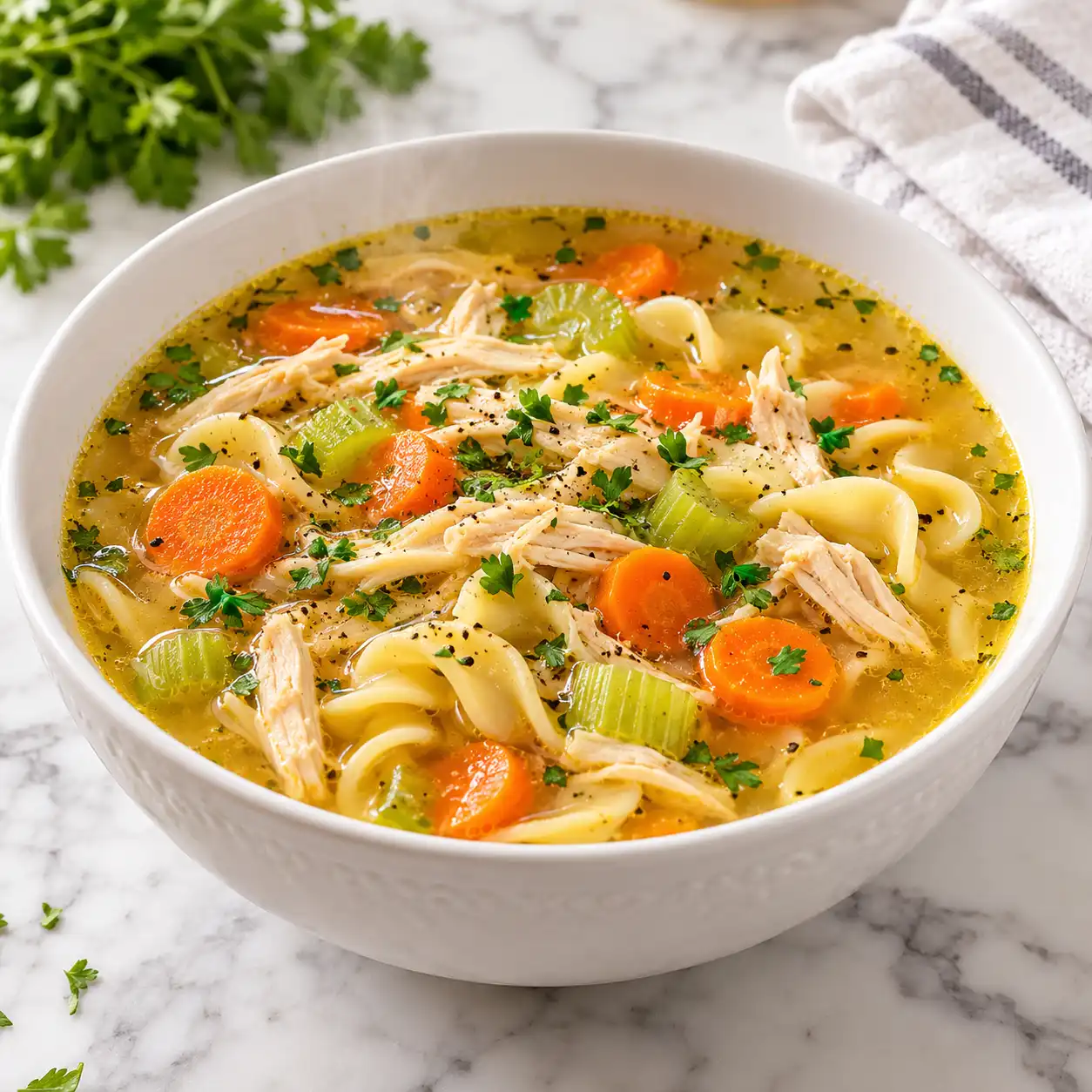
Ultimate Chicken Soup in 1 Hour
Ingredients
Method
- Instructions:
- Season the dried thighs with 1 teaspoon salt and the pepper. Warm the oil in a Dutch oven over medium high heat and sear the thighs skin side down for 5 minutes until deeply bronze, then flip for 2 minutes and transfer to a plate.
- Cook the onion, carrots, and celery in the pot’s fat for 5 minutes, stirring often, until the onion looks translucent. Add the garlic for 30 seconds.
- Add the hot water, bay leaves, and chicken with its juices. Boil, then reduce to a gentle simmer and skim off any foam.
- Simmer partly covered for 22 minutes, until a thigh reads 175°F (80°C) at the thickest point.
- Remove the chicken and bay leaves, raise the heat to high, and shred the meat after discarding the skin and bones.
- Add the noodles to the boiling broth and cook 6 to 7 minutes until tender, adding the chicken at the end.
- Off the heat, stir in the lemon juice, parsley, and remaining salt, adjusting to taste.
Notes
- Cook extra noodles separately if you plan to store leftovers.
- If using boneless thighs, replace 2 cups of water with chicken broth.
- Freeze the soup without noodles for up to 3 months.
- Thighs are safe at 165°F (74°C) but most tender at 175°F (80°C).