Foolproof Chicken Noodle Soup Homemade in 8 Easy Steps

The first thing you notice is the smell. Somewhere around the twenty minute mark, steam rolls off the pot and the whole kitchen goes quiet and warm, the way a house does when someone has been cooking for you all afternoon. That smell is why chicken noodle soup homemade beats anything from a can, and why people still ask for it when they’re sick, worn out, or just cold.
This version uses bone in chicken, so the broth turns rich and golden without any shortcuts. You sear the chicken, simmer everything in one pot, and finish with a squeeze of lemon that wakes up the whole bowl. Total time is 1 hour, and most of that is the pot doing the work while you do something else. The noodles go in near the end, so they stay tender instead of falling apart. It’s simple enough for a weeknight and good enough to serve to guests.
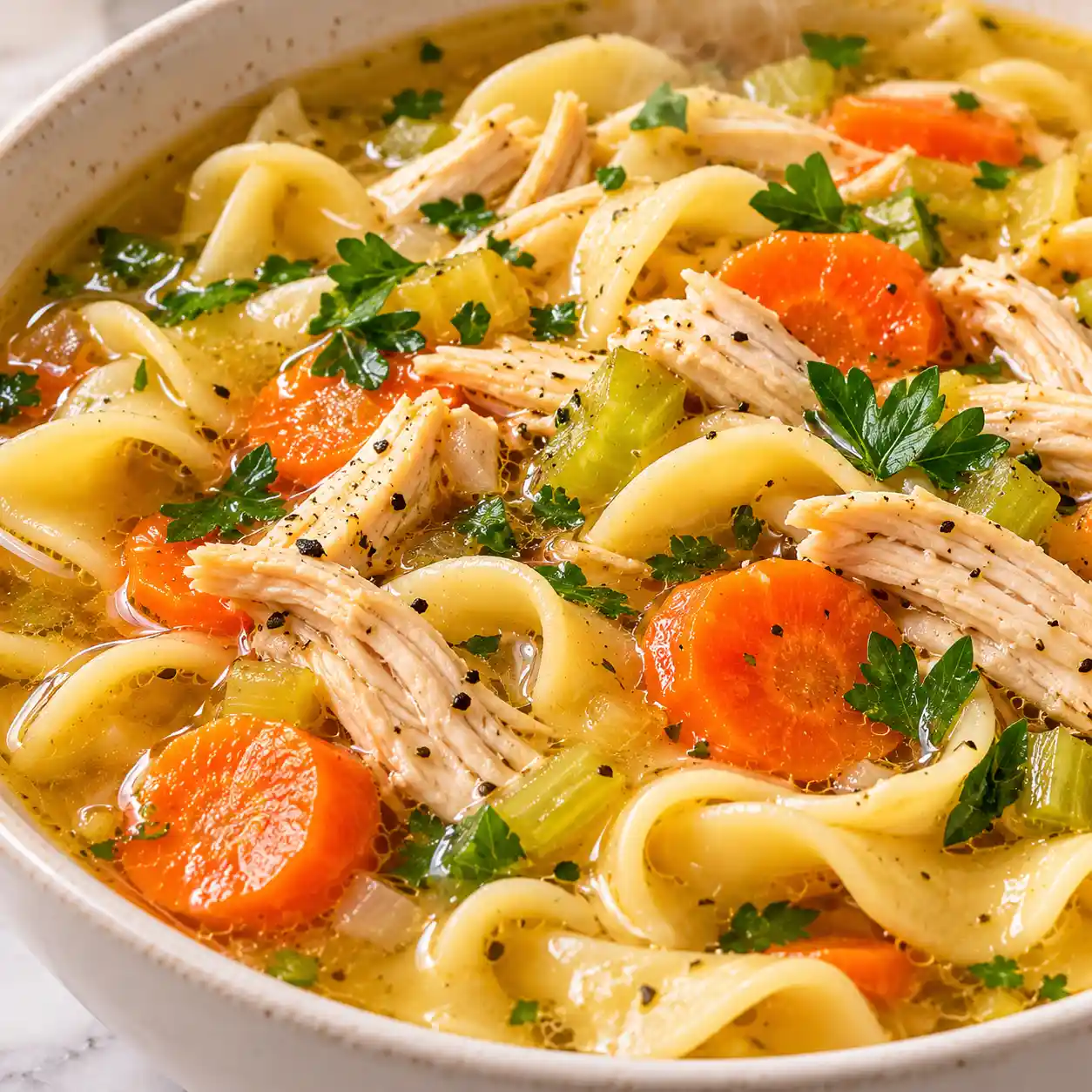
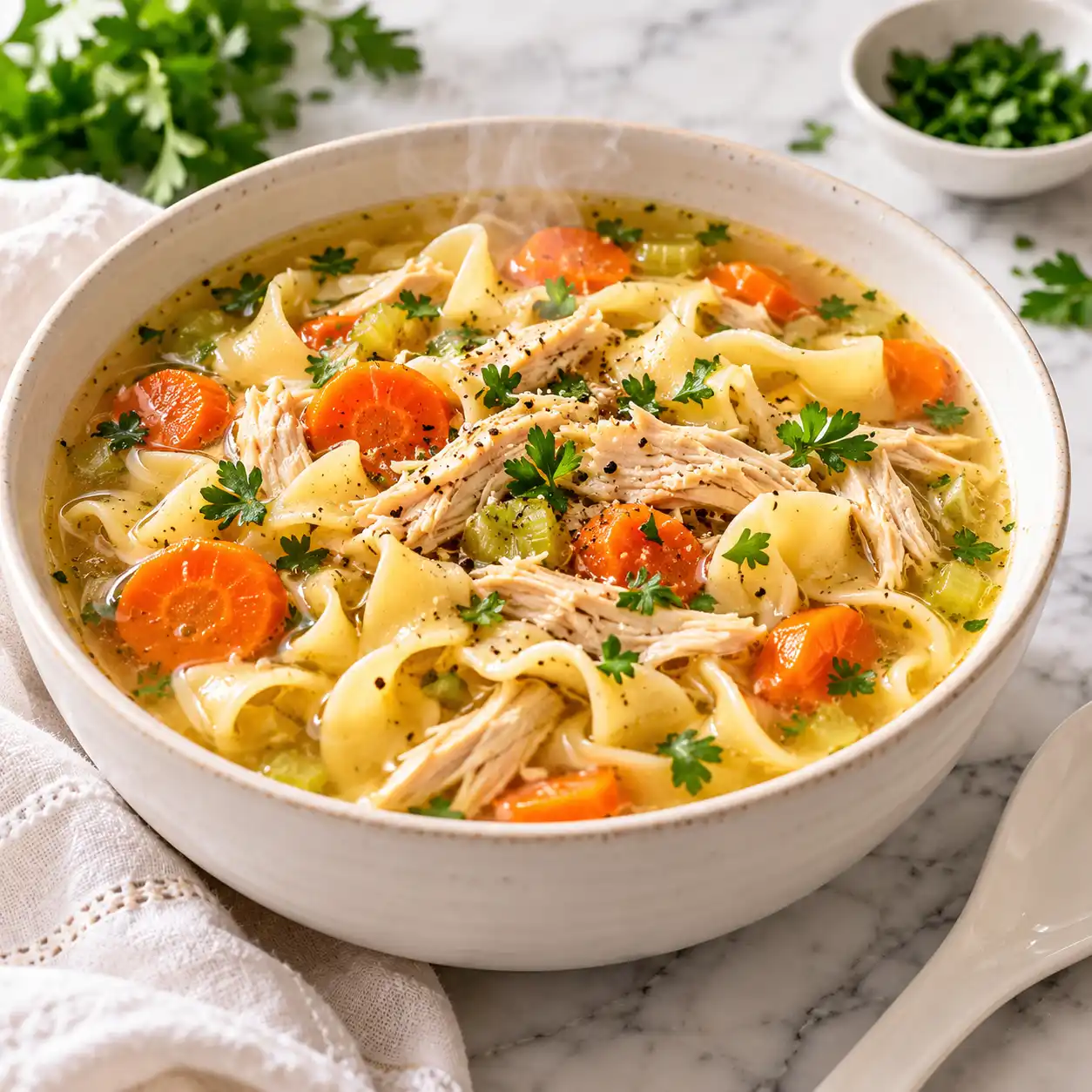
[AI IMAGE PROMPT: A deep ceramic soup bowl filled with golden chicken noodle soup, steam rising, shredded chicken, wide egg noodles, and sliced carrots glistening in the broth. White marble table, white linen napkin, white ceramic spoon, fresh parsley garnish. Warm kitchen light, 45 degree food photography angle.]
[IMAGE PLACEHOLDER | alt-text: “Bowl of homemade chicken noodle soup with shredded chicken, egg noodles, and carrots” | filename: “homemade-chicken-noodle-soup-hero-shot.jpg” | orientation: horizontal]
Why You’ll Love This Chicken Noodle Soup Homemade Recipe
- Real broth flavor: Bone in chicken and a hard sear give the broth a deeper, roasted savory taste than boxed broth can manage alone.
- One pot cleanup: Everything cooks in a single Dutch oven, so you only wash one pot, one board, and your bowls.
- Tender noodles every time: Adding the noodles near the end keeps them soft with a little bite instead of swollen and soggy.
- Ready in 1 hour: You spend 15 minutes chopping, then the soup mostly looks after itself.
- Easy to adjust: Swap the noodles, add greens, or turn up the pepper without changing the method.
Ingredient Selection Tips
Buy a mix of bone in, skin on thighs and breasts if you can. Thighs stay juicy and give the broth body, while breast meat shreds into clean, neat strands. Look for halal chicken that is pale pink and smooth, with no sticky film or sour smell. Pick carrots that feel firm and snap when bent, and celery with tight, crisp ribs. Wide or extra wide egg noodles hold up best. Choose low sodium broth so you control the salt, since regular broth plus the salt below can push the soup too far.
Recipe Snapshot
| Servings | Difficulty | Course | Cuisine | Prep Time | Cook Time | Total Time | Calories |
| 6 | Easy | Main Course | American | 15 minutes | 45 minutes | 60 minutes | 310 per serving |
Ingredients
For the soup base:
- 2 pounds (900 g) bone in, skin on chicken thighs and breasts. The bones and skin release the collagen and fat that make the broth taste full.
- 1 tablespoon olive oil
- 2 teaspoons kosher salt, divided, plus more to taste
- 1/2 teaspoon black pepper
- 1 large yellow onion, diced (about 1 1/2 cups)
- 3 medium carrots, sliced 1/4 inch thick (about 1 1/2 cups). Thick slices keep their shape through the simmer.
- 3 celery ribs, sliced 1/4 inch thick
- 4 garlic cloves, minced
- 1 teaspoon dried thyme, or 4 fresh sprigs. Thyme gives the soup its classic, slightly woodsy aroma.
- 2 bay leaves
- 6 cups (1.4 L) low sodium chicken broth
- 2 cups (475 ml) water
For the noodles and finish:
- 6 ounces (170 g) wide egg noodles. Wide noodles stay chewy longer than thin ones.
- 2 tablespoons fresh lemon juice. A little acid keeps the broth from tasting flat.
- 1/4 cup chopped fresh parsley
Substitution notes: Fresh thyme works in place of dried, using four sprigs and removing the stems before serving. If you only have regular broth, use 4 cups of it plus 4 cups of water and salt at the end.
Recipe Timing
Fifteen minutes of chopping gets you ready, and the stove time adds up to 45 minutes. About 30 of those minutes are active, which means stirring, searing, and shredding. The rest is a gentle simmer where you can wipe counters or set the table.
[AI IMAGE PROMPT: Raw ingredients for chicken noodle soup arranged on a white marble surface: bone in chicken thighs, whole carrots, crisp celery ribs, a yellow onion, garlic cloves, fresh thyme, lemon halves, and dry egg noodles in a white ceramic bowl. Soft natural daylight, top down flat lay.]
[IMAGE PLACEHOLDER | alt-text: “Flat lay of chicken, carrots, celery, onion, garlic, thyme, lemon, and egg noodles” | filename: “chicken-noodle-soup-ingredients-flat-lay.jpg” | orientation: horizontal]
Read Also:
Allergen and Dietary Disclosure
- Wheat (gluten): The egg noodles contain wheat. Use rice noodles or gluten free pasta for a gluten free bowl.
- Eggs: Egg noodles contain eggs. An egg free dried pasta, such as small shells or ditalini, works fine.
- Celery: Some people react to celery, so leave it out and add an extra carrot if needed.
Always read the labels on your broth and noodles, since brands vary. If anyone eating has a severe allergy, check with their doctor before serving, because this recipe is not guaranteed safe for any specific allergy.
Equipment Needed
- Dutch oven or heavy 5 to 6 quart pot: A thick base holds heat well and sears the chicken without scorching.
- Instant read thermometer: It removes the guesswork, since chicken needs to reach 165°F (74°C).
- Tongs: They let you flip and lift the chicken without piercing the meat.
- Ladle or wide spoon: Use it for skimming fat off the surface.
- Chef’s knife: A sharp one makes even, quick vegetable cuts, which means even cooking.
Preparation
Chop the onion, carrots, and celery, and mince the garlic. Pat the chicken thoroughly dry with paper towels, since surface moisture is what stops browning. Measure the noodles, broth, and water so nothing gets rushed once the pot is hot. Have a plate ready for the seared chicken.
Quick tip: Keep your cutting board for raw chicken separate from the one you use for vegetables, or chop all the vegetables first and handle the chicken last.
Step by Step Instructions
Step 1: Sear the chicken
Rub the dry chicken with 1 teaspoon of the salt and the pepper. Heat the oil in the Dutch oven over medium high heat, then lay the chicken in skin side down. Cook 4 minutes until the skin is deep amber and lifts easily from the pot, flip, and cook 2 minutes more. Move the pieces to a plate. The chicken is still raw inside, so wash your hands and the plate you used before touching anything else.
Chef’s Note: Dry skin browns instead of steaming. The brown bits stuck to the bottom of the pot dissolve into the broth later and give it a roasted depth.
Step 2: Soften the vegetables
Lower the heat to medium. If you see more than 2 tablespoons of fat in the pot, spoon off the extra. Add the onion, carrots, celery, and 1/2 teaspoon of the salt. Stir often for 5 minutes, until the onion looks glassy and the carrot edges brighten.
Chef’s Note: Salt pulls water out of the vegetables, which helps them soften and loosen the browned bits from the bottom.
Step 3: Wake up the garlic and thyme
Stir in the garlic, thyme, and bay leaves. Cook for 30 seconds, just until the garlic smells sweet and fragrant rather than sharp. Garlic burns fast, so don’t walk away here.
[AI IMAGE PROMPT: Bone in chicken thighs and breasts searing skin side down in a cast iron Dutch oven, golden crisp skin, sizzling fat, steam rising. Dutch oven sits on a white marble counter beside a white ceramic plate. Warm kitchen light, 45 degree food photography angle.]
[IMAGE PLACEHOLDER | alt-text: “Chicken pieces searing skin side down in a cast iron Dutch oven” | filename: “searing-chicken-for-homemade-soup.jpg” | orientation: vertical]
Step 4: Simmer the chicken
Pour in the broth and water, scraping the bottom of the pot, then nestle the chicken back in along with any plate juices. Bring to a boil, then reduce the heat until only small bubbles break the surface. Partly cover and simmer 20 minutes, until the thickest piece reads 165°F (74°C) and the meat starts pulling from the bone. Give it up to 5 more minutes if needed.
Chef’s Note: A hard boil tightens the meat and churns fat into the liquid, which makes the broth cloudy. Gentle heat coaxes out the collagen that gives the soup its silky feel.
Step 5: Start the noodles
Lift the chicken onto a clean plate with tongs. Skim any visible fat from the surface and fish out the bay leaves. Bring the soup to a steady simmer, stir in the noodles, and cook 6 to 8 minutes until tender with a slight chew. Stir now and then so they don’t stick together.
Step 6: Shred the chicken
While the noodles cook, pull the skin and bones off the chicken and throw them away. Shred the meat into bite size pieces with two forks. The chicken will have cooled enough to handle by the time you finish.
Chef’s Note: Doing this while the noodles cook saves about 8 minutes and keeps the broth from overcooking.
[AI IMAGE PROMPT: Two forks pulling juicy, tender chicken into shreds on a white ceramic plate, steam rising from the meat, bones resting at the plate’s edge. White marble surface, warm kitchen light, a small white ceramic dish of sea salt nearby. Top down flat lay.]
[IMAGE PLACEHOLDER | alt-text: “Forks shredding cooked chicken on a white plate” | filename: “shredding-chicken-for-noodle-soup.jpg” | orientation: horizontal]
Step 7: Return the chicken and brighten
Add the shredded chicken to the pot and let it warm for 2 minutes. Turn off the heat, stir in the lemon juice, and taste. Add up to 1/2 teaspoon more salt and a few grinds of pepper if the broth needs it.
Chef’s Note: Lemon juice added off the heat keeps its fresh, sharp edge instead of cooking down into something dull.
Step 8: Serve
Ladle the soup into warm bowls and scatter parsley on top. Let each bowl cool a couple of minutes first, since noodles hold heat longer than you’d think.
Read Also:
Expert Tips and Tricks
- My early mistake: I used to let the pot boil hard to save time, and the chicken turned stringy while the broth went cloudy. A lazy simmer fixed both.
- Make ahead: Finish through Step 4, cool the pot, and refrigerate it overnight. The fat rises and hardens on top, so it lifts off in seconds.
- Storage: Cool leftovers in shallow containers so they chill quickly, and refrigerate within 2 hours of cooking.
- Technique: Pat the chicken dry and don’t crowd the pot. Pieces that touch steam instead of sear.
- Texture: Cut carrots and celery thick, at about 1/4 inch. Thin slices go soft and fade into the broth.
- Time saving: Chop the vegetables while the chicken sears, so you can add them the minute the chicken comes out.
Common Mistakes and Troubleshooting
| Problem | Why It Happens | How to Fix or Prevent It |
| Cloudy broth | The soup boiled hard, which mixes fat and proteins into the liquid | Hold a gentle simmer and skim the surface once the chicken comes out |
| Bland soup | Not enough salt, or no acid at the end | Season in layers and finish with the lemon juice |
| Dry, stringy chicken | Cooked too long or at too high a heat | Check the temperature at 20 minutes and pull it as soon as it hits 165°F (74°C) |
| Mushy noodles | They sat in the hot broth too long | Add them near the end, or cook them separately if you expect leftovers |
| Greasy surface | Too much fat left from searing skin on chicken | Spoon off extra fat before adding broth, then skim after simmering |
I learned the noodle lesson the hard way. A pot I stored with the noodles in it turned into a thick, pasty stew by the next day.
Storage, Reheating, Freezing, Make Ahead
Refrigerator: Store the soup in airtight containers for 3 to 4 days. For the best texture, keep cooked noodles in a separate container.
Freezer: Freeze the broth and chicken without noodles for up to 3 months. Use freezer safe containers and leave 1 inch of space at the top for expansion. Thaw overnight in the refrigerator. [INTERNAL LINK: freezer friendly soup containers guide]
Reheating: Warm the soup over medium low heat until it steams and reaches 165°F (74°C). Add a splash of water or broth, since the noodles keep absorbing liquid.
Make ahead: Prepare the soup through Step 4 up to 2 days in advance. Cook fresh noodles when you reheat it.
Storage tip: Label each container with the date using masking tape. It saves you from guessing in three weeks.
[AI IMAGE PROMPT: Glass meal prep containers filled with chicken noodle soup, one with broth and chicken, another with separate cooked egg noodles, sealed lids, handwritten date labels on white tape. White marble counter, soft natural daylight, glossy broth visible through the glass. 45 degree food photography angle.]
[IMAGE PLACEHOLDER | alt-text: “Glass containers of chicken noodle soup and separate noodles with date labels” | filename: “storing-homemade-chicken-noodle-soup.jpg” | orientation: horizontal]
Variations and Substitutions
- Spicy: Add 1/2 teaspoon red pepper flakes with the garlic and a teaspoon of grated fresh ginger for warmth.
- Kid friendly: Use small pasta like ditalini, cut the carrots smaller, and add the lemon juice a little at a time.
- Vegetarian: Use vegetable broth, skip the chicken, and add a can of drained chickpeas and 8 ounces of sliced mushrooms in Step 2.
- Gluten free: Use gluten free pasta or rice noodles, and cook them separately so they don’t cloud the broth.
- Creamy: Stir in 1/2 cup of half and half at the very end, with the heat off.
- Extra greens: Add two big handfuls of baby spinach just before serving, and let the residual heat wilt them.
Serving Suggestions
- Warm crusty bread or dinner rolls for dunking. [INTERNAL LINK: easy homemade dinner rolls recipe]
- A simple green salad with a lemon dressing. [INTERNAL LINK: simple garden salad with lemon dressing]
- Crackers or buttered toast on the side.
- A scatter of black pepper and chopped fresh dill on top.
- Hot tea with honey, or sparkling water with lemon slices.
- A grilled cheese sandwich cut into triangles, for the classic pairing.
Nutrition Information
Serving size: about 1 1/2 cups | Servings per recipe: 6
| Nutrient | Amount |
| Calories | 310 |
| Protein | 28 g |
| Carbohydrates | 26 g |
| Fiber | 2 g |
| Sugar | 4 g |
| Fat | 11 g |
| Saturated Fat | 3 g |
| Cholesterol | 95 mg |
| Sodium | 780 mg |
The carrots make this soup a good source of vitamin A, and the chicken adds niacin and potassium. These numbers are estimates, and they will shift depending on the brands you buy and how you measure.
Why This Recipe Works
Bone in chicken is the heart of the method. The bones and connective tissue contain collagen, which turns into gelatin during a long, gentle simmer. That is what gives homemade broth a silky body that boxed broth often lacks.
Searing comes first because browning creates new flavor compounds through the Maillard reaction. Those compounds are what make the broth taste savory and a little roasted. The browned bits left in the pot dissolve into the liquid and carry that flavor through the whole batch.
The noodles go in last on purpose. Egg noodles absorb liquid and soften quickly, and their starch slightly thickens the broth. Cooking them for the shortest time gives you tender noodles with some chew, and the lemon juice added off heat lifts the whole pot.
Read Also:
Frequently Asked Questions
FAQ Source Note: Live search was not used. These questions follow typical People Also Ask and forum style patterns for this keyword.
Can I make homemade chicken noodle soup ahead of time?
Yes. Make the soup through Step 4, cool it, and refrigerate it for up to 2 days. Cook fresh noodles when you reheat it, or boil them in a separate pot and add them to each bowl. Noodles left sitting in broth keep soaking it up, so they turn soft and swollen overnight. Stored this way, the soup tastes just as good on day two, and the flavor often improves.
Why are my noodles mushy?
Noodles turn mushy when they cook too long or sit in hot broth. Add them only after the soup is back at a steady simmer, then cook them 6 to 8 minutes, until tender with a slight chew. If you plan on leftovers, boil them in a separate pot and add them to each bowl. This is the simplest fix for the most common problem with homemade chicken noodle soup.
Can I use boneless chicken instead of bone in chicken?
Yes, but the broth will taste lighter. Use about 1 1/2 pounds of boneless chicken, skip the sear if you like, and shorten the simmer to 15 to 18 minutes so the meat stays moist. To make up for the missing bones, use all broth instead of part water and add an extra pinch of thyme. Bone in pieces give richer results, so choose them when you have time.
How do I know when the chicken is done?
Check with a thermometer. Chicken is safe at 165°F (74°C) in the thickest part, and bone in thighs taste best closer to 175°F (79°C) because the meat turns softer. You can also twist a fork in the thickest piece. It should pull apart easily, and the juices should run clear with no pink near the bone. That usually takes 20 to 25 minutes at a gentle simmer.
Is this chicken noodle soup homemade recipe safe for allergies?
This recipe contains wheat and eggs because of the egg noodles. Rice noodles or gluten free pasta work for a gluten free bowl, and egg free pasta covers egg allergies. Check every label, including the broth, since some brands add allergens. If anyone at your table has a severe allergy, talk to their doctor before serving, because no recipe is guaranteed safe for everyone.
Why is my soup bland?
Bland soup usually needs more salt, more time, or a touch of acid. Season in layers: salt the chicken before searing, then taste the broth right before serving. If it still tastes flat, add a squeeze of lemon juice and a pinch of salt. Low sodium broth is a good base, but it needs your seasoning. Also check that you browned the chicken, since that step builds much of the flavor.
[AI IMAGE PROMPT: Overhead view of a white ceramic soup bowl of steaming chicken noodle soup, golden broth, shredded chicken, tender egg noodles, carrot coins, and chopped parsley. White marble table with a white linen napkin and a lemon wedge. Soft natural daylight, top down flat lay.]
[IMAGE PLACEHOLDER | alt-text: “Overhead view of a bowl of chicken noodle soup with parsley and lemon wedge” | filename: “chicken-noodle-soup-final-plated-shot.jpg” | orientation: vertical]
Conclusion
The best thing about this pot is how forgiving it is. If the vegetables run a little long or the lemon goes in a bit heavy, you still end up with something warm and good. What matters is the gentle simmer and the fresh noodles at the end.
I make this chicken noodle soup homemade whenever the weather turns, and it’s the pot I reach for when a friend needs feeding. Double the batch, freeze half without the noodles, and you’ll thank yourself on a busy night.
If you loved this recipe, save it to your soup recipes Pinterest board so you can find it easily later!
Homemade Chicken Noodle Soup
Ingredients
Method
- Instructions:
- Season the dried chicken with 1 teaspoon salt and the pepper. Heat the oil in a Dutch oven over medium high and brown the chicken, 4 minutes skin side down and 2 minutes on the other side. Transfer to a plate.
- Reduce the heat to medium. Cook the onion, carrots, celery, and 1/2 teaspoon salt for 5 minutes, stirring, until the onion turns glassy.
- Add the garlic, thyme, and bay leaves and stir for 30 seconds.
- Add the broth and water, scrape the pot bottom, and return the chicken. Boil, then drop to a low simmer and cook partly covered for 20 minutes, until the chicken reaches 165°F (74°C).
- Move the chicken to a plate and skim fat from the soup. Return to a steady simmer, add the noodles, and cook 6 to 8 minutes until tender.
- Remove the skin and bones, then shred the meat while the noodles cook.
- Stir the chicken back in and warm 2 minutes. Remove from the heat, add the lemon juice, and adjust the salt and pepper.
- Ladle into bowls and top with parsley.
Notes
- Store leftovers up to 3 to 4 days, keeping noodles separate for the best texture.
- Freeze the broth and chicken without noodles for up to 3 months.
- For gluten free, use rice noodles or gluten free pasta, cooked separately.
- Add a splash of water when reheating, since noodles absorb liquid.