Easy Lasagna Soup Recipe-Ready in 40 Minutes

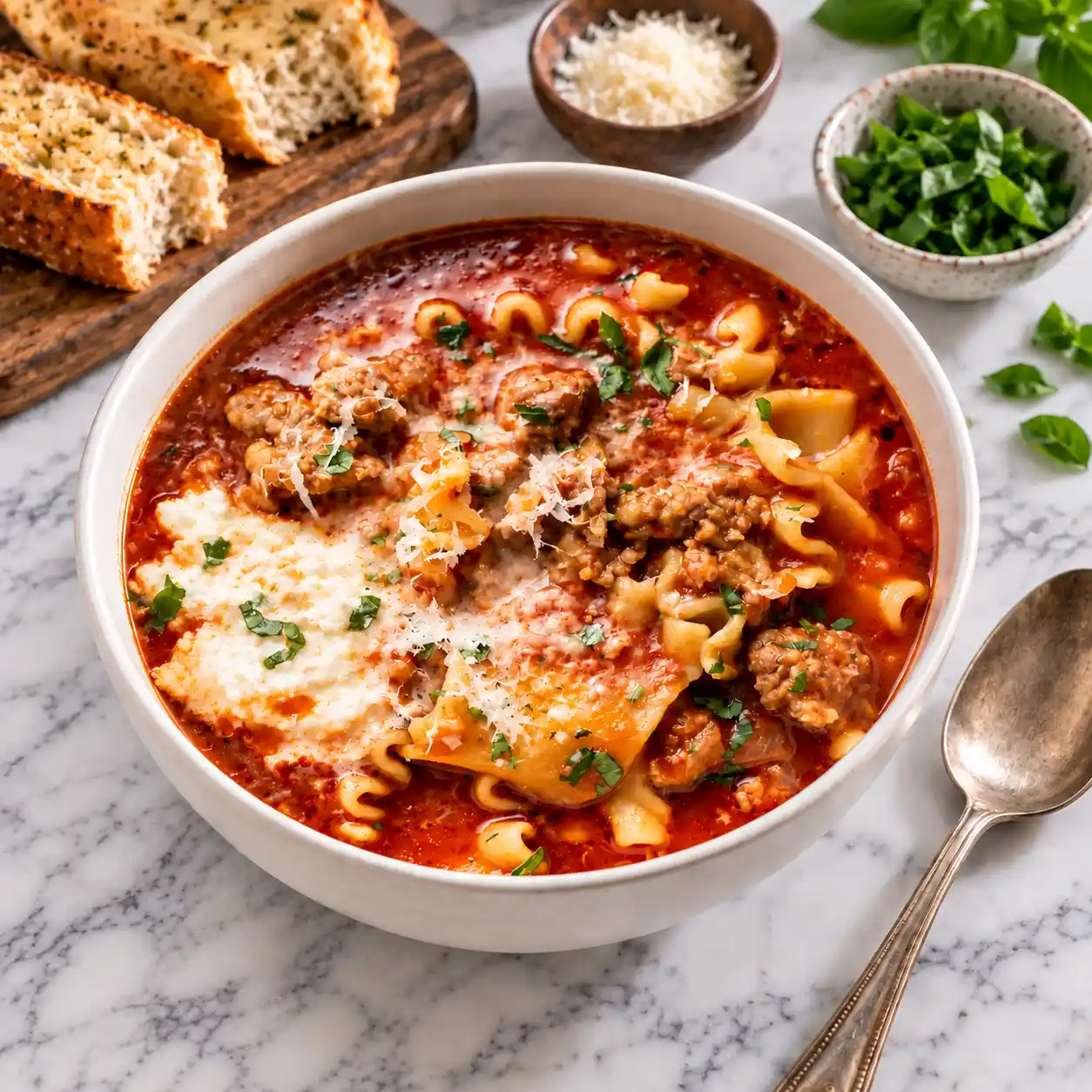
Steam curls off a bowl of broken lasagna noodles swimming in a thick tomato broth, a dollop of ricotta melting into the surface like a cloud giving up. This is what happens when you take everything good about a lasagna, the beef, the cheese, the herby tomato sauce, and let it simmer together in one pot instead of layering it into a pan.
This lasagna soup skips the boiling-noodles-separately step and the hour in the oven. Everything cooks in one pot in about 40 minutes, including the noodles, which soften right in the broth. You still get that ricotta dollop and the pull of melted mozzarella on top, just without the assembly. If you keep coming back to lasagna soup on busy weeknights, this version is built for exactly that.

Why You’ll Love This Recipe
- One pot, real cleanup savings. Everything, from browning the meat to simmering the noodles, happens in a single Dutch oven, so you are not scrubbing a lasagna pan and a saucepan afterward.
- Noodles cook right in the broth. No separate pasta pot. The broken noodles go straight into the simmering soup and soak up flavor as they soften.
- Ready faster than baked lasagna. You get the same flavors in under an hour instead of the better part of an afternoon.
- Freezer-friendly base. The soup base (without the cheese topping) freezes well, so you can stock a few containers for nights when cooking feels like too much.
- Kid-approved without extra work. The broken noodles and familiar tomato-meat flavor tend to win over picky eaters who might turn up their nose at a new dish.
- Easy to stretch or scale down. Add an extra cup of broth to feed more people, or halve the recipe for a smaller household, without changing the cooking method.
Read Also: Potato Soup
Ingredient Selection Tips
Reach for lasagna noodles, not another pasta shape. They hold their ruffled edges even after breaking into pieces, which gives the soup that familiar lasagna texture in every spoonful. For the meat, ground beef with some fat (80/20) keeps the broth from tasting thin, though ground turkey works if you want a lighter version. Whole-milk ricotta melts into a creamier dollop than part-skim, and a block of mozzarella you shred yourself will melt smoother than pre-shredded, which is often coated in anti-caking starch.
Recipe Snapshot
| Servings | 6 |
| Difficulty | Easy |
| Course | Main Dish |
| Cuisine | Italian-American |
| Prep Time | 15 minutes |
| Cook Time | 25 minutes |
| Total Time | 40 minutes |
| Calories | 420 per serving |
Ingredients
For the soup base:
- 1 pound ground beef (80/20 blend recommended for a richer broth)
- 1 medium yellow onion, diced
- 3 garlic cloves, minced (fresh garlic gives a sharper, more rounded flavor than jarred)
- 1 tablespoon Italian seasoning
- 1/2 teaspoon crushed red pepper flakes (skip if cooking for kids)
- 1 can (28 ounces) crushed tomatoes
- 1 can (15 ounces) tomato sauce
- 2 tablespoons tomato paste (deepens the color and adds concentrated tomato flavor)
- 4 cups beef broth, plus more if the soup thickens too much on reheating
- 8 lasagna noodles, broken into 1 to 2 inch pieces
- Salt and black pepper, to taste
For the topping:
- 1 cup whole-milk ricotta cheese
- 1 1/2 cups shredded mozzarella (block cheese, shredded fresh, melts more evenly)
- 1/4 cup grated Parmesan
- Fresh basil leaves, torn, for garnish
Substitution notes: Ground turkey or ground chicken can replace the beef if you want a lighter broth; add an extra tablespoon of tomato paste to keep the flavor from thinning out. Broken lasagna noodles can be swapped for mafaldine or wide egg noodles in a pinch, though the texture will be less traditional.
Recipe Timing
Fifteen minutes covers browning the meat, chopping the onion, and breaking the noodles by hand. The remaining 25 minutes is mostly hands-off simmering, aside from stirring occasionally so the noodles do not clump together at the bottom of the pot. Plan for the full 40 minutes if you want the noodles fully tender rather than slightly firm.

Allergen & Dietary Disclosure
This recipe contains dairy (ricotta, mozzarella, Parmesan) and gluten (lasagna noodles). For a dairy-free version, swap the cheeses for a plant-based ricotta and mozzarella alternative, though the melt and texture will differ slightly. For gluten-free, use certified gluten-free lasagna noodles and double-check that your beef broth and tomato paste are labeled gluten-free, since some brands add wheat-based thickeners. If anyone eating has a severe food allergy, read every label carefully, since ingredient sourcing and cross-contamination risks can change between brands.
Equipment Needed
- Dutch oven or large heavy-bottomed pot: Holds enough liquid for the broth and distributes heat evenly so the bottom layer of meat does not scorch.
- Wooden spoon: Useful for breaking up the ground beef into small crumbles as it browns.
- Box grater: Shredding your own mozzarella melts noticeably smoother than bagged pre-shredded cheese.
- Ladle: Makes portioning the soup into bowls easier without spilling the noodles and broth unevenly.

Preparation
Dice the onion and mince the garlic before you turn on the heat, since the meat browns fast and you will not have time to chop once it is in the pot. Break the lasagna noodles into rough 1 to 2 inch pieces over a cutting board, they do not need to be uniform. Measure out the crushed tomatoes, tomato sauce, and broth so they are within reach, and grate the mozzarella if you are using a block.
Step-by-Step Instructions
Step 1: Brown the beef Set the Dutch oven over medium-high heat and add the ground beef, breaking it apart with a wooden spoon as it cooks. Cook for 5 to 6 minutes, stirring occasionally, until no pink remains and the internal temperature reaches 160°F. Drain excess fat if the beef released a lot, leaving about a tablespoon in the pot.
Chef’s Note: Leaving a little fat behind rather than draining it completely helps carry flavor into the onions and garlic in the next step.
Step 2: Soften the aromatics Add the diced onion to the pot and cook for 3 to 4 minutes, stirring occasionally, until it turns translucent at the edges. Stir in the minced garlic and cook for another 30 seconds, just until it smells fragrant, since garlic burns quickly and turns bitter if left too long.
Step 3: Bloom the seasonings Sprinkle the Italian seasoning and red pepper flakes over the meat and onions, stirring to coat everything evenly. Let the spices cook for about a minute in the residual fat, this short toasting step wakes up their flavor before the liquid goes in.
Chef’s Note: Adding dried herbs to the hot pan before any liquid touches them pulls more flavor out of the herbs than stirring them into broth alone.
Step 4: Build the tomato base Stir in the tomato paste first, letting it coat the meat for about a minute to deepen in color. Pour in the crushed tomatoes and tomato sauce, scraping the bottom of the pot with your spoon to loosen any browned bits stuck there.
Step 5: Add the broth and simmer Pour in the beef broth and stir everything together, then bring the pot to a gentle boil over medium-high heat. Once bubbling, reduce the heat to medium-low so the soup simmers steadily rather than boiling hard.
Step 6: Cook the noodles in the broth Add the broken lasagna noodle pieces directly into the simmering soup, stirring right away so they do not stick together. Simmer uncovered for 12 to 15 minutes, stirring every few minutes, until the noodles are tender but still hold their shape.
Chef’s Note: Stirring every few minutes matters here more than in most soups, since flat noodle pieces tend to clump and stick to the bottom of the pot if left alone too long.
Step 7: Season and taste Taste the soup and adjust with salt and black pepper as needed, since canned tomatoes and broth vary in sodium between brands. If the soup looks thicker than you like, stir in an extra half cup of broth or water.
Step 8: Add the cheese topping and serve Ladle the hot soup into bowls, then top each one with a generous spoonful of ricotta, a handful of shredded mozzarella, and a sprinkle of Parmesan. Let the residual heat melt the cheese for a minute before scattering torn basil leaves on top.
[AI IMAGE PROMPT: Close-up 45-degree angle shot of ground beef and diced onion browning in a cast iron Dutch oven, glossy fond on the pot bottom, warm kitchen lighting, steam rising, wooden spoon resting against the pot edge.] [IMAGE PLACEHOLDER — alt-text: “Ground beef and onions browning in a Dutch oven for lasagna soup” | filename: “lasagna-soup-browning-beef.jpg” | orientation: horizontal]
[AI IMAGE PROMPT: Vertical 2:3 shot of a ladle lifting lasagna soup out of a Dutch oven, broken noodles and tomato broth glistening, melted mozzarella stretching from the ladle, dark wood table, soft natural daylight, side angle for texture.] [IMAGE PLACEHOLDER — alt-text: “Ladle scooping lasagna soup with melted cheese stretching from the pot” | filename: “lasagna-soup-ladle-scoop.jpg” | orientation: vertical]
Read Also: Beef Stroganoff
Expert Tips & Tricks
- Break the noodles unevenly on purpose. Uniform pieces look tidy but a mix of sizes actually mimics the layered texture of real lasagna better in a spoonful.
- My early mistake: adding noodles too soon. The first time I made this, I added the noodles while the broth was still cold, and they turned mushy by the time the soup came to a simmer. Wait until the broth is actively bubbling.
- Make the base a day ahead. The soup without noodles and cheese tastes even better after the flavors sit overnight in the fridge; just cook the noodles fresh when you reheat it.
- Warm the ricotta slightly before serving. A cold scoop of ricotta straight from the fridge cools the soup down fast; letting it sit at room temperature for 10 minutes helps it melt into the broth instead of sitting on top.
- Shred your own cheese. Pre-shredded mozzarella is coated in starch to prevent clumping in the bag, which also keeps it from melting as smoothly into the hot soup.
- Store noodles separately if you know you have leftovers. Cooking a smaller batch of noodles fresh for each reheated portion keeps them from turning soft and swollen in the fridge.
- Add a splash of milk to mellow acidity. If the tomato flavor tastes sharp, a tablespoon or two of milk stirred in right before serving softens it without changing the recipe much.
Common Mistakes & Troubleshooting
| Problem | Why It Happens | How to Fix or Prevent It |
| Noodles turn mushy | Added to broth before it reached a simmer, or cooked too long | Add noodles only once the broth is actively bubbling, and check for doneness starting at the 10 minute mark |
| Soup tastes flat | Under-seasoned or the tomatoes were low quality | Season in layers throughout cooking, not just at the end, and taste before adding the cheese topping |
| Cheese clumps instead of melting | Pre-shredded cheese with anti-caking starch, or ricotta added to a bowl that has cooled too much | Shred cheese from a block, and serve the soup hot enough that residual heat can melt the topping |
| Broth is too thick after reheating | Noodles keep absorbing liquid as the soup sits | Stir in extra broth or water, a quarter cup at a time, when reheating leftovers |
| Meat tastes greasy | Beef with too much fat was not drained after browning | Drain most of the rendered fat before adding the onions, leaving only about a tablespoon |
Storage, Reheating, Freezing, Make-Ahead
Refrigerator: Store leftover soup in an airtight container for up to 4 days. Keep the ricotta and mozzarella topping separate if you plan to reheat multiple portions over several days, since the cheese texture holds up better added fresh each time.
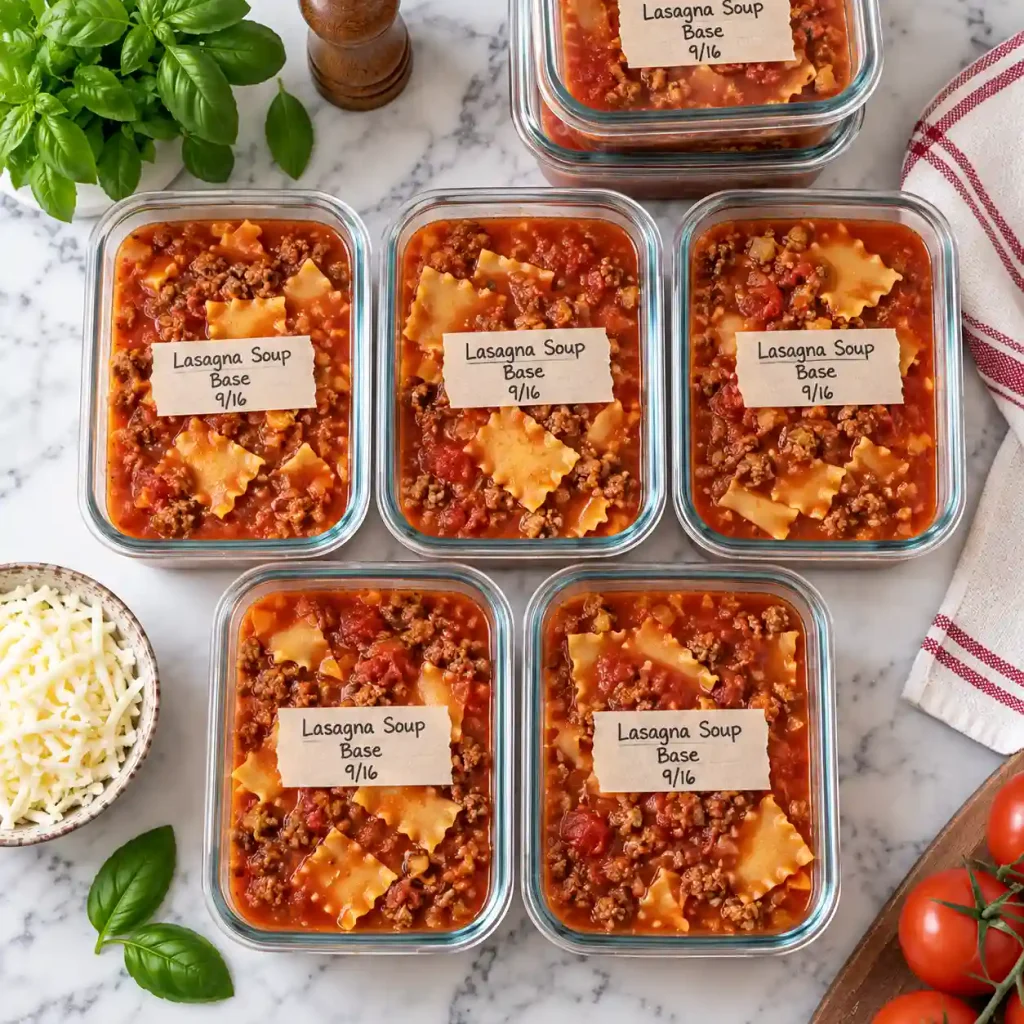
Freezer: Freeze the soup base without noodles or cheese for up to 3 months in a freezer-safe container, leaving an inch of headspace for expansion. Cook fresh noodles when you are ready to serve, since frozen and thawed noodles turn soft and lose their shape.
Reheating: Warm leftovers on the stovetop over medium-low heat, stirring occasionally and adding a splash of broth or water if the soup has thickened. A microwave works too, in 1-minute intervals, stirred between each round.
Make-Ahead: The soup base keeps well in the fridge for up to 2 days before you add noodles, which actually deepens the flavor as the tomatoes and spices sit together. I usually make a double batch of just the base on a Sunday and portion it into containers for two separate dinners that week.
Variations & Substitutions
- Spicy version: Double the red pepper flakes and stir in a diced jalapeño with the onion for extra heat.
- Kid-friendly version: Skip the red pepper flakes entirely and stir a tablespoon of butter into the broth for a milder, slightly richer flavor kids tend to prefer.
- Vegetarian version: Replace the ground beef with a can of drained white beans or a plant-based ground meat substitute, and swap the beef broth for vegetable broth.
- Gluten-free version: Use a certified gluten-free lasagna noodle and confirm your broth and tomato paste are labeled gluten-free.
- Lighter version: Use ground turkey instead of beef and swap the ricotta topping for a smaller dollop of low-fat cottage cheese blended smooth.
Serving Suggestions
- A simple green salad with lemon vinaigrette balances the richness of the cheese topping.
- Garlic bread or a crusty baguette works well for scooping up the last bits of broth.
- A light drizzle of good olive oil over the finished bowl adds a fresh, peppery finish.
- Extra grated Parmesan on the side lets everyone adjust the cheese level to taste.
- Pair with [INTERNAL LINK: a simple homemade garlic bread recipe] for the full lasagna dinner experience without the oven time.
- A glass of sparkling water with lemon cuts through the richness nicely for a lighter, non-alcoholic pairing.
Nutrition Information
Per serving (serving size: approximately 1.5 cups soup with topping, 6 servings per recipe)
| Nutrient | Amount |
| Calories | 420 |
| Protein | 27g |
| Carbohydrates | 32g |
| Fiber | 4g |
| Sugar | 8g |
| Fat | 20g |
| Saturated Fat | 9g |
| Cholesterol | 85mg |
| Sodium | 780mg |
This soup is a solid source of protein from the beef and cheese, and the crushed tomatoes contribute a meaningful amount of vitamin C and lycopene. These values are estimates only and will shift depending on the specific brands you use and how you measure each ingredient, so treat them as a general guide rather than an exact count.
Why This Recipe Works
Browning the meat and blooming the dried herbs in the fat before adding any liquid is what gives this soup a deeper flavor than simply dumping everything into a pot at once. Fat carries and holds onto flavor compounds from spices far more effectively than water does, which is why that minute of toasting the Italian seasoning in Step 3 matters more than it might seem.
Cooking the noodles directly in the tomato broth instead of boiling them separately does double duty. The starch that releases from the pasta as it cooks helps thicken the broth slightly, giving the soup a body closer to a light sauce than a thin liquid, without needing a separate roux or thickener.
The ricotta dollop on top, rather than stirred into the soup, keeps its texture intact. Stirring ricotta directly into a hot liquid tends to break it into small curds, while spooning it on top lets it soften into a creamy pocket that mimics the ricotta layer in a baked lasagna.
Read Also: Stuffed Bell Peppers
Frequently Asked Questions
FAQ source note: these questions reflect typical search patterns and common reader questions around one-pot pasta soups, based on general recurring themes rather than a specific live search.
Can I make lasagna soup ahead of time?
Yes, make the soup base through Step 5 up to 2 days ahead and store it in the fridge. Cook the noodles fresh when you are ready to serve, since pre-cooked noodles left sitting in the broth will turn mushy by the time you reheat everything.
Why did my noodles turn out mushy?
This usually happens when the noodles go into the pot before the broth reaches a simmer, or when they simmer longer than 15 minutes. Add them only once the broth is actively bubbling and start checking for tenderness around the 10 minute mark.
Can I substitute a different pasta shape for the lasagna noodles?
You can use mafaldine, wide egg noodles, or even broken bowtie pasta, though the texture will feel less like traditional lasagna. Broken lasagna noodles hold their ruffled edges best and cook to a similar chew as the original dish.
How do I know the soup is done without a thermometer for the beef?
Ground beef is safe to eat once it reaches 160°F internally and shows no pink color when broken apart with a spoon. If you do not have a meat thermometer, cut into the largest piece of beef in the pot and confirm it is uniformly brown throughout.
Is this recipe safe for someone with a dairy allergy?
Not as written, since it includes ricotta, mozzarella, and Parmesan. Swap in plant-based ricotta and mozzarella alternatives for a dairy-free version, though always check labels carefully rather than assuming any substitute is guaranteed safe for a severe allergy.
Can I freeze lasagna soup with the noodles already in it?
It is not ideal. Noodles that have already absorbed broth tend to turn soft and swollen once frozen and thawed. For the best texture, freeze just the soup base and cook fresh noodles after thawing.
What can I use instead of ground beef?
Ground turkey or ground chicken both work well; add an extra tablespoon of tomato paste to make up for the milder flavor. For a vegetarian option, drained white beans or a plant-based ground meat substitute hold up nicely in the broth.
[AI IMAGE PROMPT: Vertical 2:3 hero shot of a finished bowl of lasagna soup, melted mozzarella and ricotta on top, torn basil garnish, steam rising, rustic wooden board underneath a white ceramic bowl, warm natural side lighting, 45-degree food photography angle.] [IMAGE PLACEHOLDER — alt-text: “Finished bowl of lasagna soup topped with melted cheese and fresh basil” | filename: “lasagna-soup-final-plated-shot.jpg” | orientation: vertical]
Conclusion
Lasagna soup earns its place in a weeknight rotation because it delivers the exact comfort of baked lasagna without the layering, the baking dish, or the hour of oven time. Once you get the timing down on the noodles, it becomes one of those recipes you can make from memory on a night when cooking feels like a chore.
The first time I made this for my own family, I nearly skipped the ricotta dollop to save a step, and it would have been a mistake. That single spoonful on top is what makes each bowl of lasagna soup taste like the real thing.
If you loved this recipe, save it to your Soup Recipes Pinterest board so you can find it easily later!
Easy Lasagna Soup
Ingredients
Method
- Instructions:
- Brown the ground beef in a Dutch oven over medium-high heat, breaking it into crumbles until fully cooked and no pink remains.
- Add the diced onion and cook until softened, then stir in the garlic for about 30 seconds.
- Stir in the Italian seasoning and red pepper flakes, letting them toast briefly in the pan.
- Add the tomato paste, followed by the crushed tomatoes and tomato sauce, stirring to combine.
- Pour in the beef broth and bring to a gentle boil, then reduce to a simmer.
- Stir in the broken lasagna noodles and simmer for 12 to 15 minutes, stirring occasionally, until tender.
- Season with salt and pepper to taste.
- Ladle into bowls and top with ricotta, shredded mozzarella, Parmesan, and torn basil.
Notes
- Store leftovers in the fridge for up to 4 days, keeping cheese toppings separate for best texture.
- Freeze the soup base without noodles or cheese for up to 3 months.
- Cook the noodles fresh if reheating from the freezer for the best texture.
- Swap ground beef for turkey or a plant-based substitute for a lighter or vegetarian version.