Best Lasagna Recipe: 7 Steps to Unbelievably Cheesy Layers

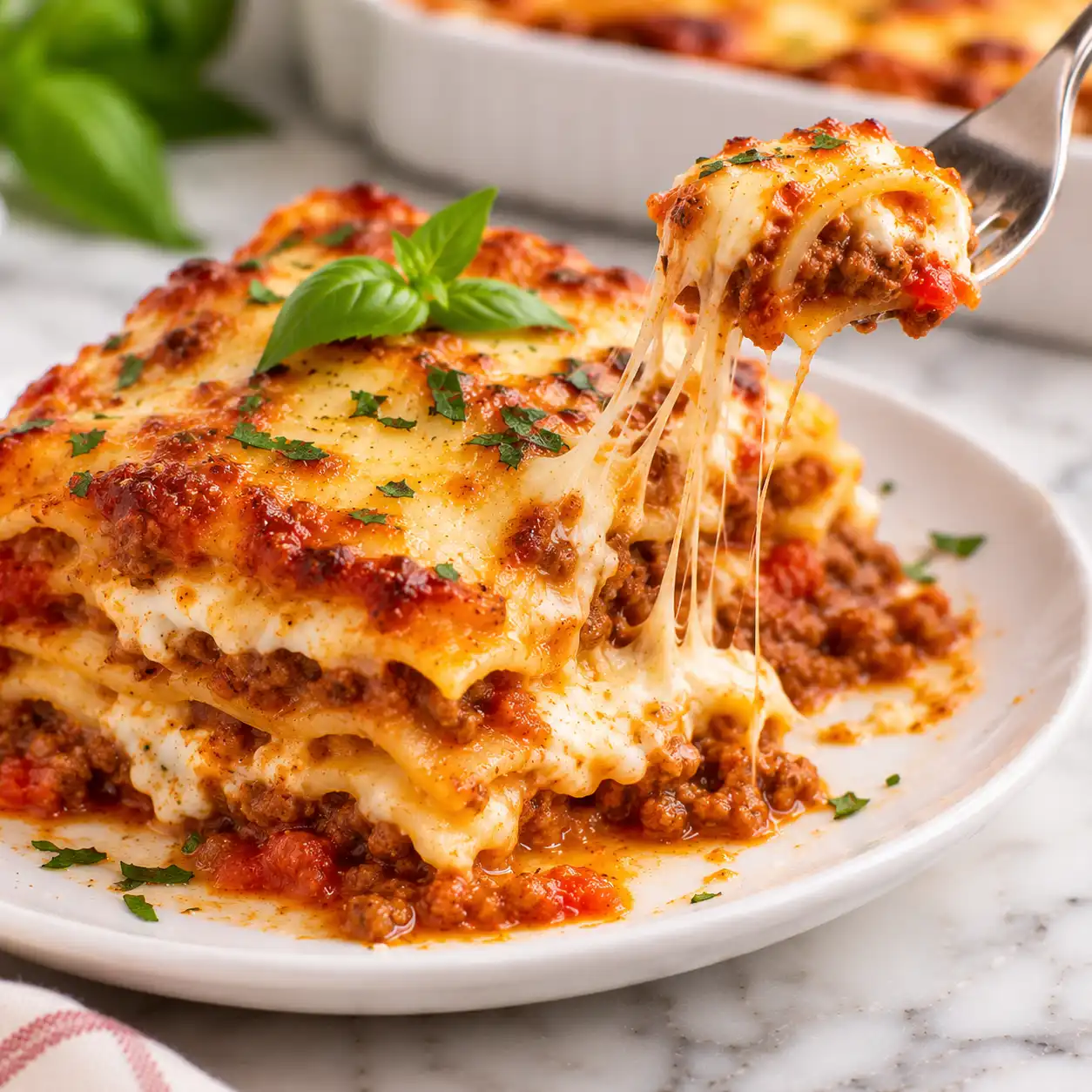
The first thing you notice when a good lasagna comes out of the oven is the sound. The edges crackle against the dish, the sauce bubbles up through the cheese, and the whole kitchen smells like tomato, garlic, and browned beef. It is the kind of dinner that makes people wander in from other rooms.
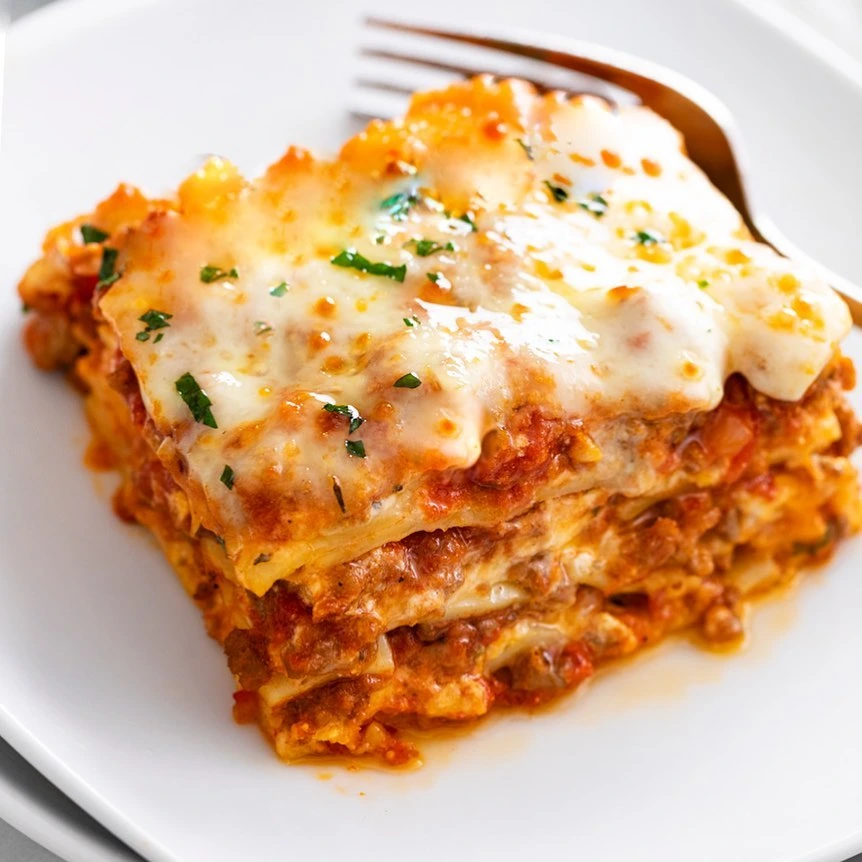
This lasagna recipe is built for clean, tall slices that hold together on the plate. A thick, slow simmered beef ragu keeps the layers from turning soupy, and a seasoned ricotta filling adds creaminess. Hands on work takes about 30 minutes, and the total time is 2 hours 30 minutes, with plenty of it spent waiting while the oven works.
Why You’ll Love This Lasagna Recipe
- Layers that stay put: A thick ragu and a well drained filling mean every square keeps its shape instead of sliding apart.
- Deep sauce flavor: Cooking the tomato paste before adding the tomatoes gives the ragu a savory, slightly sweet base.
- Creamy filling with a little seasoning: Parmesan, parsley, and a pinch of nutmeg stop the ricotta from tasting flat.
- Plans around your schedule: You can assemble the dish a day ahead and bake it when you are ready.
- Freezer friendly: Individual portions reheat well, so one pan covers several dinners.
Ingredient Selection Tips
Buy whole milk ricotta in a tub, not a part skim one, because it stays creamy when baked and bakes up less grainy. Choose ground beef labeled 80/20, which has enough fat to flavor the sauce without leaving a greasy pool on top. For mozzarella, reach for a low moisture block and shred it yourself. Pre-shredded bags are coated to stop clumping, which keeps the cheese from melting as smoothly. Canned crushed tomatoes with only tomatoes and salt on the label give the cleanest taste.
Recipe Snapshot
| Detail | Info |
| Servings | 8 |
| Difficulty | Medium |
| Course | Main Course |
| Cuisine | Italian |
| Prep Time | 30 minutes |
| Cook Time | 1 hour 40 minutes |
| Rest Time | 20 minutes |
| Total Time | 2 hours 30 minutes |
| Calories | 520 kcal per serving |
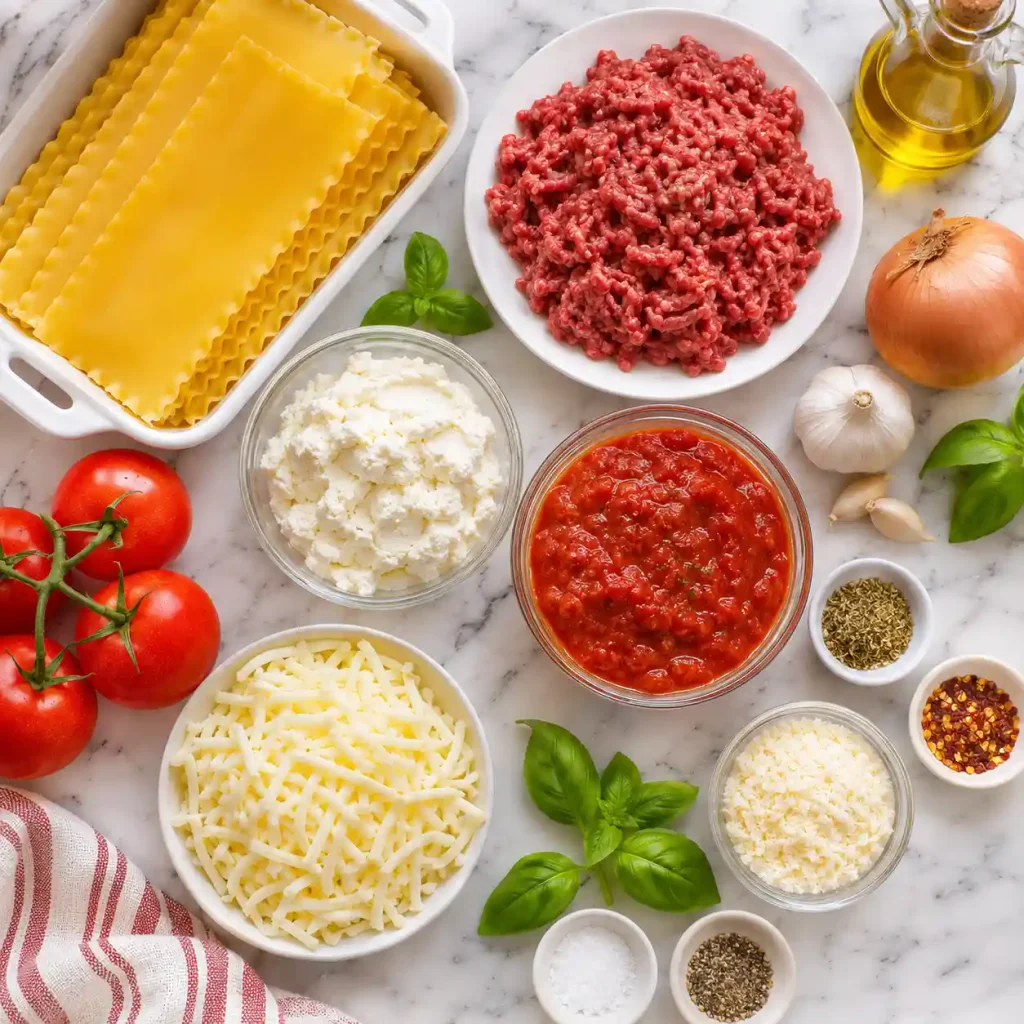
Ingredients
For the beef ragu:
- 2 tablespoons olive oil
- 1 medium yellow onion, finely chopped (it melts into the sauce and adds natural sweetness)
- 4 garlic cloves, minced
- 1 medium carrot, finely grated (balances the acidity of the tomatoes)
- 1.5 pounds (680 g) ground beef, 80/20
- 1 teaspoon salt
- 2 tablespoons tomato paste (cooking it first deepens the savory flavor)
- 1 can (28 ounces / 794 g) crushed tomatoes
- 1 cup (240 ml) beef stock (adds body and richness without wine)
- 1 teaspoon dried oregano
- 1 teaspoon dried basil
- 1/2 teaspoon black pepper
- 1 bay leaf
For the ricotta filling:
- 15 ounces (425 g) whole milk ricotta
- 1 large egg (binds the filling so it slices cleanly)
- 1/2 cup (50 g) grated Parmesan style hard cheese made with microbial rennet (gives a sharp, salty finish)
- 2 tablespoons chopped fresh parsley
- 1/2 teaspoon salt
- A pinch of ground nutmeg
For assembly:
- 12 dry lasagna noodles
- 3 cups (340 g) shredded low moisture mozzarella
- 1/4 cup (25 g) extra grated hard cheese for the top
Substitutions: Cottage cheese, drained well, can stand in for ricotta. Ground turkey works in place of beef, though the sauce will taste lighter.
Recipe Timing
Most of the 30 minutes of prep goes to chopping the vegetables, grating the cheese, and mixing the filling. The noodles can boil while the sauce simmers, so that task adds no extra time. The ragu needs 55 minutes from first sauté to finished sauce, and the dish bakes for another 45. After that, the lasagna rests for 20 minutes before slicing, which brings the total to 2 hours 30 minutes.
Read Also:
Allergen & Dietary Disclosure
This lasagna recipe contains dairy (ricotta, mozzarella, hard cheese), egg, and gluten (wheat noodles).
- Dairy: Use dairy free shredded cheese and a cashew based ricotta, though the texture will be softer.
- Egg: Skip the egg and stir 2 tablespoons of cornstarch into the filling for binding.
- Gluten: Use gluten free lasagna noodles and cook them according to the package.
Anyone with a severe allergy should read every ingredient label and speak with a doctor, since this recipe cannot be guaranteed safe for a specific allergy.
Equipment Needed
- 9×13 inch baking dish: Ceramic or glass holds heat evenly, so the edges do not scorch before the center warms.
- Cast iron or heavy Dutch oven: Thick walls keep the ragu from sticking while it simmers.
- Box grater: Use the fine side for the carrot and the coarse side for the cheese.
- Instant read thermometer: It is the only reliable way to confirm the center has reached a safe temperature.
- Aluminum foil: A snug cover traps steam and keeps the noodles tender during the first half of baking.
Preparation
Heat the oven to 375°F (190°C) while you work. Chop the onion, mince the garlic, and grate the carrot and all the cheese before turning on the stove. Lightly oil the baking dish. Bring a large pot of salted water to a boil for the noodles, and keep the ricotta ingredients within arm’s reach so assembly moves quickly later.
Step-by-Step Instructions
Step 1: Build the Ragu Base
Warm the olive oil in the Dutch oven over medium heat, then cook the onion and carrot for 5 minutes until soft and translucent. Stir in the garlic for 30 seconds. Add the beef and salt, breaking the meat into small crumbs, and cook for 8 to 10 minutes until no pink remains and the bottom of the pot shows browned bits.
Food safety note: Wash your hands, board, and utensils after handling raw beef, and make sure the meat is fully cooked through.
Chef’s Note: Those browned bits on the bottom of the pot carry a lot of flavor. Scrape them into the sauce as the liquid goes in.
Step 2: Simmer the Sauce
Push the beef to one side, add the tomato paste to the cleared space, and cook it for 2 minutes until it darkens to brick red. Pour in the crushed tomatoes and stock, then add the oregano, basil, pepper, and bay leaf. Simmer on low for 40 minutes, stirring now and then, until a spoon drawn across the bottom leaves a clear trail. Remove the bay leaf.
Chef’s Note: Thick sauce is the secret to tall slices. A thin sauce turns the finished dish into a puddle.
[AI IMAGE PROMPT: Thick beef ragu simmering in a cast iron Dutch oven, glossy and deep red with browned crumbles of beef and flecks of fresh basil, a white ceramic spoon resting nearby, steam rising, white marble surface, warm kitchen light, 45 degree food photography angle.]
[IMAGE PLACEHOLDER, alt-text: “Thick beef ragu simmering in a cast iron Dutch oven” | filename: “lasagna-recipe-beef-ragu-simmering.jpg” | orientation: horizontal]
Step 3: Boil the Noodles
While the ragu simmers, cook the noodles in the boiling salted water for about 8 minutes, one minute short of the package time. Drain them and lay them flat on a lightly oiled tray so they do not stick together.
Step 4: Mix the Ricotta Filling
Stir the ricotta, egg, hard cheese, parsley, salt, and nutmeg in a medium bowl until smooth and evenly speckled with green.
Chef’s Note: The egg acts as a binder. Without it, the filling can slump out of the layers when you cut.
Step 5: Layer the Lasagna
Spread 1 cup of ragu across the bottom of the dish. Add 4 noodles in a single layer, then half the ricotta mixture, 1 cup of mozzarella, and 1.5 cups of ragu. Repeat once. Finish with the last 4 noodles, the remaining ragu, the remaining mozzarella, and the extra hard cheese.
[AI IMAGE PROMPT: Hands spreading white ricotta filling over a layer of lasagna noodles and red ragu inside a white ceramic baking dish, creamy texture, glossy sauce, mozzarella shreds nearby in a glass bowl, white marble surface, warm kitchen light, top down flat lay.]
[IMAGE PLACEHOLDER, alt-text: “Spreading ricotta filling over lasagna noodles and beef sauce in a baking dish” | filename: “lasagna-recipe-layering-ricotta-ragu.jpg” | orientation: horizontal]
Step 6: Bake in Two Stages
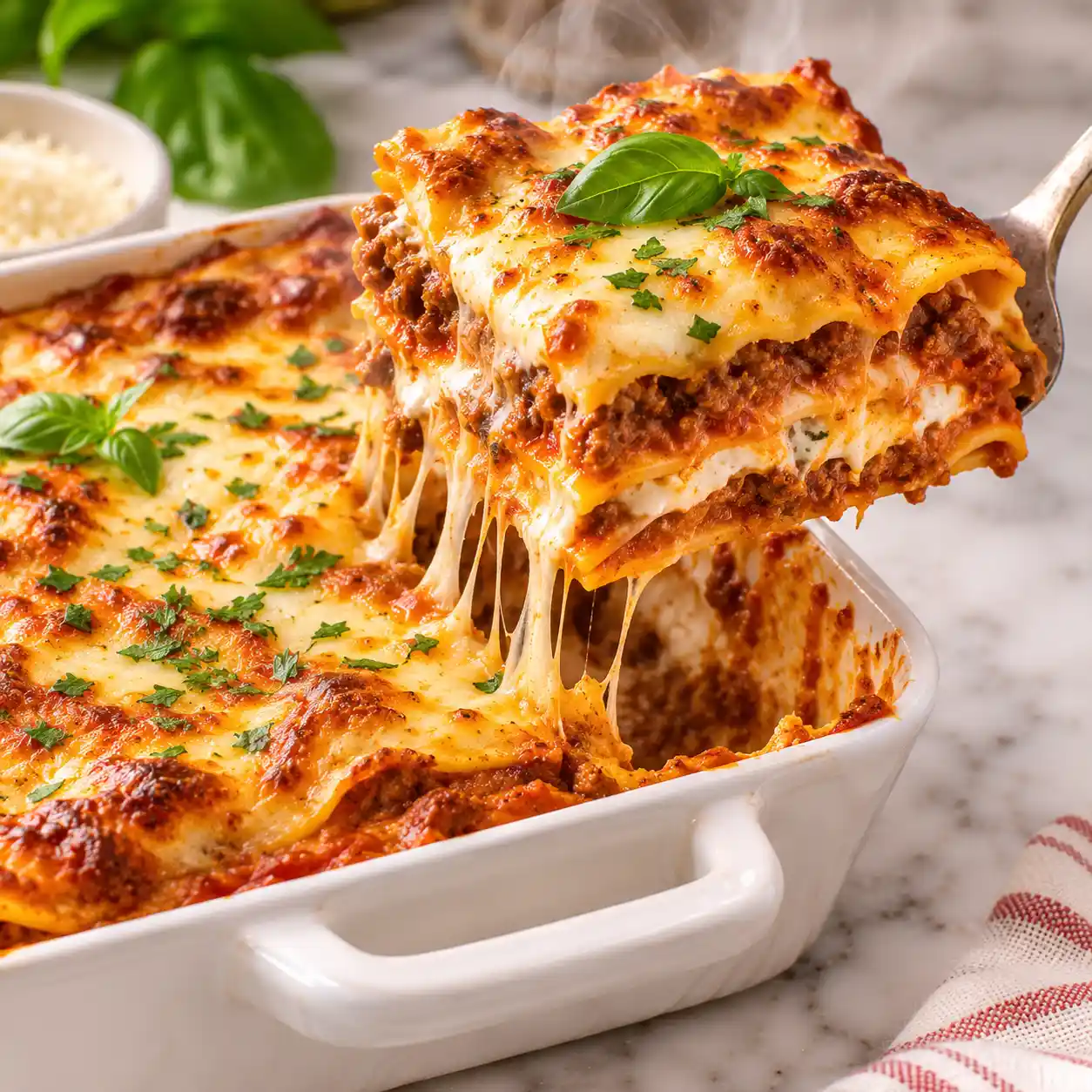
Cover the dish tightly with foil and bake for 30 minutes. Remove the foil and bake 15 minutes more, until the edges bubble and the cheese blisters in golden patches. A thermometer in the center should read 165°F (74°C).
Chef’s Note: Covering the dish first steams the noodles through. Uncovering it at the end gives you the browned top.
Step 7: Rest and Slice
Let the lasagna sit on the counter for 20 minutes. Cut into 8 squares with a sharp knife, wiping the blade between slices.
Read Also:
Expert Tips & Tricks
- Shred your own cheese: Block mozzarella melts into smooth, stretchy strands, while bagged shreds can stay a little powdery.
- Pause before slicing: I once cut into a lasagna straight from the oven for a hungry crowd, and the layers slid right apart. Now I wait the full 20 minutes.
- Prep ahead: Assemble the whole dish up to 24 hours before baking, cover tightly, and refrigerate. Add about 10 minutes to the covered baking stage.
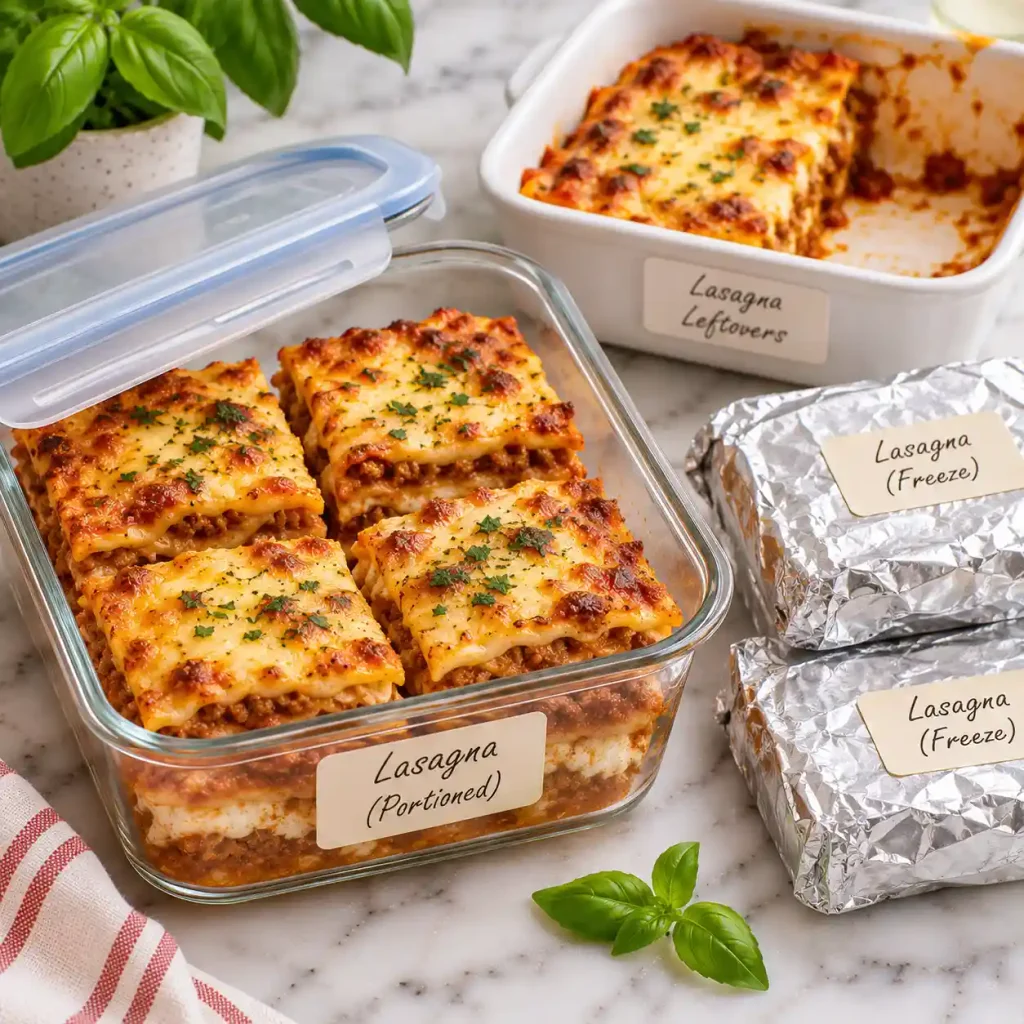
- Store it in portions: Cut the cooled lasagna into squares before storing, so you can reheat only what you need.
- Boil noodles on the side: Start them while the ragu simmers. It saves nearly 15 minutes of standing around.
- Season the ricotta: Plain ricotta tastes bland between strong layers, so give it salt, cheese, and nutmeg.
Callout: If your ragu looks loose after 40 minutes, keep simmering with the lid off. Five extra minutes makes a visible difference to the final slice.
Common Mistakes & Troubleshooting
| Problem | Why It Happens | How to Fix or Prevent It |
| Watery lasagna | Thin sauce or wet ricotta | Simmer the ragu until thick and drain the ricotta if loose |
| Slices fall apart | Skipped resting time | Rest 20 minutes before cutting |
| Dry, curled noodles | Edges stuck out of the sauce | Cover every noodle with ragu and keep the foil tight |
| Burnt top, cool center | Oven too hot or foil removed too early | Bake covered for 30 minutes before uncovering |
| Greasy surface | Very fatty beef | Spoon off extra fat from the ragu before layering |
Storage, Reheating, Freezing, Make Ahead
Refrigerator: Store covered leftovers in an airtight glass container for up to 4 days.
Freezer: Wrap individual squares in foil and place them in a freezer bag for up to 3 months. Unbaked lasagna can freeze too, wrapped twice, for the same time.
Reheating: Warm a square, covered, at 350°F (175°C) for 20 to 25 minutes, or microwave it for 2 to 3 minutes. Thaw frozen portions overnight in the fridge first.
Make ahead: Assemble the dish, cover, and refrigerate for up to 24 hours before baking.
My personal tip is to write the date on the foil with a marker so nothing gets lost in the freezer.
Variations & Substitutions
- Spicy: Stir 1 teaspoon red pepper flakes into the ragu with the garlic.
- Mild and kid friendly: Skip the pepper flakes and grate in an extra carrot for a sweeter sauce.
- Vegetarian: Replace the beef with 3 cups of sautéed mushrooms and 8 ounces of chopped spinach, and use vegetable stock.
- Gluten free: Use gluten free noodles and check the stock label.
- Chicken or turkey: Use 1.5 pounds of ground halal chicken or turkey, and add 1 tablespoon of olive oil, since poultry is leaner.
Serving Suggestions
- Warm garlic bread for scooping up extra sauce. [INTERNAL LINK: garlic bread recipe]
- A crisp Caesar or arugula salad to balance the richness. [INTERNAL LINK: Caesar salad recipe]
- Roasted broccoli or green beans on the side for a vegetable.
- A small bowl of grated hard cheese and chili flakes at the table.
- Sparkling water with lemon or iced tea as a drink.
- Tiramisu or fresh berries for dessert. [INTERNAL LINK: tiramisu recipe]
Nutrition Information
Serving size: 1 square (about 1/8 of the dish). Servings per recipe: 8.
| Nutrient | Amount |
| Calories | 520 kcal |
| Protein | 34 g |
| Carbohydrates | 36 g |
| Fiber | 3 g |
| Sugar | 8 g |
| Fat | 26 g |
| Saturated Fat | 12 g |
| Cholesterol | 120 mg |
| Sodium | 890 mg |
Notable micronutrients: calcium and iron. These numbers are estimates and will shift depending on the brands you buy and how you measure.
Why This Recipe Works (E-E-A-T)
Cooking the tomato paste before the tomatoes go in concentrates its sugars and savory compounds, which gives the sauce body that a quick simmer alone cannot. Grated carrot and finely chopped onion break down into the sauce, adding sweetness that softens the acid in the tomatoes.
The ricotta filling holds together because the egg proteins set as they bake, and the hard cheese absorbs a little extra moisture. Low moisture mozzarella melts without releasing much water, so the layers stay defined instead of turning soupy.
Resting matters for the same reason a roast needs it. As the lasagna cools slightly, the cheese and starch from the noodles firm up, and the structure holds when you slice.
Read Also:
Frequently Asked Questions
FAQ Source Note: These questions reflect typical question patterns seen around this keyword, not live search results.
Can I make lasagna ahead of time?
Yes. Assemble the whole dish up to 24 hours ahead, cover it tightly, and refrigerate. Bake it straight from the fridge, adding about 10 minutes to the covered stage. For longer storage, freeze unbaked or baked portions for up to 3 months. This lasagna recipe handles both well because the thick sauce does not soak into the noodles overnight.
Why is my lasagna watery?
Excess moisture usually comes from a thin sauce, loose ricotta, or fresh mozzarella. Simmer the ragu until a spoon leaves a trail across the pot, drain the ricotta if it looks wet, and use low moisture mozzarella. Skipping the 20 minute rest is the other common culprit, since the layers firm up as they cool.
Can I substitute cottage cheese for ricotta?
Yes, use the same amount. Drain it in a fine mesh strainer for 10 minutes first to remove extra liquid. The flavor will be a touch tangier and the texture slightly wetter, so stir in 2 tablespoons of extra grated hard cheese to help it set. Blend briefly if you prefer a smoother filling.
How do I know when lasagna is done?
Look for bubbling edges, golden blisters on the cheese, and a center that reads 165°F (74°C) on an instant read thermometer. The sauce at the corners should be actively bubbling, not just warm. If the top browns before the middle heats, cover the dish loosely with foil and bake a few minutes longer.
Do I need to boil the noodles for this lasagna recipe?
For this lasagna recipe, yes. Regular dry noodles need about 8 minutes in boiling salted water, which gives them a firm, sliceable structure. Oven ready noodles skip the boiling, but they need extra liquid, so add 1/2 cup of stock to the ragu and expect a slightly softer result.
Is this lasagna safe for people with allergies?
It contains dairy, egg, and wheat. You can swap dairy free cheese, use cornstarch in place of egg, and choose gluten free noodles, but each change affects texture. Read every label and talk to a doctor about severe allergies, since this recipe cannot be guaranteed safe for any specific allergy.
[AI IMAGE PROMPT: Close up of a lasagna square on a white ceramic plate, oozing ricotta between tender noodle layers, glossy ragu, bubbling golden mozzarella, basil leaf garnish, fork resting beside it, white marble surface, soft natural daylight, low 30 degree food photography angle.]
[IMAGE PLACEHOLDER, alt-text: “Close up of a plated lasagna slice with melted mozzarella and basil garnish” | filename: “best-lasagna-recipe-final-plated-shot.jpg” | orientation: vertical 2:3 (1000x1500px)]
Conclusion
The best thing about this lasagna recipe is how forgiving the schedule is. You can cook the sauce on Sunday, layer the pan on Monday, and bake it whenever the house is hungry.
I make it for gatherings because it feeds a crowd without much last minute work, and the leftovers are even better the next day. Try it once with the full 20 minute rest and you will see why clean slices are worth the wait.
If you loved this recipe, save it to your pasta dinner Pinterest board so you can find it easily later!
Best Lasagna Recipe
Ingredients
Method
- Instructions:
- Warm the oil in a Dutch oven over medium heat. Cook the onion and carrot for 5 minutes, then add the garlic for 30 seconds.
- Crumble in the beef with the salt and cook 8 to 10 minutes, until no pink remains. Wash hands and tools that touched raw meat.
- Cook the tomato paste in the pot for 2 minutes, then add the tomatoes, stock, herbs, pepper, and bay leaf. Simmer on low for 40 minutes until thick, and remove the bay leaf.
- Boil the noodles in salted water for about 8 minutes, drain, and lay them flat on an oiled tray.
- Heat the oven to 375°F (190°C). Stir the ricotta, egg, hard cheese, parsley, salt, and nutmeg together.
- Spread 1 cup of ragu in the dish. Add 4 noodles, half the filling, 1 cup of mozzarella, and 1.5 cups of ragu. Repeat, then top with the last noodles, ragu, mozzarella, and extra cheese.
- Cover with foil and bake 30 minutes. Uncover and bake 15 minutes more, until bubbling at the edges and 165°F (74°C) in the center.
- Rest for 20 minutes, then cut into 8 squares.
Notes
- Assemble up to 24 hours ahead and add about 10 minutes to the covered bake.
- Refrigerate leftovers for up to 4 days or freeze portions for up to 3 months.
- Drain loose ricotta before mixing to prevent a watery bake.
- Swap ground turkey or halal chicken for beef if you prefer.