Mississippi Pot Roast: 6 Steps to Unbelievably Tender Beef

The smell reaches you around hour four. Something rich and buttery drifts through the house, with a faint tang underneath that sends everyone wandering into the kitchen to lift the lid and look. Under all of that, a plain chuck roast is quietly turning into beef that sags apart at the touch of a fork.
This Mississippi pot roast takes about 15 minutes of hands on work and 8 hours in the slow cooker, so the total comes to 8 hours 30 minutes including a short rest. What sets this version apart is the seasoning. Instead of relying on store packets, you stir together a quick blend from pantry spices, which lets you control the salt and gives the gravy a cleaner, beefier taste. You skip the searing, you skip the babysitting, and you end up with meat you can shred without a knife. Put it on in the morning and dinner takes care of itself.
Why You’ll Love This Recipe
- Almost no hands on work: Fifteen minutes of stacking ingredients is all the cooker needs before you can walk away.
- A pantry spice blend: Mixing your own seasoning means you decide how salty the finished gravy turns out.
- Tender every time: Chuck roast is full of connective tissue, and eight slow hours turn it into soft, shreddable beef.
- Gravy built into the pot: Butter, broth, and pepperoncini brine blend into a savory sauce, so there is no extra pan to wash.
- Easy to feed a crowd: The recipe serves eight, and the leftovers reheat well for sandwiches or rice bowls.
Ingredient Selection Tips
Look for a boneless chuck roast about 3 inches thick with thin white threads of fat running through the red meat. That marbling is what keeps the beef juicy through a long cook, so skip lean cuts like round or sirloin, which turn dry and stringy. For the peppers, grab a jar of whole mild pepperoncini and check that the brine looks clear rather than cloudy. Unsalted butter is the better pick here because the brine and broth already bring plenty of sodium.
Recipe Snapshot
| Servings | Difficulty | Course | Cuisine | Prep Time | Cook Time | Rest Time | Total Time | Calories |
| 8 | Easy | Main Course | American | 15 minutes | 8 hours | 15 minutes | 8 hours 30 minutes | 520 per serving |
Ingredients
For the roast:
- 3.5 pounds boneless beef chuck roast. Chuck has the collagen that melts into gravy, which is why this cut works better than leaner ones.
- 1/2 teaspoon kosher salt
- 1/2 teaspoon freshly ground black pepper
- 4 tablespoons unsalted butter, cut into 4 slices. The butter bastes the top of the roast as it softens and rounds out the sauce.
- 6 whole pepperoncini peppers, plus 1/4 cup brine from the jar. The brine adds a mild tang that keeps the rich beef from tasting heavy.
- 1/2 cup low sodium beef broth. Low sodium lets you control the salt level in the gravy. Water with an extra pinch of onion powder works in a pinch.
For the seasoning blend:
- 1 tablespoon dried parsley
- 1 teaspoon dried dill. Dill gives the blend its ranch style herbal note.
- 2 teaspoons garlic powder
- 2 teaspoons onion powder
- 1/2 teaspoon dried chives
- 1 teaspoon smoked paprika. It adds a savory depth similar to the stuff in store bought gravy mixes.
- 1/2 teaspoon kosher salt
- 1/2 teaspoon black pepper
For the optional gravy thickener:
- 1 tablespoon cornstarch
- 2 tablespoons cold water. Mixed together, these make a slurry that thickens the sauce without lumps. Arrowroot works as a one to one swap.
Recipe Timing
Start the cooker by 9:00 AM and dinner lands on the table around 5:30 PM. Your hands are busy for about 15 minutes in the morning and another 10 or so near the end when you shred the beef. If you are short on time, the high setting finishes in roughly 5 to 6 hours, though the low setting gives softer meat. The optional gravy thickening adds about 10 minutes that you can overlap with setting the table, and it is not counted in the total above.
[AI IMAGE PROMPT: Raw ingredients for Mississippi pot roast arranged on a white marble slab: a marbled beef chuck roast, a butter stick, jar of pepperoncini peppers, small white ceramic bowls of ranch seasoning and au jus blend, soft natural daylight, top down flat lay, fresh crisp parsley.] [IMAGE PLACEHOLDER | alt text: “Ingredients for Mississippi pot roast including chuck roast, butter, pepperoncini, and seasoning blend on white marble” | filename: “mississippi-pot-roast-ingredients-flatlay.jpg” | orientation: horizontal]
Allergen & Dietary Disclosure
The butter is the only dairy in this recipe. To make it dairy free, use 3 tablespoons of olive oil or a dairy free butter alternative in its place. The recipe contains no wheat, but some beef broths and spice products contain gluten, so read every label. If someone at your table has a severe allergy, check each package yourself, because ingredients vary between brands and this recipe cannot be called safe for every person.
Equipment Needed
- 6 quart slow cooker: A 3.5 pound roast fits snugly in this size, and a smaller one will crowd the liquid and slow the cooking.
- Instant read thermometer: The most reliable way to know the beef is truly done is to check that the center sits near 200°F.
- Long handled tongs: They let you lift the soft roast out of the pot without it falling apart.
- Two forks or meat claws: Either one shreds the beef in a couple of minutes.
- Fat separator or wide spoon: Use it to skim excess fat so the gravy tastes rich but not greasy.
Preparation
Slow cookers need no heating up, so prep is short. Stir the seasoning blend ingredients together in a small bowl. Pat the chuck roast dry on all sides with paper towels and trim off any thick, hard slabs of fat, leaving a thin layer for flavor. Cut the butter into four even slices, drain the pepperoncini over a bowl to save the brine, and measure out your broth. Have everything within arm’s reach so the stacking takes only a few minutes.
Quick tip: Resist adding extra salt before you taste the finished gravy. The pepperoncini brine and broth carry more sodium than most people expect.
Step by Step Instructions
Step 1: Season the roast
Press the 1/2 teaspoon salt and 1/2 teaspoon pepper into every side of the dry roast, then coat it generously with the seasoning blend. Wash your hands, the cutting board, and any tools that touched the raw beef before moving on.
Chef’s Note: A dry surface lets the spices cling instead of sliding off in a damp film, so the crust ends up seasoned all over.
Step 2: Stack the slow cooker
Set the roast in the cooker insert, lay the four butter slices across the top, and tuck the pepperoncini around the sides. Pour the brine and broth down the inside edge of the pot, not over the beef. The butter should sit in neat flat pieces on top, ready to melt as the heat builds.
Chef’s Note: Pouring liquid around the roast keeps the seasoning crust in place, and the butter melts slowly down the sides to baste the meat.
[AI IMAGE PROMPT: Butter slices and whole pepperoncini sitting on a seasoned chuck roast inside a white ceramic slow cooker insert, ranch seasoning dusted across the beef, glossy butter beginning to soften, warm kitchen light, eye level side angle, resting on a white marble counter, steam faintly rising.] [IMAGE PLACEHOLDER | alt text: “Seasoned chuck roast topped with butter and pepperoncini in a white slow cooker insert” | filename: “mississippi-pot-roast-slow-cooker-assembled.jpg” | orientation: horizontal]
Step 3: Cook low and slow
Cover the cooker, set it to low, and leave it alone for 8 hours. The roast is ready when the top looks dark and glossy, a thermometer reads between 200°F and 205°F in the center, and the meat sags when you nudge it with tongs.
Chef’s Note: Collagen needs that 200°F range to melt into gelatin. At 180°F the beef is cooked through but still tough, which is why temperature matters more than the clock.
Step 4: Let it rest
Turn off the heat and leave the lid on for 15 minutes. You will know it is ready when the bubbling in the liquid stops and the steam slows to a gentle wisp.
Chef’s Note: Resting in the juices lets the fibers reabsorb moisture, so the shredded meat stays juicy instead of drying out.
Step 5: Shred the beef
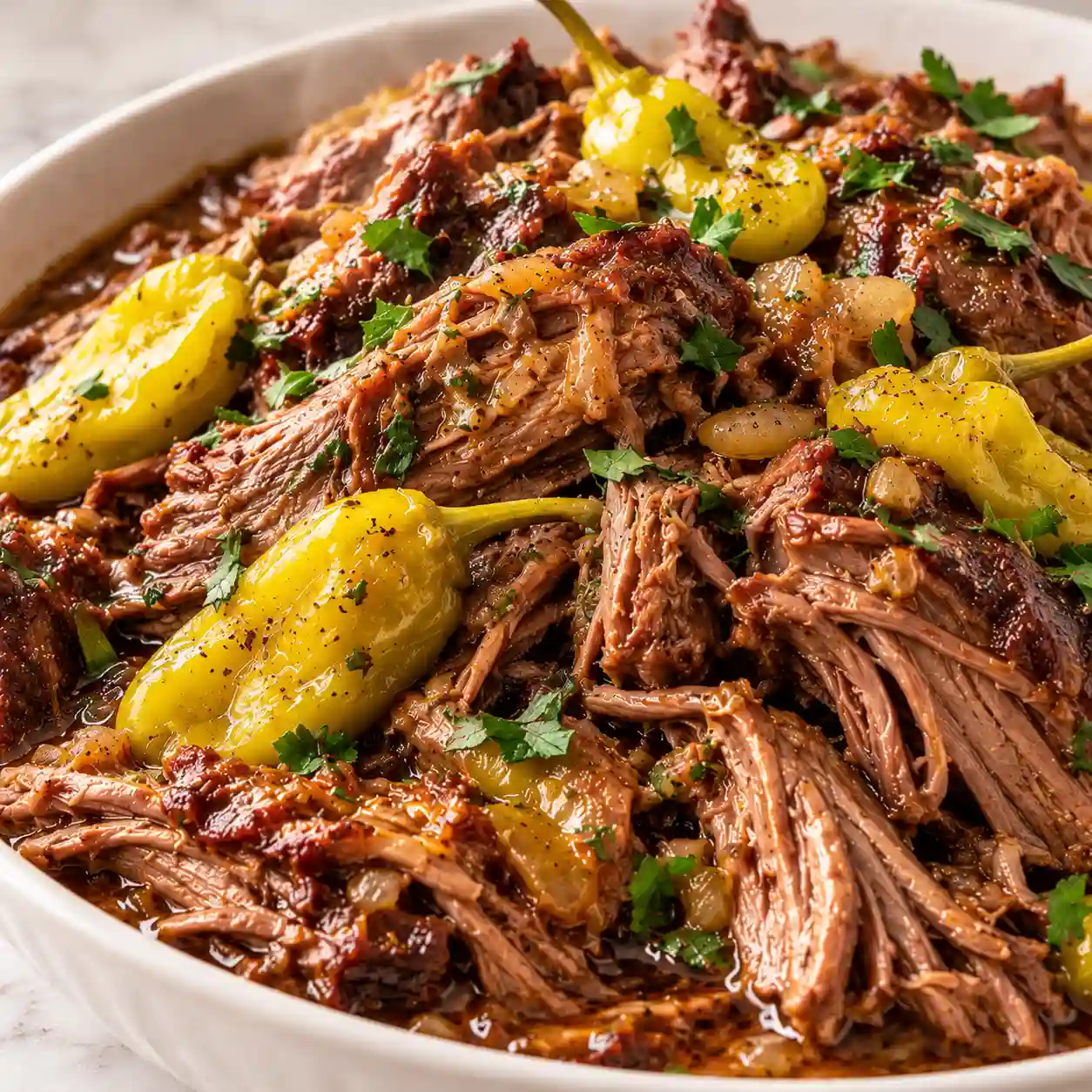
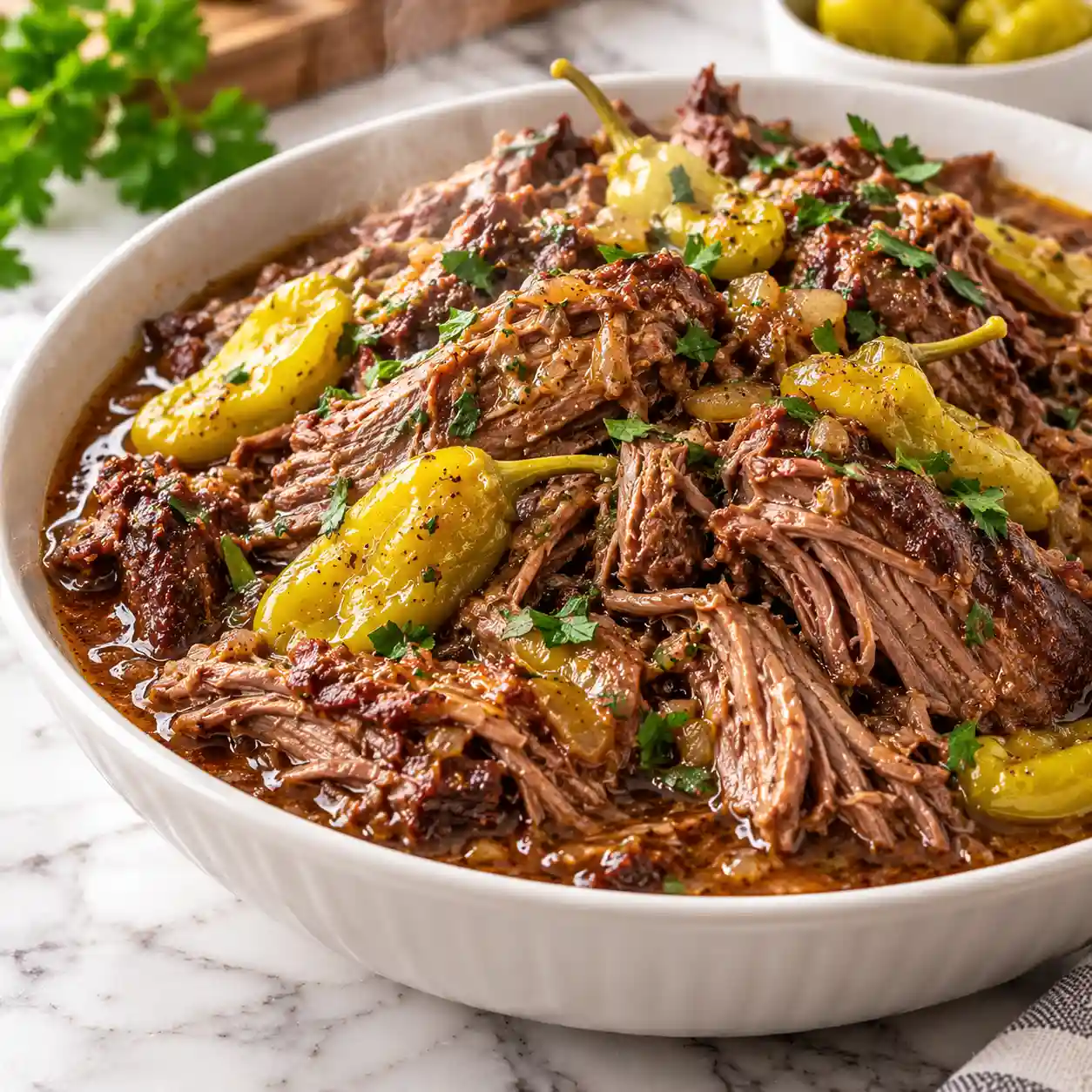
Pull the roast apart with two forks right in the pot, discarding any large pieces of fat. The strands should separate along their natural seams with almost no resistance. Stir the beef into the cooking liquid so every piece soaks up the gravy.
[AI IMAGE PROMPT: Two forks pulling apart a tender Mississippi pot roast in a white ceramic slow cooker insert, juicy beef strands falling away, dark glossy gravy, steam rising, warm kitchen light, 45 degree angle, white marble counter, whole pepperoncini visible among the shreds, fresh parsley flecks.] [IMAGE PLACEHOLDER | alt text: “Two forks shredding tender Mississippi pot roast in a white slow cooker” | filename: “mississippi-pot-roast-shredding-beef.jpg” | orientation: horizontal]
Step 6: Thicken and serve the gravy
Skim visible fat from the surface with a wide spoon. For a thicker sauce, stir in the cornstarch slurry, switch to high, and cook uncovered for 10 minutes until the gravy coats the back of a spoon. Taste and add a small pinch of salt only if it needs it.
Chef’s Note: Cornstarch thickens as it comes to a bubble, so wait for the gravy to simmer before deciding whether it needs more.
Expert Tips & Tricks
- Skip the sear if you want ease: Searing adds a little extra browning, but this recipe tastes great without it, and skipping it saves a messy pan.
- Keep the lid on: Every peek lets heat escape and can add 15 to 20 minutes to the cooking time, so resist checking until the 7 hour mark.
- Shred into the liquid: Pulling the meat apart directly in the juices helps every strand pick up gravy, which keeps the texture moist.
- A mistake I made once: I salted the roast heavily out of habit, and the finished gravy came out far too salty because of the brine. Taste first, season last.
- Make ahead: Cook the roast a day early and refrigerate it in its liquid. The flavor deepens overnight, and the fat rises to the top where you can lift it off.
- Time saving: Mix a double batch of the seasoning blend and store it in a small jar so the next roast takes five minutes to start.
Common Mistakes & Troubleshooting
| Problem | Why It Happens | How to Fix or Prevent It |
| Tough, chewy beef | The collagen has not melted yet because the center has not reached 200°F | Cover and cook another 45 to 60 minutes, checking with a thermometer |
| Gravy tastes too salty | Brine, broth, and added salt all contribute sodium. This happened to me the first time I salted generously out of habit | Use low sodium broth, skip extra salt, and serve over unsalted potatoes or rice |
| Dry, stringy roast | A lean cut was used, or the cooker ran too hot for too long | Choose a marbled chuck roast and stay on the low setting |
| Greasy gravy | Butter and rendered beef fat float on top | Skim with a wide spoon or fat separator, or chill and lift off the solid fat |
| Thin gravy | The beef released a lot of liquid as it cooked | Stir in the cornstarch slurry and simmer on high for 10 minutes |
Storage, Reheating, Freezing, Make-Ahead
Refrigerator: Keep leftovers in an airtight container with plenty of gravy for up to 4 days.
Freezer: Freeze in flat freezer bags or containers for up to 3 months. My storage tip is to freeze in 2 cup portions so you can thaw only what you need.
Reheating: Warm the beef gently in a covered saucepan over low heat with a splash of broth until it reaches 165°F and steams throughout. In a microwave, use 90 second bursts and stir between each one.
Make ahead: Cook the roast the day before, refrigerate it overnight in the liquid, lift off the hardened fat the next day, and reheat on the stove.
[AI IMAGE PROMPT: Shredded Mississippi pot roast with gravy packed in clear glass meal prep containers with white lids, labeled with date on white tape, lined up on a white marble surface, soft natural daylight, top down flat lay, tidy and glossy, ready to chill.] [IMAGE PLACEHOLDER | alt text: “Labeled glass containers of shredded Mississippi pot roast with gravy for storage” | filename: “mississippi-pot-roast-storage-containers.jpg” | orientation: horizontal]
Good to know: The gravy turns firm and jelly like in the fridge. That is the gelatin from the beef setting, and it melts back into a smooth sauce as soon as it heats up.
Variations & Substitutions
- Spicy version: Add 1/2 teaspoon red pepper flakes to the seasoning blend and a few sliced pepperoncini at the end.
- Kid friendly version: Use only 3 peppers and cut the brine to 2 tablespoons for a milder, less tangy gravy.
- Oven method: Use a covered Dutch oven at 300°F for 3.5 to 4 hours, until a fork slides in with no resistance.
- Pressure cooker method: Cook on high pressure for about 65 minutes with a 20 minute natural release, using the same ingredients.
- Add vegetables: Tuck 1 pound of baby potatoes and 3 sliced carrots around the roast for a full one pot meal.
- Gluten free version: Confirm that your broth and spices are labeled gluten free, and keep the cornstarch thickener as written.
Serving Suggestions
- Mashed potatoes: Spoon the shredded beef and gravy over [INTERNAL LINK: creamy mashed potatoes recipe] for a classic comfort plate.
- Greens on the side: A pan of [INTERNAL LINK: roasted green beans recipe] cuts through the rich gravy.
- Warm bread: Serve with [INTERNAL LINK: homemade dinner rolls recipe] to mop up every bit of sauce.
- Rice or egg noodles: Either soaks up the gravy and keeps the meal budget friendly.
- Sandwiches: Pile the beef on toasted buns with a slice of provolone for the next day’s lunch.
- Drinks: Iced tea, sparkling water with lemon, or a cold glass of lemonade pair well with the savory flavors.
Nutrition Information
Serving size: about 6 ounces of beef with gravy (1/8 of the recipe). Servings per recipe: 8.
| Nutrient | Amount |
| Calories | 520 |
| Protein | 42 g |
| Carbohydrates | 4 g |
| Fiber | 1 g |
| Sugar | 1 g |
| Fat | 37 g |
| Saturated Fat | 17 g |
| Cholesterol | 150 mg |
| Sodium | 980 mg |
Notable micronutrients: iron (about 3.6 mg), zinc (about 8 mg), and vitamin B12 (about 2.5 mcg). These numbers are estimates and shift with brands and how you measure, so treat them as a rough guide.
Why This Mississippi Pot Roast Works
Chuck roast comes from the shoulder, a muscle that works hard and is packed with collagen. Held at a gentle heat for hours, that collagen slowly converts to gelatin, which is what makes the beef feel silky instead of chewy and gives the gravy its body. Low heat matters here because high heat tightens muscle fibers before the collagen has time to soften.
The flavor balance comes from a few simple pieces. Butter carries fat soluble flavors from the herbs and spices, while the pepperoncini brine adds acidity that keeps the sauce from tasting flat or heavy. A small amount of salt in the seasoning blend lets the roast season itself, and the broth rounds out the liquid so nothing scorches.
Frequently Asked Questions
FAQ source note: These questions follow common patterns from People Also Ask style searches and recipe forum discussions. No live search was used.
Can I make Mississippi pot roast without ranch or au jus packets?
Yes, and the homemade blend in this recipe does exactly that. Parsley, dill, garlic powder, onion powder, chives, paprika, salt, and pepper cover the same flavor ground as the packets, usually with less sodium. Mix a double batch and store it in a jar so the next roast takes five minutes to start. Taste the gravy at the end, then adjust with a small pinch of salt only if needed.
Why is my Mississippi pot roast tough?
Tough beef almost always means the roast needs more time. Chuck roast stays chewy until its connective tissue breaks down, which happens around 200°F to 205°F inside. If your roast feels stiff after 8 hours, cover it again and keep cooking on low for another 45 to 60 minutes, checking with a thermometer. Slow cookers vary in heat, so trust the temperature and the fork test rather than the clock.
Can I cook Mississippi pot roast on high?
You can, though low gives better results. On high, a 3.5 pound roast needs about 5 to 6 hours, but the outer layers can tighten before the center softens. The long, gentle low setting gives the connective tissue time to melt into gravy. If you are short on time, use high and check for a 200°F center before shredding. Expect slightly drier edges than the low method.
How long does leftover Mississippi pot roast keep?
Store it in an airtight container with plenty of gravy for up to 4 days in the refrigerator, or freeze it for up to 3 months. The gravy protects the beef from drying out in storage. Thaw frozen portions overnight in the refrigerator, then warm gently in a covered saucepan with a splash of broth until steaming hot throughout. Leftovers also work well for sandwiches, tacos, and rice bowls.
Is Mississippi pot roast spicy?
Not really. Pepperoncini peppers are mild and tangy, and cooking softens their heat even further, so most of what you taste is gentle acidity that balances the rich beef. If you want to dial things down for kids, use fewer peppers and cut the brine to 2 tablespoons. If you want heat, add a pinch of red pepper flakes to the seasoning blend.
Is Mississippi pot roast dairy free or gluten free?
The only dairy is the butter, so swap it for 3 tablespoons of olive oil or a dairy free butter alternative. The recipe has no wheat, but some broths and seasoning products contain gluten, so read labels carefully. Use cornstarch for the gravy, as written, instead of flour. If anyone at your table has a serious allergy, check every package, since brands differ.
[AI IMAGE PROMPT: Plated Mississippi pot roast over creamy mashed potatoes on a round white ceramic dinner plate, glossy gravy spooned over tender beef, green beans alongside, parsley garnish, warm kitchen light, low close up angle, white marble table, a folded white linen napkin, steam rising, juicy edges.] [IMAGE PLACEHOLDER | alt text: “Plated Mississippi pot roast over mashed potatoes with gravy and green beans” | filename: “mississippi-pot-roast-final-plated-shot.jpg” | orientation: vertical, 2:3 ratio (1000x1500px)]
Conclusion
A good pot roast does not need a long ingredient list or constant attention. It needs the right cut, enough time, and a cooker with the lid left alone. This Mississippi pot roast delivers on all three, and the gravy it makes on its own is reason enough to keep a loaf of bread nearby.
The first time I made it, I nearly lifted the lid every hour, and the roast turned out best when I finally left it alone. Start it before the day gets busy, and by evening you will have a pot full of tender beef, a few pepperoncini, and dinner already finished.
If you loved this recipe, save it to your slow cooker dinner Pinterest board so you can find it easily later!
Mississippi Pot Roast
Ingredients
Method
- Instructions:
- Blend the dried herbs and spices in a small bowl. Dry the roast with paper towels, then rub it all over with salt, pepper, and the herb mixture.
- Place the beef in a 6 quart slow cooker. Top with the butter slices, arrange the pepperoncini alongside, and pour the brine and broth down the side of the insert.
- Put the lid on and cook on low for 8 hours. The meat is finished when the center reads 200°F to 205°F and it slumps under light pressure from tongs.
- Switch off the heat and keep the lid closed for 15 minutes so the juices settle back into the beef.
- Pull the roast into strands with two forks, discarding thick pieces of fat, and mix the beef back into the pot liquid.
- If you want thicker gravy, whisk the cornstarch and cold water together, stir it in, and cook on high with the lid off for 10 minutes. Taste before adding any salt.
Notes
- Leftovers keep up to 4 days in the refrigerator or 3 months in the freezer, stored in the gravy.
- Reheat gently with a splash of broth to keep the beef juicy.
- For a dairy free version, swap the butter for 3 tablespoons of olive oil.
- Taste the finished gravy before salting, since the brine and broth add sodium.