Easy French Toast: 7 Foolproof Tricks for Creamy Perfection

The first thing you notice is the sound: a hot pan sizzling, then a soft hiss as a soaked slice settles in. A minute later the whole kitchen smells warm and sweet, and the sleepy household starts wandering toward the stove asking how long until breakfast. Nobody ever needs to be called to the table twice.
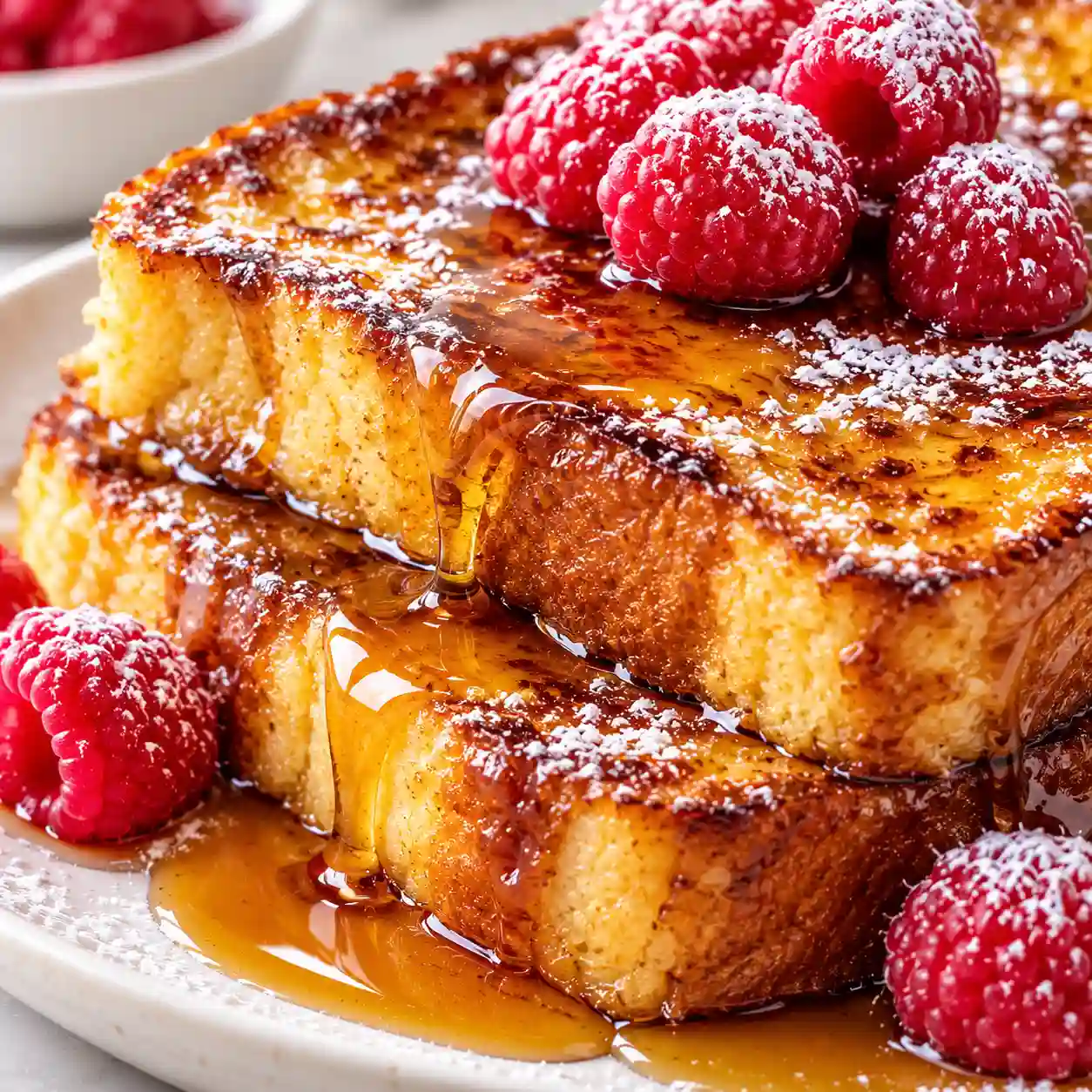
This french toast has crisp, lightly sweet edges and a soft, custardy middle that never turns soggy. It takes 25 minutes from the first egg cracked to the first bite, and all you need is a skillet and a shallow dish. The trick is a short, even soak and steady medium heat, which cooks the center through before the outside darkens. I tested this ratio with brioche, challah, and plain sandwich bread, and the method works for all three with small adjustments. Follow the steps below and a weekday breakfast will taste like a weekend brunch.
Why You’ll Love This French Toast
- Ready in 25 minutes: The custard takes two minutes to mix and each batch cooks in under ten, so you can have plates on the table before the coffee cools.
- Crisp outside, creamy inside: A touch of heavy cream in the custard gives the centers a soft, pudding like texture while the butter crisps the edges.
- Pantry friendly: You need eggs, milk, bread, butter, and a few spices you probably already own.
- Forgiving method: The soak time is short and the visual cues are clear, so even a first attempt comes out even and well cooked.
- Easy to scale: Double the custard and cook in two pans for a crowd, or cook only what you need and keep the leftover custard for the next morning.
Ingredient Selection Tips
Bread is the single biggest decision here. Look for loaves labeled brioche or challah, which have a rich, tight crumb that drinks custard without falling apart. Ask the bakery to slice it about 3/4 inch (2 cm) thick, or cut it yourself at home. Bread that is a day or two old is ideal, because slightly dry slices absorb more liquid and stay firm. Choose eggs with deep yellow yolks for better color, and buy whole milk rather than skim, since the fat helps browning and flavor.
Recipe Snapshot
| Servings | Difficulty | Course | Cuisine | Prep Time | Cook Time | Rest Time | Total Time | Calories |
| 4 (8 slices) | Easy | Breakfast | French | 10 minutes | 10 minutes | 5 minutes | 25 minutes | 520 per serving |
Ingredients
For the custard:
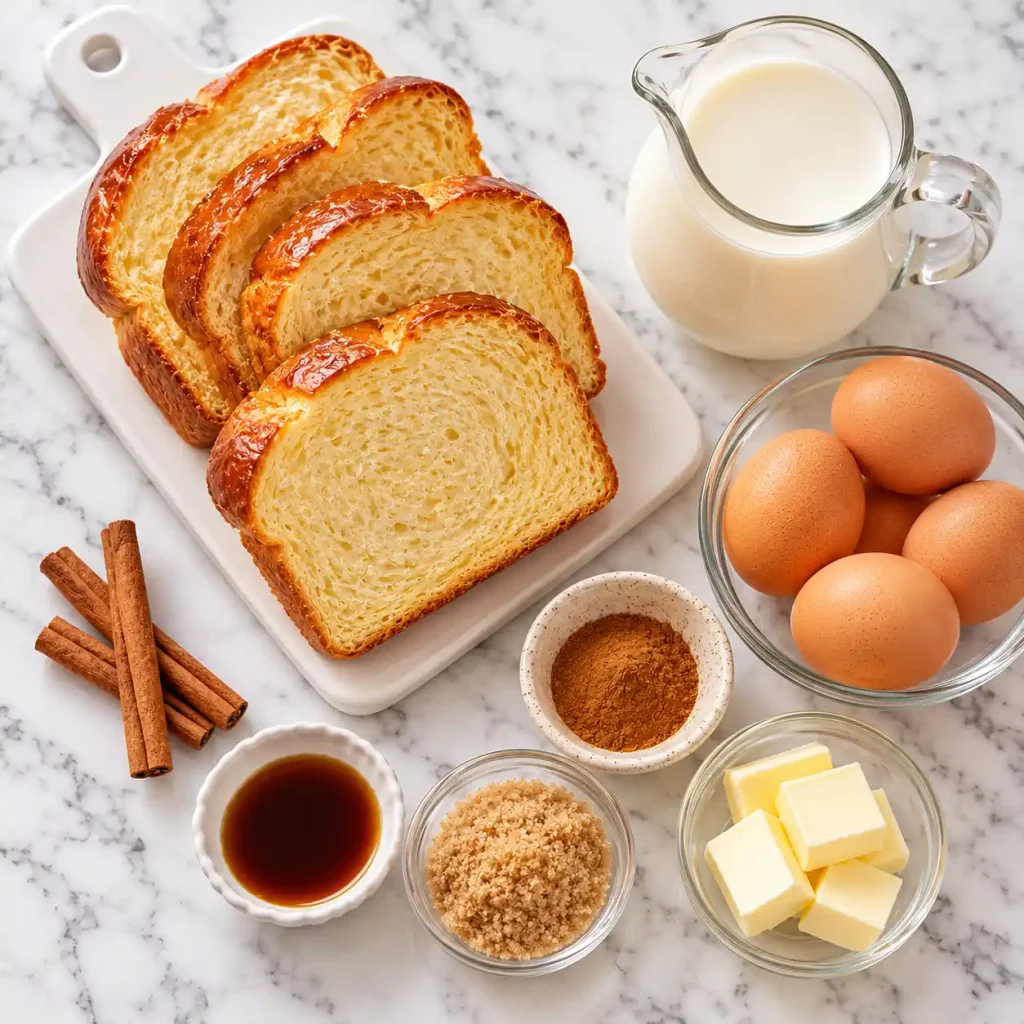
- 4 large eggs (they bind the custard and give the slices their rich, set texture)
- 1 cup (240 ml) whole milk
- 1/4 cup (60 ml) heavy cream (adds body so the center turns creamy rather than eggy)
- 2 tablespoons granulated sugar
- 2 teaspoons vanilla bean paste (gives a rounder, sweeter vanilla flavor than extract, with tiny visible specks)
- 1/2 teaspoon ground cinnamon
- 1/4 teaspoon fine salt (sharpens the sweetness)
- 1 pinch ground nutmeg
For cooking:
- 8 slices brioche or challah, about 3/4 inch (2 cm) thick, a day or two old
- 3 tablespoons unsalted butter, divided
- 1 teaspoon neutral oil (lets the butter brown without scorching)
To serve:
- Maple syrup
- Fresh berries
- Powdered sugar
Substitution notes: Half and half can replace the milk and cream together, using 1 1/4 cups in total. Thick sandwich bread works if you shorten the soak. Honey or brown sugar can stand in for the white sugar.
Recipe Timing
You will spend about 10 minutes cutting bread, mixing the custard, and heating the oven for holding the finished slices. The 5 minute rest is the soaking window, which overlaps with warming the pan, so it costs you almost nothing extra. Cooking runs about 10 minutes of active time across two batches of four slices. Count on 25 minutes total from start to table.
Allergen and Dietary Disclosure
This recipe contains eggs, dairy (milk, cream, and butter), and gluten from the bread. Brioche may also contain additional dairy.
- Eggs: See the egg free custard in the FAQ below, though the texture will be softer.
- Dairy: Use full fat oat or coconut milk and plant based butter.
- Gluten: Choose a thick sliced gluten free loaf and shorten the soak to about 10 seconds per side.
If you are cooking for someone with a severe allergy, read every package label yourself, because this recipe cannot be guaranteed safe for any specific allergy.
Equipment Needed
- Wide, shallow dish: A pie plate lets each slice lie flat so both sides soak evenly.
- 12 inch skillet: Nonstick is the easiest option, while cast iron gives deeper browning if you manage the heat.
- Wide, thin spatula: It slides under the slices without tearing the crisp crust.
- Wire rack set on a baking sheet: Holding cooked slices on a rack keeps steam from softening the underside.
- Instant read thermometer: Optional, but it removes all doubt about doneness.
Preparation
Heat the oven to 200 F (95 C) and place a wire rack on a baking sheet on the middle shelf. This is where finished slices will wait. If your bread is fresh and soft, spread the slices on a tray and dry them in a 300 F (150 C) oven for 10 minutes, then let them cool. Slice your berries, measure the syrup into a small jug, and cut the butter into two portions so everything is within reach once the pan is hot.
Step by Step French Toast Instructions
Step 1: Build the custard
Crack the eggs into the shallow dish and whisk until no streaks of white remain. Pour in the milk and cream, add the sugar, vanilla paste, cinnamon, nutmeg, and salt, and whisk again until the sugar dissolves and the liquid looks evenly pale yellow. Wash your hands and the whisk after handling raw eggs.
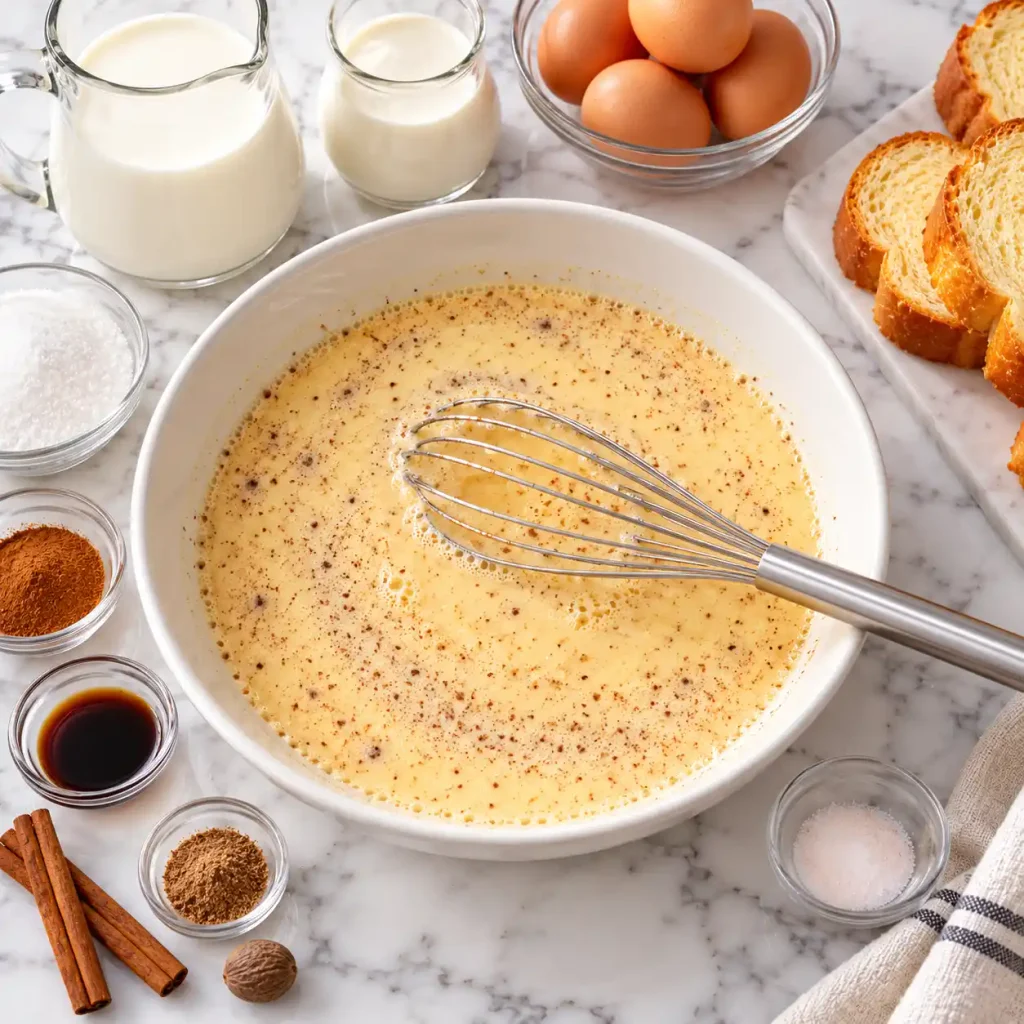
Chef’s Note: A shallow dish matters because the slices can lie flat. Deep bowls force you to dunk, which soaks the center too fast and leaves the edges dry.
Step 2: Soak the bread
Lay one slice in the custard for about 20 seconds, flip it, and give the second side another 20 seconds. The slice should feel heavy and damp but hold its shape when lifted, with no liquid streaming off the edges.
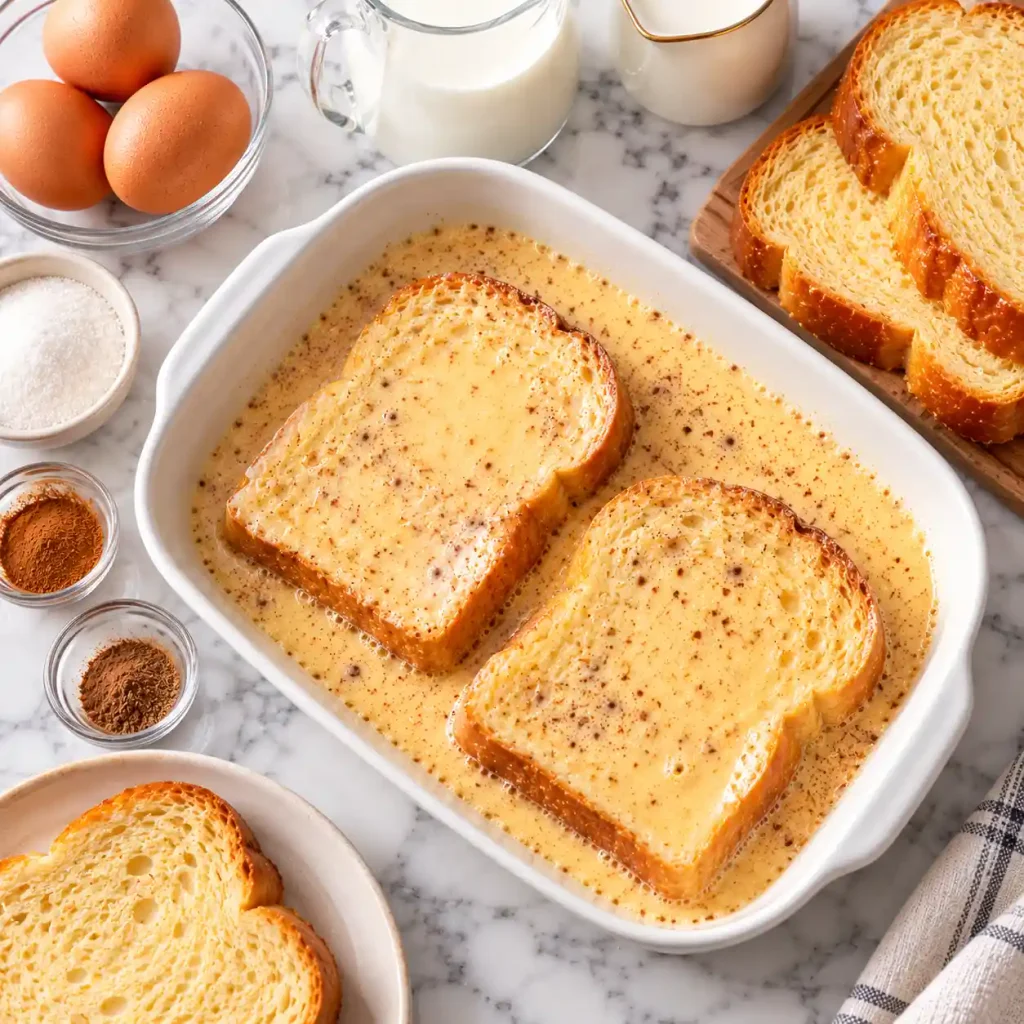
Chef’s Note: A short soak lets the custard move inward without breaking down the crumb. Longer soaking is the most common reason french toast turns gummy.
Step 3: Heat the pan
Warm the skillet over medium heat for 2 minutes. Add 1 tablespoon of butter and the oil, and wait until the foam settles and the butter smells faintly nutty. That is your signal that the pan is ready.

Step 4: Cook the first side
Lift a slice, let the extra custard drip for 3 seconds, and lay it in the pan. Fit in as many as will sit comfortably without touching, usually four slices in a large skillet. Cook for 3 to 4 minutes, until the underside is deep amber and the edges look crisp.

Step 5: Flip and finish
Turn the slices with a wide spatula and cook for another 3 minutes. Press the center lightly: it should spring back with no wet custard seeping out, and an instant read thermometer should show 160 F (71 C).

Chef’s Note: The browning comes from milk proteins and sugar reacting in the heat, so medium heat is the sweet spot. Higher heat burns the sugar before the egg in the middle has set.
Step 6: Keep batches warm
Move the finished slices to the rack in the 200 F oven. Wipe the skillet clean, add the next tablespoon of butter, and repeat Steps 3 to 5 with the remaining bread.
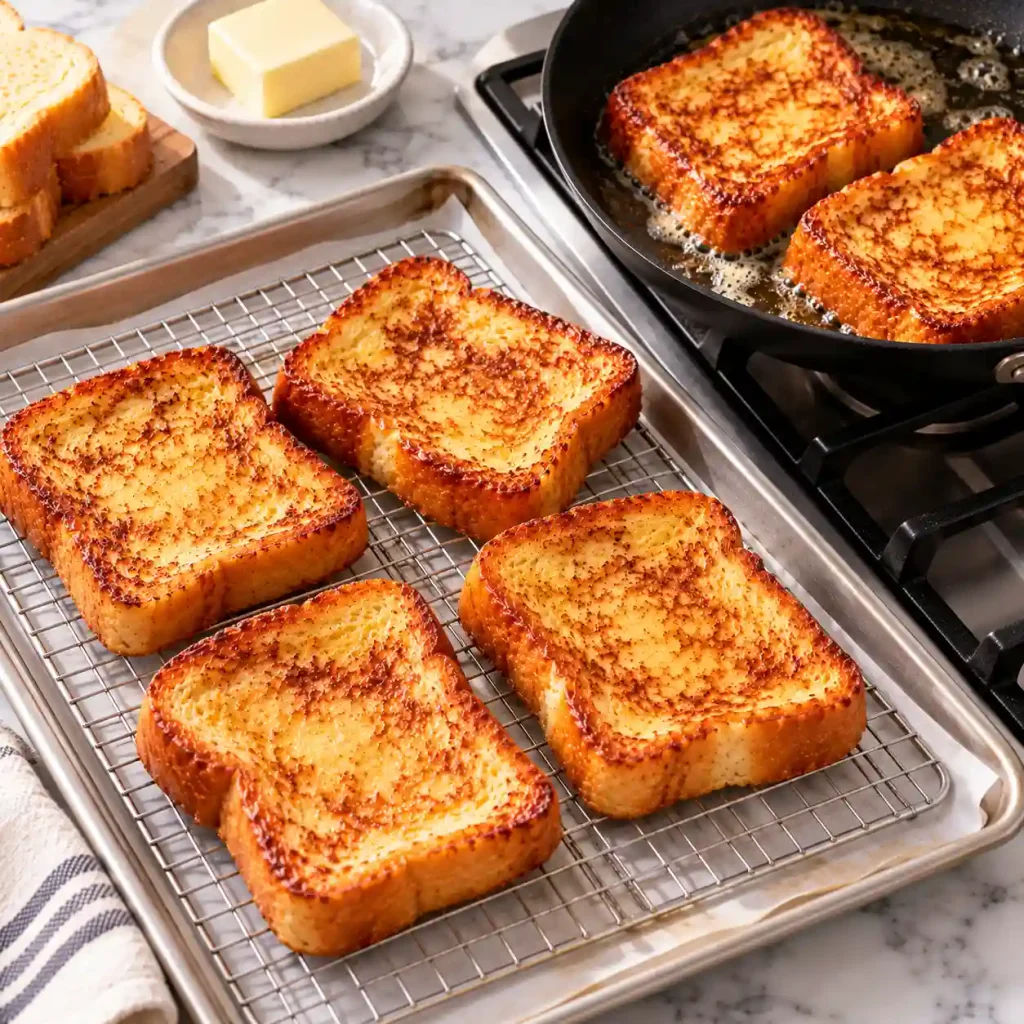
Chef’s Note: A rack lets air circulate under the slices. A flat plate traps steam and softens the crust you worked to build.
Step 7: Plate and serve
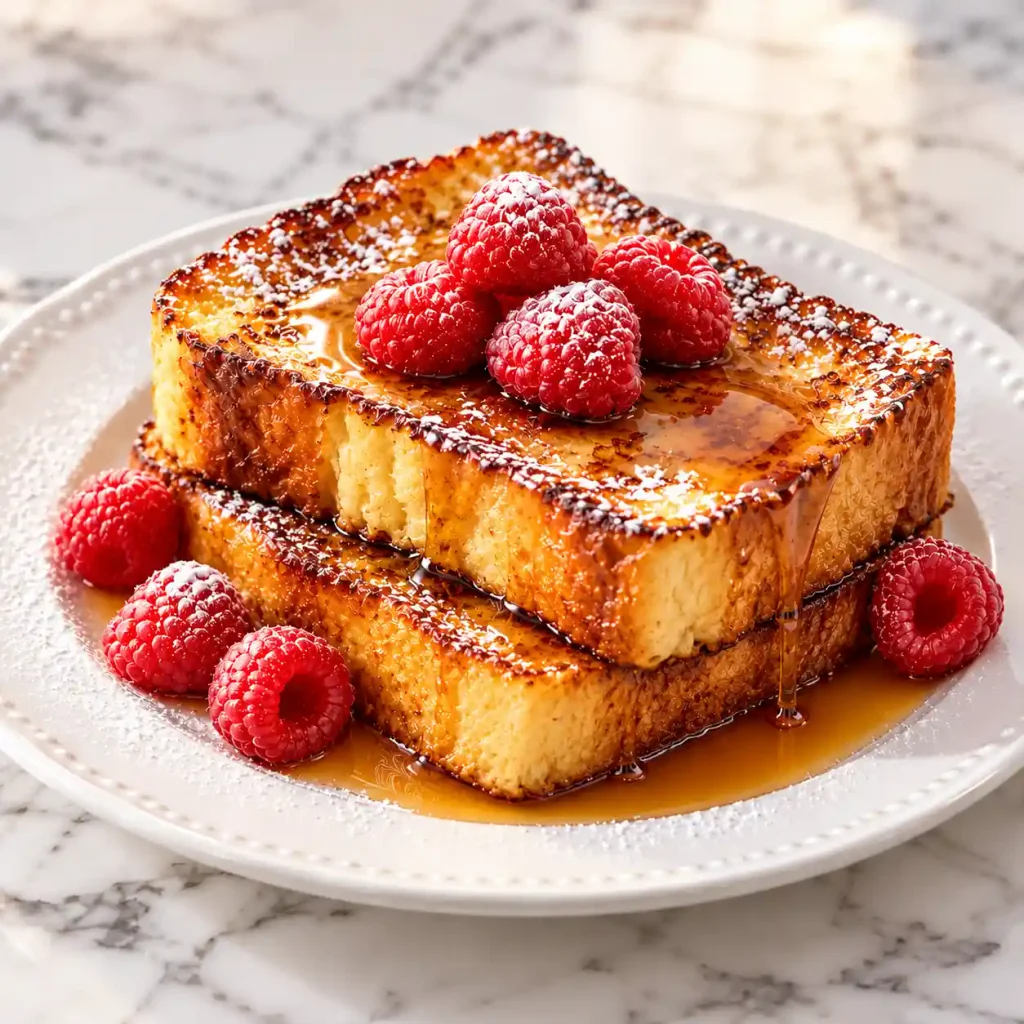
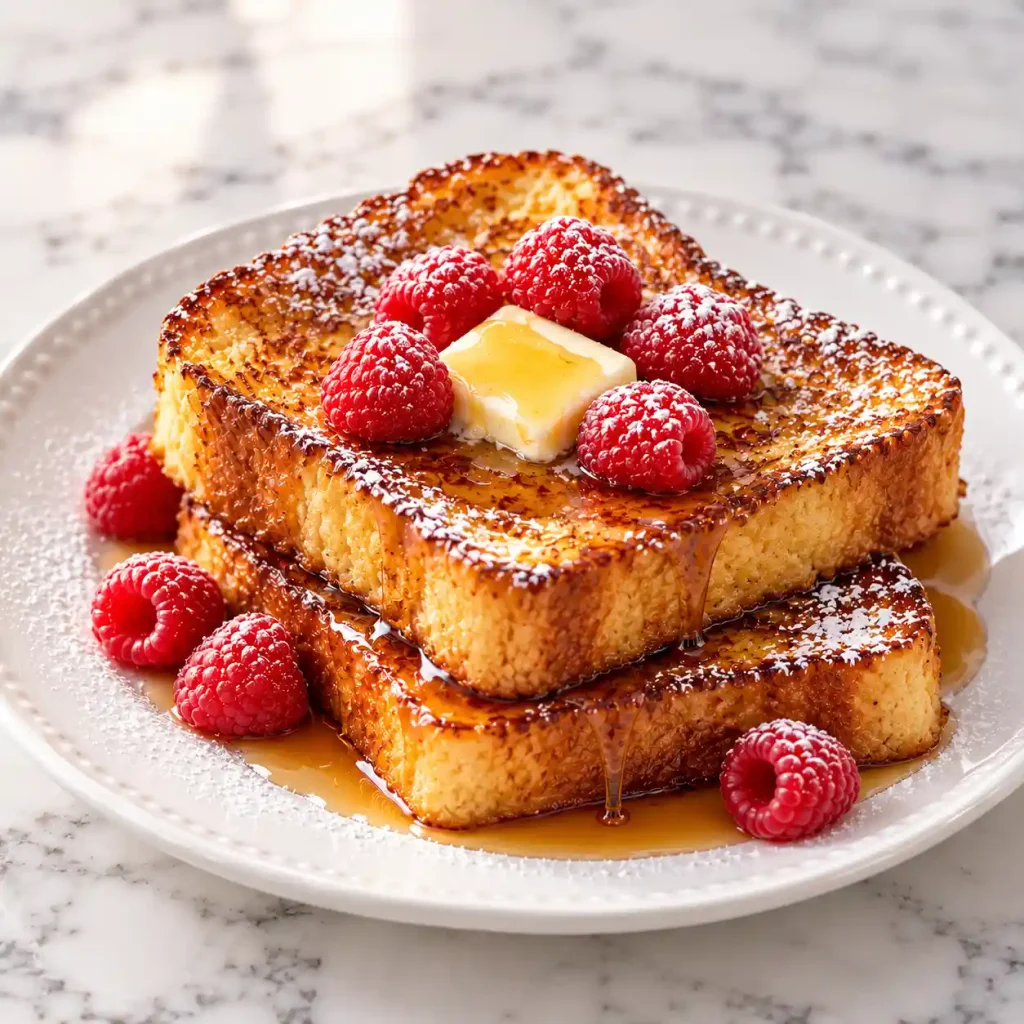
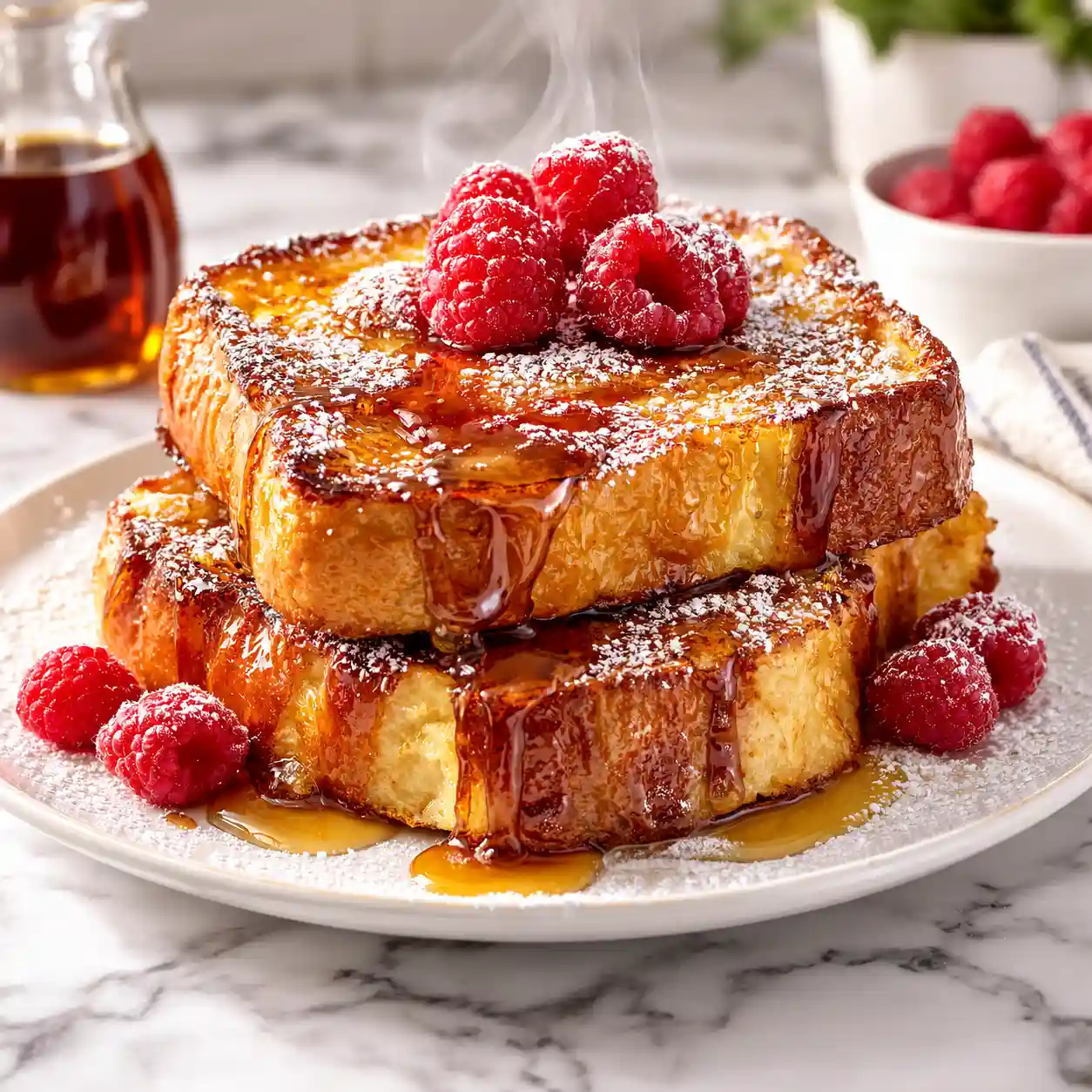
Stack two slices per plate, drop on a small pat of butter, and add syrup, berries, and a dusting of powdered sugar right before serving. Adding toppings at the last second keeps the edges crisp.
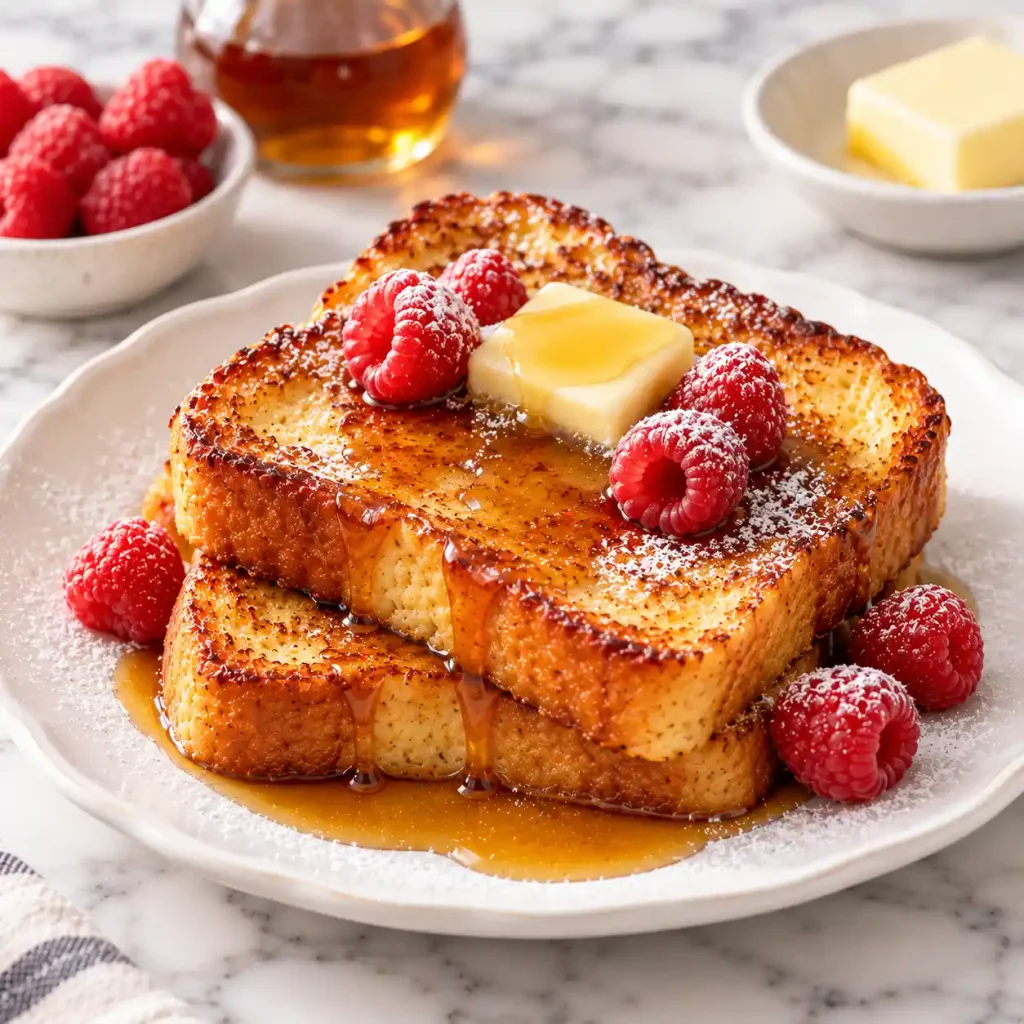
Callout: Cook one test slice before the main batch. It shows you exactly how your pan runs hot or cool, and you can adjust the heat before the other slices commit.
Expert Tips and Tricks
- Stale bread wins: Slightly dry slices absorb custard like a sponge and keep their structure. Fresh bread can be dried in a 300 F oven for 10 minutes, as in the preparation step.
- My soggy middle mistake: Early on I soaked slices for a full minute, thinking more custard meant more flavor. The centers turned wet and heavy. Twenty seconds per side fixed it permanently.
- Strain for smoothness: If your custard has stubborn white streaks, pour it through a fine mesh sieve. Cooked egg white strands on the surface look unappealing and brown unevenly.
- Butter plus oil: Butter alone burns before the second batch. A small splash of neutral oil raises the smoke point so the flavor stays buttery without bitter specks.
- Use two pans for a crowd: Run two skillets at once and the whole batch finishes in 10 minutes instead of 20.
- Make the custard ahead: Mix it the night before, cover it, and refrigerate for up to 24 hours. Whisk it again before soaking, since the cream and spices settle overnight.
- Freeze in single layers: Cool cooked slices completely, freeze them flat on a tray for one hour, then bag them. They will not stick together and can go straight into the toaster.
Common Mistakes and Troubleshooting
| Problem | Why It Happens | How to Fix or Prevent It |
| Soggy center | Fresh bread or soaking too long | Use day old bread and soak 20 seconds per side |
| Burnt outside, raw inside | Pan too hot | Lower to medium heat and cook 3 to 4 minutes per side |
| Scrambled egg bits on the crust | Custard not mixed evenly | Whisk until smooth and strain if needed |
| Slices stick to the pan | Pan not hot enough or too little fat | Wait for the butter foam to settle before adding bread |
| Bland flavor | Missing salt or too little vanilla | Keep the pinch of salt and use vanilla bean paste |
Storage, Reheating, Freezing, and Make Ahead
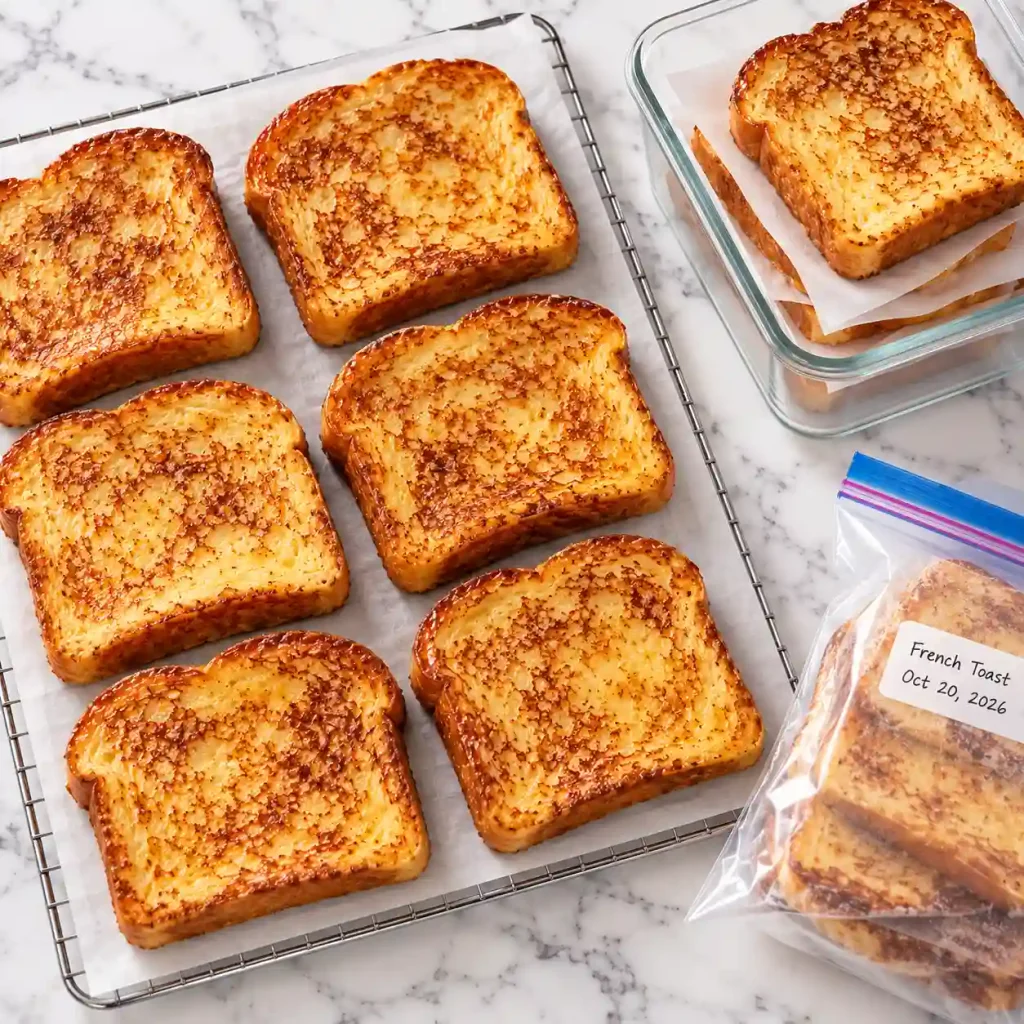
Refrigerator: Cool the slices to room temperature, then stack them with parchment between each layer in an airtight container. They keep for up to 3 days.
Freezer: Freeze the cooled slices on a tray for 1 hour, then move them to a freezer bag. They keep for up to 2 months.
Reheating: Warm refrigerated or frozen slices in a toaster or in a 350 F (175 C) oven for 8 to 10 minutes, until hot and crisp at the edges. Avoid the microwave, which makes them rubbery.
Make ahead: The raw custard keeps for 24 hours in a covered jar in the refrigerator.
My storage tip: write the date on the freezer bag with a marker. Frozen slices all look the same after three weeks.
Variations and Substitutions
- Cardamom and orange: Replace the cinnamon with 1/2 teaspoon ground cardamom and add 1 teaspoon of orange zest to the custard for a fragrant, brighter flavor.
- Cream cheese stuffed: Spread two slices with cream cheese and berry jam, press them together, and soak the sandwich briefly. Cook about 1 minute longer per side.
- Kid friendly sticks: Cut each bread slice into three fingers, soak for 10 seconds, and cook on all sides. Serve with a small cup of syrup for dipping.
- Dairy free: Swap in full fat oat milk and coconut cream, and cook in a dairy free butter.
- Gluten free: Use thick gluten free bread and shorten the soak to about 10 seconds per side.
Serving Suggestions
- Fruit: Fresh strawberries, blueberries, or sliced banana add a tart contrast to the sweet custard. [INTERNAL LINK: fresh fruit salad with honey lime dressing]
- Savory side: Crispy breakfast potatoes balance the sweetness for a more filling plate. [INTERNAL LINK: crispy breakfast potatoes recipe]
- Drinks: A pot of hot tea, or cold brew coffee on warmer days. [INTERNAL LINK: homemade cold brew coffee]
- Sauces: Warm maple syrup, honey, or a spoonful of fruit compote.
- Garnishes: Powdered sugar, a pat of butter, or a pinch of cinnamon.
- Brunch spread: Serve alongside scrambled eggs and a bowl of yogurt with granola.
Nutrition Information
Serving size: 2 slices | Servings per recipe: 4
| Nutrient | Amount |
| Calories | 520 |
| Protein | 17 g |
| Carbohydrates | 58 g |
| Fiber | 2 g |
| Sugar | 21 g |
| Fat | 25 g |
| Saturated Fat | 13 g |
| Cholesterol | 255 mg |
| Sodium | 520 mg |
Eggs also supply choline and vitamin B12, and the milk and cream contribute calcium. These numbers are estimates, and actual values will shift with your bread, brands, and how you measure.
Why This French Toast Recipe Works
The structure comes from the eggs. As the custard heats, egg proteins set between about 150 and 160 F, turning the liquid soaked into the bread into a soft, sliceable filling. That is why a thermometer reading of 160 F is a reliable doneness check, and why a short soak is enough: the custard only needs to coat the crumb, not fill it.
The crust comes from browning. Sugar and milk proteins darken when they hit a pan at medium heat, creating the deep amber color and toasty, caramel like flavor. Using butter with a little oil keeps those milk solids from burning before the center cooks through.
The bread does the rest. Slightly dry, enriched bread has a tight crumb and plenty of room to absorb liquid, so it carries the custard without collapsing. Fresh bread has already absorbed moisture from the air, which leaves less room and a gummier result.
Frequently Asked Questions
FAQ source note: These questions follow typical patterns seen in search suggestions and recipe forums for this topic. They were not pulled from a live search.
Can I make french toast ahead of time?
Yes. Cook the slices fully, cool them on a rack in a single layer, then refrigerate in an airtight container for up to 3 days or freeze for 2 months. Reheat in a toaster or a 350 F oven for 8 to 10 minutes so the edges crisp again. You can also mix the custard the night before and keep it covered in the fridge, which saves five minutes in the morning.
Why is my french toast soggy in the middle?
Soggy centers usually come from fresh, soft bread, a long soak, or a pan that is too hot. Fresh bread turns to mush as it drinks the custard, while a hot pan darkens the outside before the middle sets. Use bread that is a day old, soak each side for about 20 seconds, and cook over medium heat for 3 to 4 minutes per side until the center feels springy.
What can I use if I have no milk?
Any liquid works, with small changes in flavor. Half and half makes a richer slice, oat milk gives a mild nutty sweetness, and canned coconut milk adds a soft tropical note. Keep the total liquid near 1 1/4 cups for 4 eggs so the custard stays loose enough to soak in but thick enough to coat the bread. The easy french toast method stays the same.
How do I know french toast is cooked through?
Look for a deep amber surface, crisp edges, and a center that springs back when you press it gently with a spatula. No wet custard should seep out when you press. For total certainty, an instant read thermometer pushed into the middle of a slice should read 160 F, the temperature at which egg custard sets safely. Most thick french toast slices need 3 to 4 minutes per side.
Can I make french toast without eggs or dairy?
Yes, with some trade offs. For a dairy free batch, swap the milk and cream for full fat oat or coconut milk and cook in oil or plant butter. For an egg free version, blend 1 cup of milk (use a plant milk if you also avoid dairy) with 2 tablespoons of cornstarch and 1 tablespoon of sugar until smooth. It gives a softer, less rich result. Anyone with a severe allergy should check every label, since bread often contains milk or egg.
What is the best bread for french toast?
Brioche and challah are the best choices because their rich, tight crumb absorbs custard without collapsing. Cut slices about 3/4 inch (2 cm) thick and let them dry out for several hours or toast them lightly in a 300 F oven for 10 minutes. Regular sandwich bread works too, but it needs a shorter soak of about 10 seconds per side, or it falls apart in the dish.
Conclusion
I make this french toast most Sunday mornings, and the thing I keep coming back to is how much a few small habits matter. Slightly dry bread, a short soak, and patient medium heat are the difference between limp slices and ones that crackle when you cut into them. My own kitchen rule is to cook one test slice first, because it tells you everything about your pan’s heat.
Once you have the rhythm, you can start playing. Swap the spices, stuff the slices with cream cheese, or cut them into sticks for small hands. The base stays the same, and it holds up to nearly anything you add. Pull out a skillet this weekend and see how fast the plate empties.
If you loved this recipe, save it to your breakfast Pinterest board so you can find it easily later!
Easy French Toast
Ingredients
Method
- Instructions:
- Heat the oven to 200 F (95 C) and put a wire rack on a baking sheet inside it.
- Whisk the eggs, milk, cream, sugar, vanilla paste, cinnamon, nutmeg, and salt in a shallow dish until the mixture is smooth and evenly colored.
- Dip each bread slice for 20 seconds per side, then lift it and let the extra custard drip back into the dish.
- Melt 1 tablespoon of butter with the oil in a skillet over medium heat and wait for the foam to fade.
- Fry the slices for 3 to 4 minutes per side, until deep amber, crisp at the edges, and springy in the center (160 F inside).
- Move cooked slices to the rack in the oven, add fresh butter to the pan, and cook the remaining batches.
- Plate two slices per person with butter, syrup, berries, and powdered sugar.
Notes
- Day old bread gives the best texture. Fresh slices can be dried in a 300 F oven for 10 minutes.
- Cooked slices keep in the refrigerator for 3 days or in the freezer for 2 months. Reheat in a toaster or 350 F oven.
- Uncooked custard can be mixed up to 24 hours ahead. Whisk again before using.
- Half and half can replace the milk and cream, using 1 1/4 cups total.