Perfect Pancake Recipe: 7 Simple Ingredients, 20 Minutes

Pull the first pancake off the pan and you can tell almost everything from the edges. A thin, lacy ring and a center that bounces back under your finger means the whole stack is going to be tender. A pale, rubbery disc means something went wrong in the bowl, not on the stove. For years my Saturday batches landed somewhere in between, thick in the middle and chewy at the edges, until I stopped chasing fancy tricks and fixed the basics.
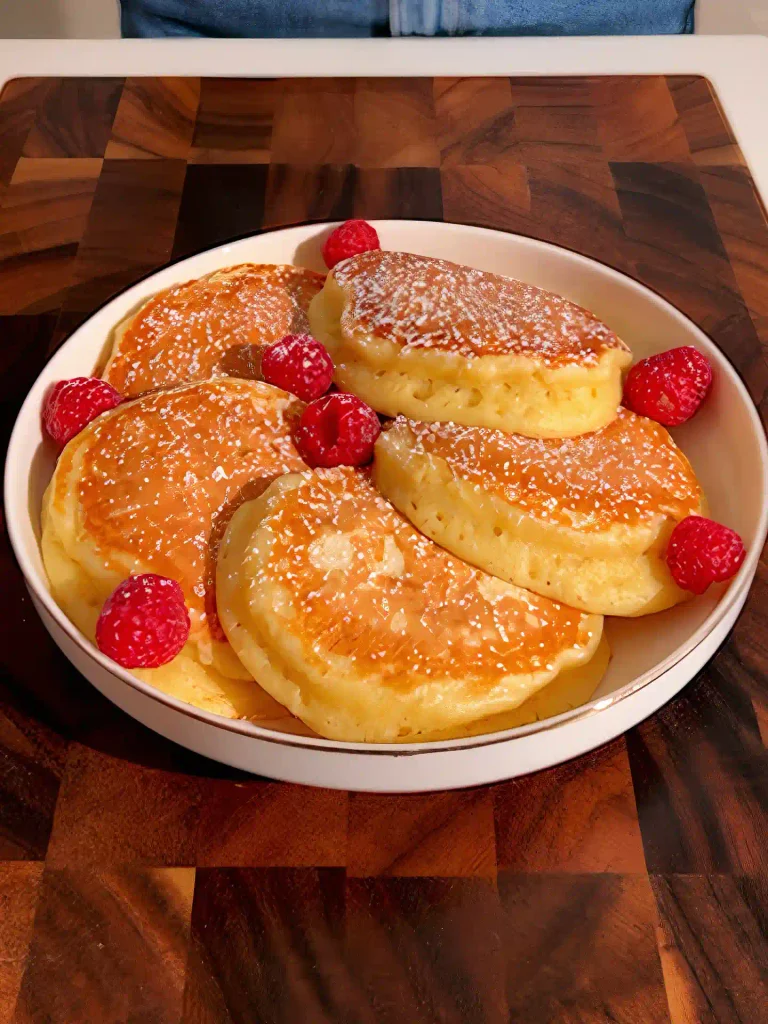
This pancake recipe uses seven pantry staples, one bowl, and about 20 minutes from first whisk to first bite. The batter gets a short rest, the pan gets steady medium heat, and the stirring stays gentle. That is the whole method. You end up with pancakes that stay soft inside with browned, slightly crisp edges, and they work on the first attempt even if you have never made them before.
Why You’ll Love This Pancake Recipe
- Seven pantry staples: Everything comes from an ordinary kitchen, so there is no special shopping trip before breakfast.
- One bowl, one pan: Cleanup comes down to a whisk, a bowl, a jug, and a skillet.
- Fluffy but sturdy: A short rest and a gentle stir give you thick pancakes that still hold syrup without collapsing.
- Ready in 20 minutes: That total includes the batter rest, so it fits a weekday morning.
- Freezer friendly: Leftover pancakes go from frozen to hot in a toaster in about 2 minutes.
Ingredient Selection Tips
A reliable pancake recipe depends on a few small choices at the store. Check the date on your baking powder, because it loses strength over time, usually within six to twelve months of opening. Drop half a teaspoon into hot water, and if it fizzes hard, it is still good. Buy plain all purpose flour rather than self rising, since self rising flour already contains leavening and salt. Whole milk gives the softest crumb, though 2 percent works. Unsalted butter lets you control the salt, and real maple syrup for serving makes a noticeable difference.
Recipe Snapshot
| Servings | Difficulty | Course | Cuisine | Prep Time | Cook Time | Rest Time | Total Time | Calories |
| 4 (8 pancakes) | Easy | Breakfast | American | 5 minutes | 10 minutes | 5 minutes | 20 minutes | 340 per serving |
Ingredients
For the batter:
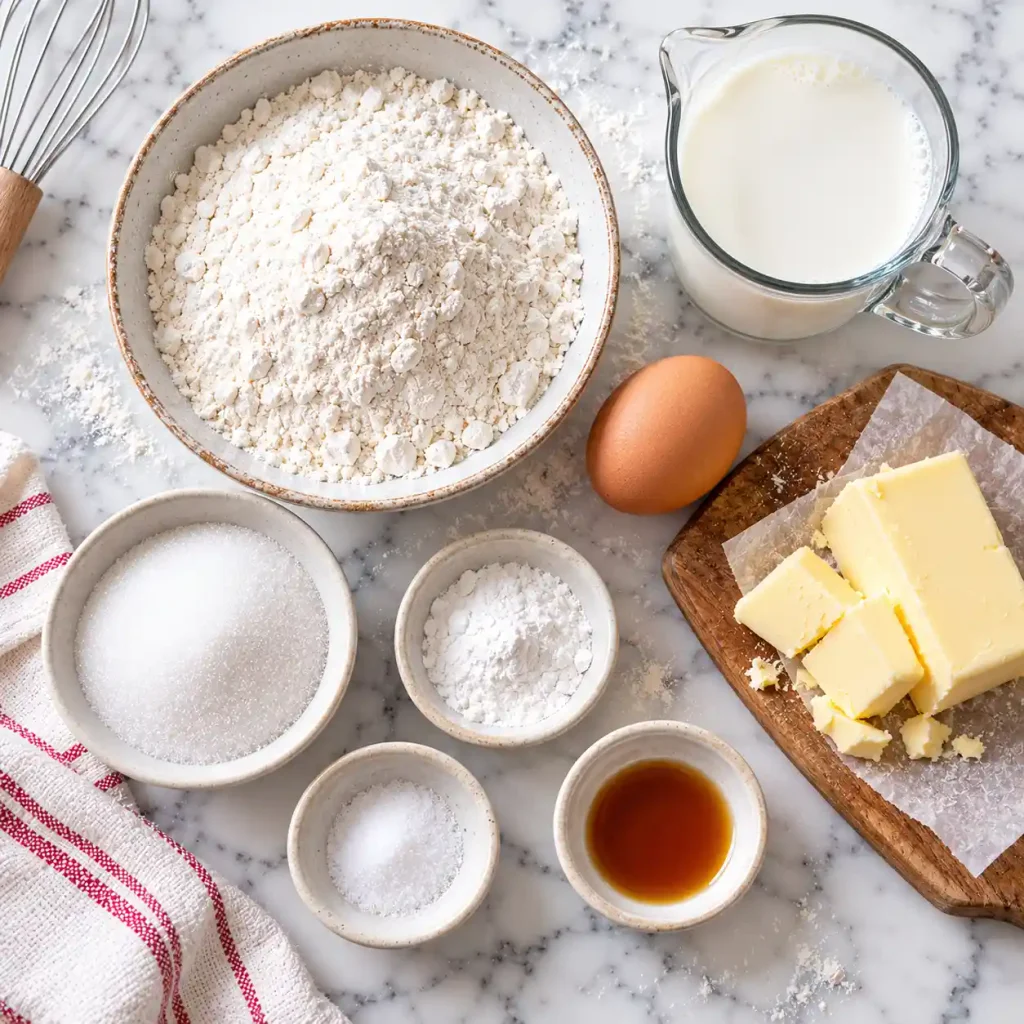
- 1 1/2 cups (190 g) all purpose flour. This gives enough protein for structure without turning chewy.
- 2 tablespoons (25 g) granulated sugar. It adds light sweetness and helps the surface color.
- 2 1/2 teaspoons baking powder. This is the lift, and this amount gives pancakes about 1/2 inch thick.
- 1/2 teaspoon fine salt. It sharpens the flavor so the pancakes do not taste flat.
- 1 1/4 cups (300 ml) whole milk, cool room temperature. Cold milk can make melted butter seize into specks.
- 1 large egg. It binds the batter and adds richness and structure.
- 3 tablespoons (42 g) unsalted butter, melted and slightly cooled. It tenderizes the crumb and adds flavor.
For the pan:
- 1 to 2 teaspoons extra unsalted butter. A thin film browns the surface evenly without frying it.
Substitution notes: Only have salted butter? Use it and cut the salt in the batter to 1/4 teaspoon. Out of whole milk? Two percent works, and you can stir in an extra teaspoon of melted butter to make up the richness.
Kitchen Tip: Spoon the flour into the cup and level it with a knife, or weigh out 190 g. Scooping straight from the bag can pack in up to 30 percent extra flour, which is the quiet reason many pancakes turn out dense.
Recipe Timing
From the first whisk to the last pancake on the plate takes about 20 minutes. Prep is quick because there is nothing to chop, only measuring and melting. The batter rests for 5 minutes while your pan heats, so that wait costs you nothing extra. Cooking takes around 10 minutes in three rounds on a wide skillet. If you use two pans or a griddle, you can finish even sooner.
Allergen & Dietary Disclosure
This pancake recipe contains wheat (gluten), milk, and eggs. Here are realistic swaps for each:
- Gluten: Use a 1 to 1 gluten free baking flour blend and let the batter rest a full 5 minutes.
- Dairy: Use unsweetened oat or soy milk and swap the butter for dairy free butter or a neutral oil.
- Egg: Use 1/4 cup (60 g) unsweetened applesauce in place of the egg. The pancakes will be a bit softer.
These swaps change the texture slightly, and this recipe is not guaranteed safe for any specific allergy. If you or a guest has a severe allergy, read every ingredient label and check with a medical professional first.
Equipment Needed
- Wide nonstick skillet or electric griddle (about 12 inches): It fits three pancakes at once and releases them without tearing.
- 1/4 cup scoop or ice cream scoop: Equal portions mean every pancake finishes at the same time.
- Thin flexible spatula: It slides under the delicate rim without squashing the top.
- Pouring jug: Mixing the wet ingredients here gives a clean pour and stops butter streaks.
- Kitchen scale: Weighing the flour is the easiest way to get consistent texture.
- Wire rack set on a baking sheet: It keeps finished pancakes crisp at the edges in the warm oven instead of steaming them.
Preparation
- Melt the butter in the microwave in 20 second bursts, about 40 seconds total, and let it stand while you measure the rest.
- Warm the oven to 200°F (95°C) and slide in a baking sheet topped with a wire rack.
- If your milk is straight from the fridge, microwave it for 15 seconds so it takes the chill off.
- Put the skillet, scoop, spatula, jug, and bowl within reach of the stove.
Step by Step Instructions
Step 1: Mix the dry base
Whisk the flour, sugar, baking powder, and salt together in a roomy bowl for about 15 seconds. The mixture should look uniform, with no visible streaks of white baking powder.
Step 2: Blend the wet mixture
Beat the milk and egg in a pouring jug until the yolk disappears into the milk. Slowly stream in the cooled butter while whisking, until no oily flecks float on top. Wash your hands after handling the raw egg.
Chef’s Note: Butter that is too hot can start to cook the egg, and butter that is too cold clumps into bits. Warm to the touch is the target.
Step 3: Fold the batter together
Pour the wet mixture over the dry and stir with a spatula using 10 to 12 strokes. Stop when the dry flour streaks are gone, even if small pea sized lumps remain. The batter should be thick enough to fall from the spatula in a slow ribbon.
Chef’s Note: Stirring develops gluten, and more gluten means chewier pancakes. Those leftover lumps are your friend.
[AI IMAGE PROMPT: Pale yellow pancake batter thick enough to fall from a whisk in a slow ribbon, a few small lumps visible, sitting in a white ceramic mixing bowl on dark wood, warm kitchen light from the side, flour dusted rim, 45 degree angle, melted butter jug in the background.]
[IMAGE PLACEHOLDER: alt text: “Thick pancake batter falling from a whisk in a ribbon inside a white mixing bowl” | filename: “pancake_batter_ribbon_stage.jpg” | orientation: horizontal]
Step 4: Rest the batter
Leave the bowl untouched for 5 minutes, until small bubbles dot the surface and the batter thickens slightly. While it rests, heat a wide nonstick skillet over medium heat for about 3 minutes. A few drops of water flicked onto the pan should skitter and vanish within 2 seconds.
Chef’s Note: The rest lets the flour absorb liquid and gives the baking powder a head start, which is why rested batter cooks up taller.
Step 5: Grease and pour
Swirl about 1/2 teaspoon of butter across the pan until it foams. Pour 1/4 cup (60 ml) of batter for each pancake, leaving about 2 inches between them. Each pour should spread into a round roughly 4 inches wide.
Step 6: Flip once
Cook the first side for about 2 minutes, until bubbles break across the surface and leave holes that stay open, and the rim looks matte instead of shiny. Slide a thin spatula underneath and flip in one confident motion. Cook the second side for 1 1/2 minutes, until the underside is the color of toasted bread and the center springs back when pressed lightly.
Chef’s Note: Flip only once, and never press down with the spatula. Pressing squeezes out the air bubbles that make the pancake fluffy.
[AI IMAGE PROMPT: Three pancakes cooking in a black nonstick skillet, bubbles opening across the pale surfaces, undersides turning toasted tan, a thin spatula lifting one edge, butter sheen on the pan, dark wood counter, warm side light, 45 degree angle, steam rising.]
[IMAGE PLACEHOLDER: alt text: “Three pancakes with open bubbles cooking in a nonstick skillet as a spatula lifts one edge” | filename: “pancakes_cooking_in_skillet.jpg” | orientation: horizontal]
Step 7: Hold and repeat
Move finished pancakes to the rack in the 200°F (95°C) oven, in a single layer. Wipe the pan, add a little fresh butter, and repeat with the rest of the batter. Tear one open to check: the middle should look set and fluffy, never wet or gummy.
Expert Tips & Tricks
- Technique, steady heat: Medium heat gives even browning. If the first side colors in under 90 seconds, lower the dial slightly and wait a minute before pouring more batter.
- Texture, keep the lumps: Small lumps soften as the batter rests and disappear as it cooks. A perfectly smooth batter usually means too much stirring and chewy pancakes.
- A mistake I made: For a long time I pressed each pancake flat after flipping, thinking it would cook faster. It only squeezed out the air and gave me thin, tough discs, so now the spatula only lifts and flips.
- Make ahead: Whisk the dry ingredients into a jar and keep it in the pantry for up to two weeks. On the day, you only need to mix the milk, egg, and butter and combine.
- Storage: Let pancakes sit on a rack for about 10 minutes before stacking them for storage. Trapped steam otherwise makes the surfaces gummy.
- Time saving: Use two pans, or an electric griddle set to 350°F (175°C), to cut cook time nearly in half. Pour all the pancakes first so they finish together.
Kitchen Note: Butter burns quickly. If you see dark specks or smell sharp smoke, wipe the pan with a paper towel and lower the heat. Burnt butter flecks stick to every pancake that follows.
Common Mistakes & Troubleshooting
| Problem | Why It Happens | How to Fix or Prevent It |
| Flat, dense pancakes | Overmixed batter, weak baking powder, or too much flour | Stir only until dry streaks vanish, test the baking powder in hot water, and weigh the flour at 190 g |
| Raw center with a dark outside | The pan is too hot | Lower the heat to medium and cook the first side a full 2 minutes before flipping |
| Pale pancakes with no color | The pan is too cool or has too much butter | Raise the heat slightly and wipe away extra butter between rounds |
| Rubbery texture | Heavy stirring or packed flour | Fold with 10 to 12 strokes and spoon the flour lightly into the cup |
| Thin, spreading pancakes | Butter added too hot or too much milk | Cool the butter first, measure the milk exactly, and add 1 tablespoon of flour if needed |
| Dark, spotty tops | Butter burned in the pan | Wipe the pan before each round and use only 1/2 teaspoon of butter |
The last one comes from my own kitchen. I used to drop a big pat of butter in between rounds, and the pancakes came out freckled and bitter.
Storage, Reheating, Freezing, Make Ahead
Refrigerator
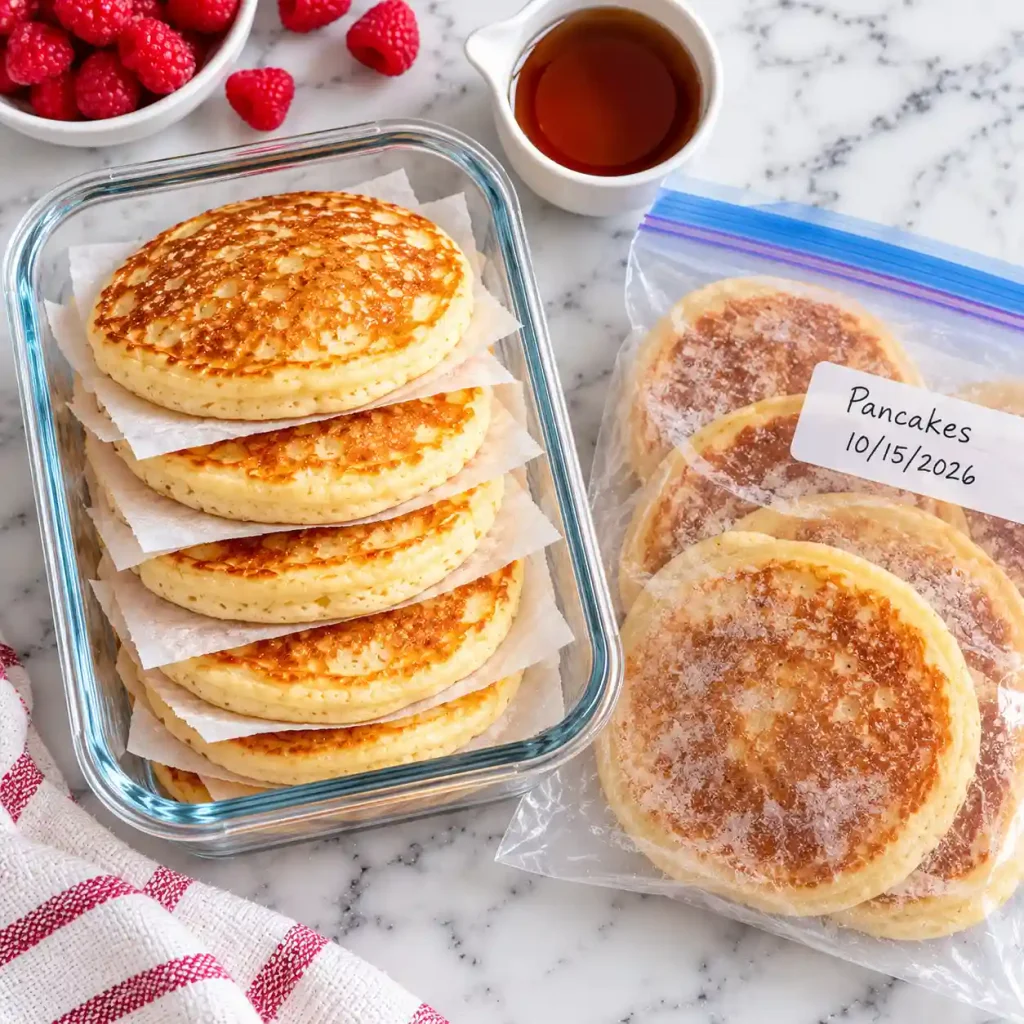
Cool the pancakes on a rack, then stack them with squares of parchment between each one in an airtight container. They keep for up to 3 days.
Freezer
Freeze the pancakes in a single layer on a baking sheet for 1 hour, then move them to a freezer bag with the air pressed out. They keep for up to 2 months.
Reheating
Toast frozen or chilled pancakes for about 2 minutes, or warm two at a time in a skillet over low heat for 1 minute per side. In the microwave, cover them with a damp paper towel and heat for 20 to 30 seconds. The toaster gives the best edges.
Make Ahead
Keep a jar of the dry mix in the pantry for up to two weeks. You can also mix the milk, egg, and butter and refrigerate it in a covered jug for up to 12 hours.
My storage tip: slide a square of parchment between every pancake before freezing so you can pull out exactly the number you need.
Variations & Substitutions
- Blueberry: Scatter 3/4 cup (110 g) berries over the pancakes right after pouring, so they do not bleed into the batter.
- Chocolate chip: Sprinkle 1/3 cup (60 g) of chips over each pancake after pouring, using the same method as the berries.
- Buttermilk: Swap the milk for 1 1/4 cups (300 ml) of buttermilk, lower the baking powder to 1 teaspoon, and add 1/2 teaspoon of baking soda for a tangier, taller pancake.
- Whole wheat: Replace half of the flour with whole wheat flour and add 2 tablespoons of extra milk, since whole wheat absorbs more liquid.
- Mini, kid friendly: Pour 2 tablespoons of batter per pancake and cook about 1 minute per side for bite sized pancakes that are easy for small hands.
- Cinnamon vanilla: Stir 1/2 teaspoon of cinnamon into the dry mix and 1 teaspoon of vanilla extract into the wet mix for a bakery style flavor.
Serving Suggestions
- Classic toppings: A pat of butter and a generous pour of maple syrup never fails.
- Fresh fruit: Sliced strawberries, bananas, or a spoonful of warm berry compote add a juicy contrast. [INTERNAL LINK: easy berry compote recipe]
- Egg side: A scoop of soft scrambled eggs balances the sweetness with something savory. [INTERNAL LINK: soft scrambled eggs recipe]
- Dips and spreads: Peanut butter, or Greek yogurt stirred with a little honey, turns the pancakes into a protein rich plate.
- Drinks: Hot chai, cold milk, or fresh orange juice all pair well.
- Brunch spread: Add a bowl of fruit salad and yogurt to feed a crowd with almost no extra work. [INTERNAL LINK: fresh fruit salad for brunch]
Nutrition Information
Serving size: 2 pancakes (about 4 inches each). Servings per recipe: 4.
| Nutrient | Amount |
| Calories | 340 |
| Protein | 9 g |
| Carbohydrates | 46 g |
| Fiber | 1 g |
| Sugar | 10 g |
| Fat | 13 g |
| Saturated Fat | 7 g |
| Cholesterol | 78 mg |
| Sodium | 620 mg |
Notable micronutrients per serving: calcium (about 130 mg), iron (about 2 mg), and vitamin B12 (about 0.4 mcg). These values are estimates and will shift depending on the brands you buy and how you measure.
Why This Recipe Works
Pancakes rise through two jobs happening at different moments. Baking powder releases a first burst of gas when it meets wet batter, then a second burst once heat hits the pan. The short rest lets that first burst start, and the hot skillet delivers the second, so you get height without whipping egg whites.
Gluten forms when flour proteins meet liquid and get stirred. A light hand keeps it weak, which keeps the crumb tender. Melted butter coats some of the flour proteins, which limits gluten further, and the rest period lets the starch soak up liquid so the batter thickens without extra stirring.
Browning comes from the Maillard reaction, a chemical change between proteins and sugars that picks up above roughly 300°F (150°C). The small amount of sugar and the natural sugar in milk feed it, and medium heat gives the surface time to color before the center sets. That is why a pancake recipe with a patient pan beats one with a screaming hot pan.
Frequently Asked Questions
FAQ Source Note: These questions follow typical question patterns that home cooks ask about pancake batter on search engines and cooking forums. No live search was used for this section.
Can I make pancake batter ahead of time?
Yes, but only partly. Whisk the dry ingredients and keep them in a jar for up to two weeks, and keep the milk, egg, and butter mixed in a covered jug in the fridge for up to 12 hours. Combine them right before cooking. Once wet and dry meet, the baking powder starts working, and batter left overnight makes flatter, denser pancakes with less rise.
Why are my pancakes flat and dense?
The usual causes are overmixed batter, old baking powder, or too much flour. Stir only until the dry streaks vanish, test your baking powder in hot water, and weigh the flour at 190 g instead of scooping. If you follow this pancake recipe closely and the pancakes still turn out thin, check your milk quantity, since an extra splash spreads the batter before it can rise.
Can I use plant milk or water instead of dairy milk?
Unsweetened oat or soy milk swaps in one to one and gives a similar texture. Water works too, though the pancakes taste plainer and brown a little less, so add an extra tablespoon of melted butter or oil to make up for the lost richness. Almond milk is thinner, so hold back about 2 tablespoons of it and add more only if the batter feels too stiff.
How do I know when to flip a pancake?
Watch the surface, not the clock. Flip when bubbles have popped across the top and the holes stay open instead of filling back in, and when the outer rim looks dry and matte. That usually takes about 2 minutes on medium heat. A pancake that releases easily from the pan is ready. If you flip earlier, the batter will run and tear. The second side needs less time, around 1 1/2 minutes.
Can I make this pancake recipe egg free, dairy free, or gluten free?
Yes. For eggs, use 1/4 cup (60 g) unsweetened applesauce. For dairy, use oat milk and dairy free butter or a neutral oil. For gluten, use a 1 to 1 gluten free baking blend. Texture changes slightly with each swap, and anyone with a severe allergy should check every label first, since cross contact is easy to miss.
Why does the first pancake always turn out worse?
The pan is usually not at a steady temperature yet, and the butter layer is too thick or too thin. Treat the first pancake as a test. If it browns in under 90 seconds, lower the heat slightly. If it stays pale after 2 minutes, raise it. Once the pan settles, every pancake after that follows the same pattern, and this pancake recipe gives consistent results from the second one onward.
[AI IMAGE PROMPT: Two plates of pancake stacks with blueberries, sliced strawberries and a drizzle of maple syrup, glossy butter melting at the center, golden edges, white plates on a dark wooden table, mugs of chai nearby, soft window light from the side, 45 degree angle.]
[IMAGE PLACEHOLDER: alt text: “Two plates of fluffy pancakes with berries and syrup next to mugs of chai on a dark wooden table” | filename: “pancake_recipe_final_plated_shot.jpg” | orientation: vertical, 2:3 (1000x1500px)]
Conclusion
I made this pancake recipe at least a dozen times before I stopped fiddling with it. The one change that mattered was patience: five minutes of rest, a pan on steady medium heat, and a spatula left alone after the flip. Everything else is small stuff.
Make a double batch next weekend and freeze half. On a busy weekday, two frozen pancakes from the toaster take about two minutes and taste close to fresh. That small convenience is why this recipe stays in my rotation long after the novelty of a big weekend breakfast wears off. Start with the basic version here, then try the blueberry or chocolate chip versions once the base feels easy.
If you loved this recipe, save it to your breakfast Pinterest board so you can find it easily later!
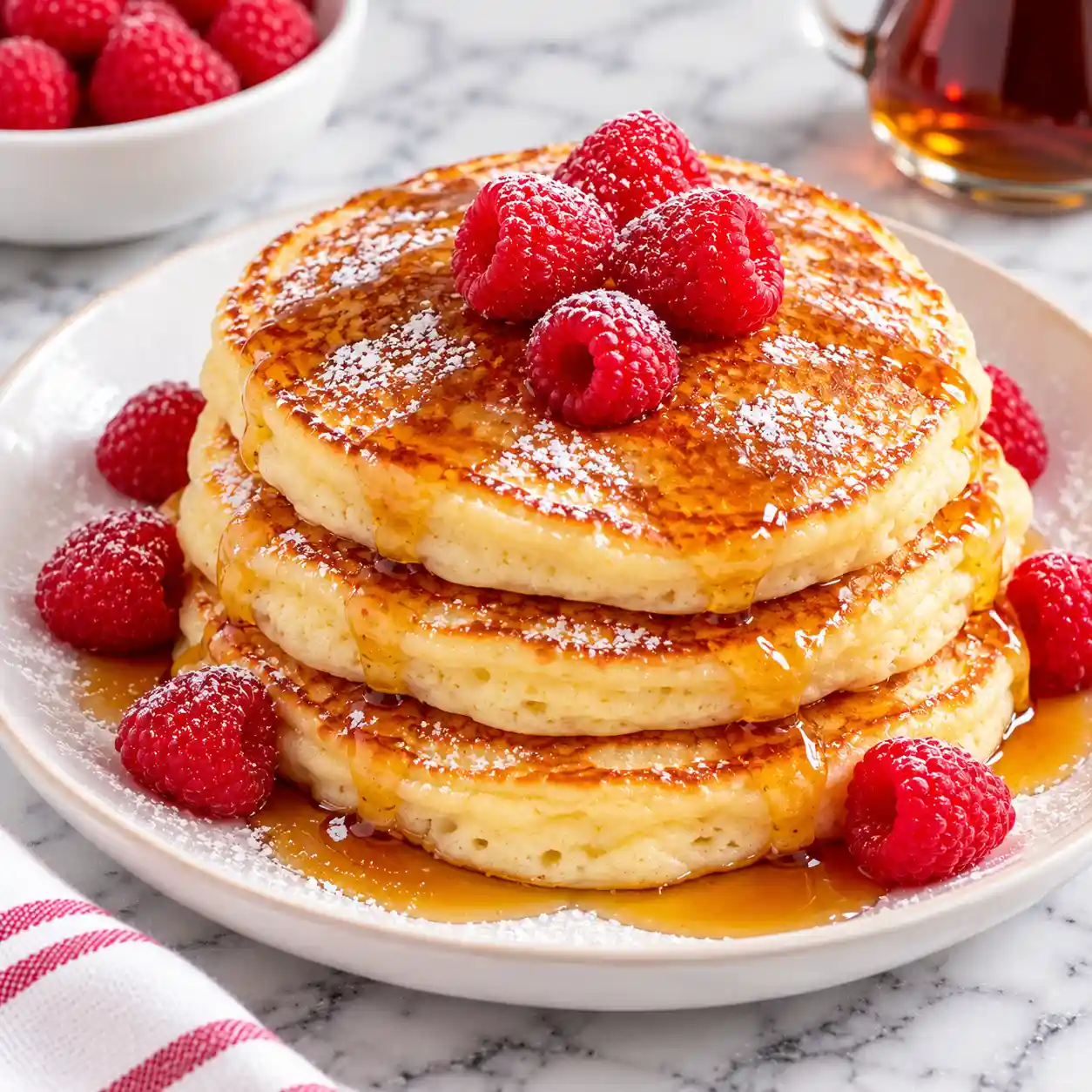
Fluffy Pancake Recipe
Ingredients
Method
- Instructions:
- Stir the flour, sugar, baking powder, and salt in a bowl until evenly combined.
- In a jug, beat the milk with the egg, then whisk in the cooled melted butter until smooth.
- Pour the liquid onto the dry mix and stir with about 10 strokes. Leave small lumps in place.
- Rest the batter for 5 minutes while a nonstick pan warms over medium heat. Water droplets should sizzle away fast.
- Rub a little butter over the pan. Scoop 1/4 cup of batter per pancake, spacing them 2 inches apart.
- Cook roughly 2 minutes, until bubbles pop and stay open and the edges look dry. Flip once and cook 1 1/2 minutes more, until the pancake springs back and the underside is toast colored.
- Keep finished pancakes on a rack in a 200°F (95°C) oven while you cook the rest. Serve right away.
Notes
- Spoon and level the flour or weigh it at 190 g for the best texture.
- Refrigerate cooled pancakes for up to 3 days, or freeze them for up to 2 months with parchment between each one.
- Reheat in a toaster for about 2 minutes for crisp edges.
- Lumps in the batter are fine and will cook out.