The Best Beef Stew Recipe – Ready in Under 3 Hours

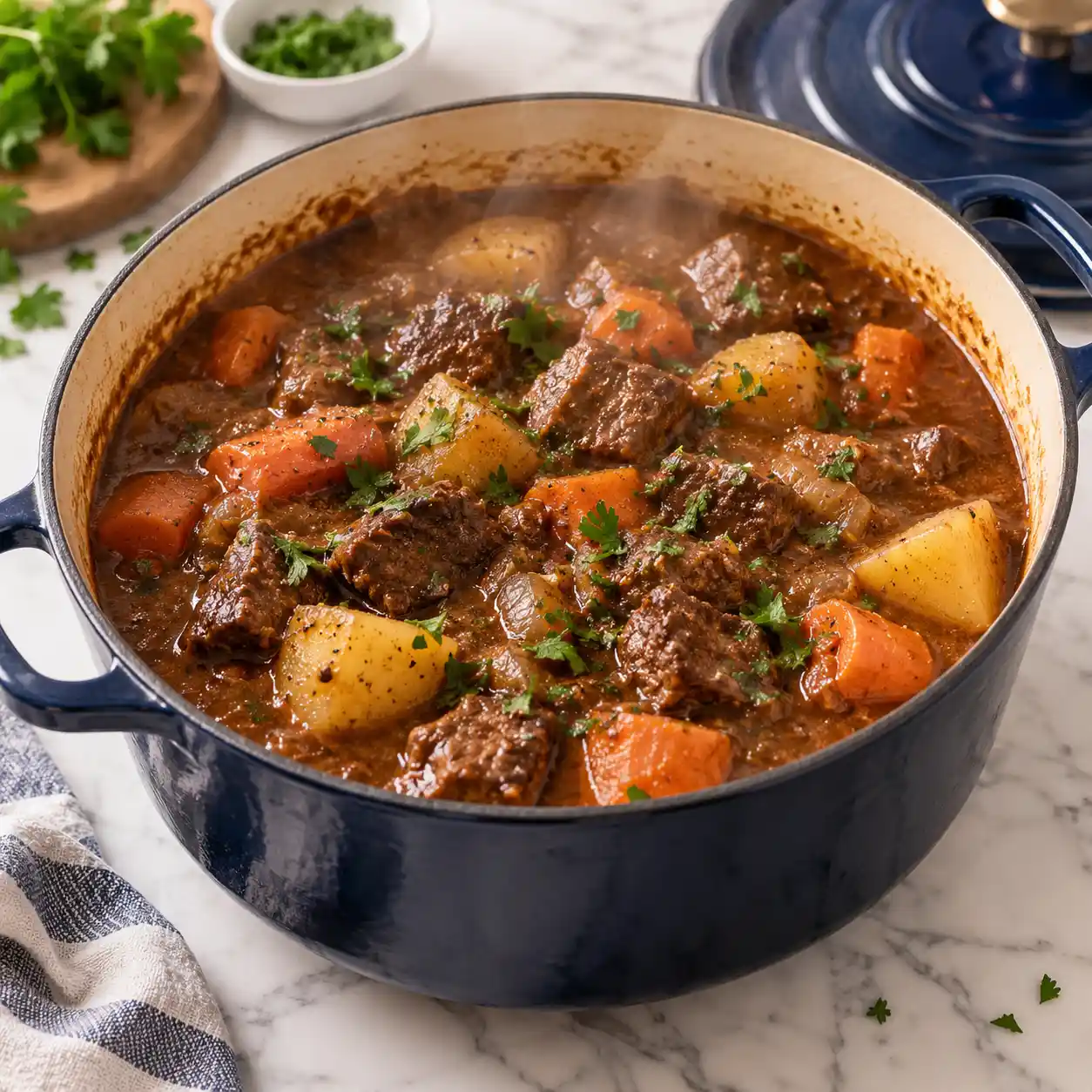
Steam curls off the pot and the kitchen smells like onions caramelizing in beef fat, that’s the first sign this stew is working. Chunks of chuck roast go in tough and stubborn, and two hours later they fall apart under a fork, sitting in a gravy dark enough to coat a spoon.
What separates this version from a thin, watery stew is the sear on the beef and the slow reduction of the broth. You’ll need about 20 minutes of hands on prep and roughly two and a half hours of mostly unattended simmering, and the payoff is a pot that easily feeds six with leftovers that taste even better the next day.
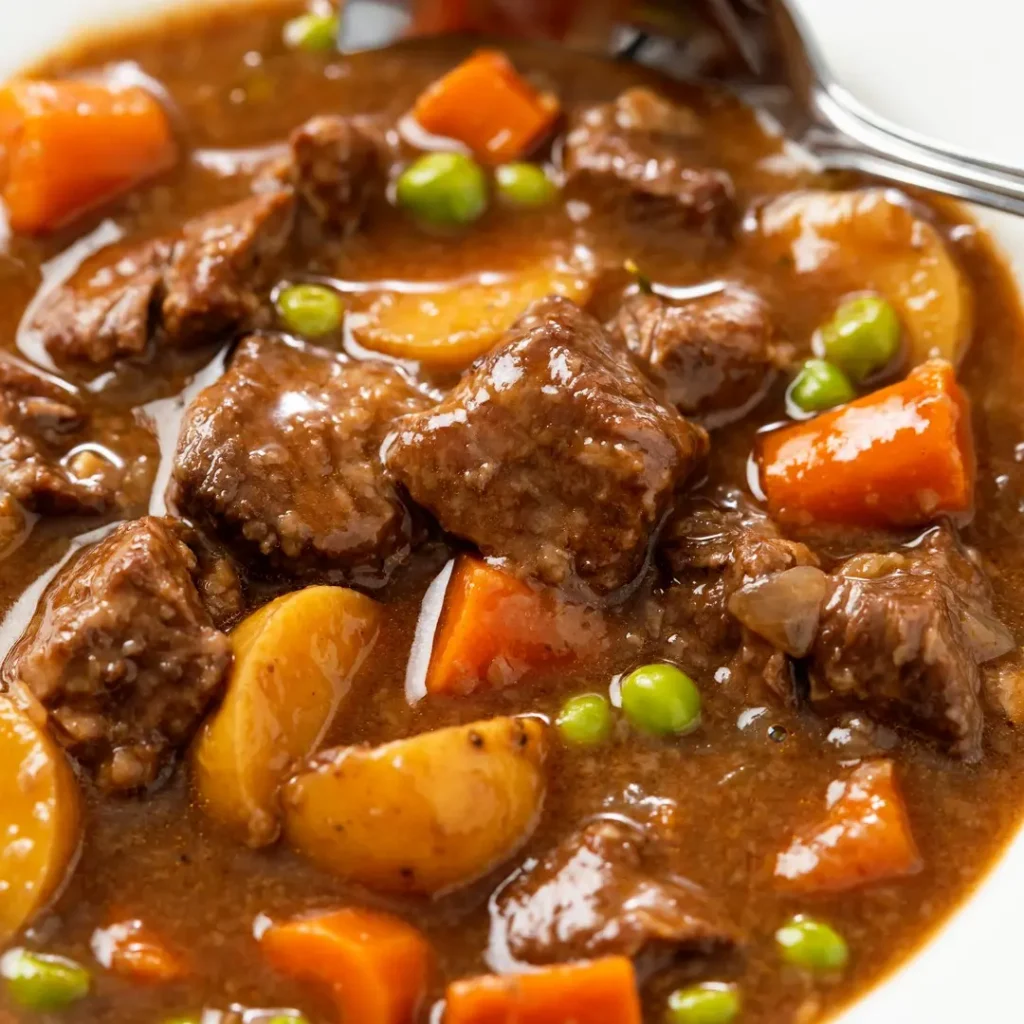
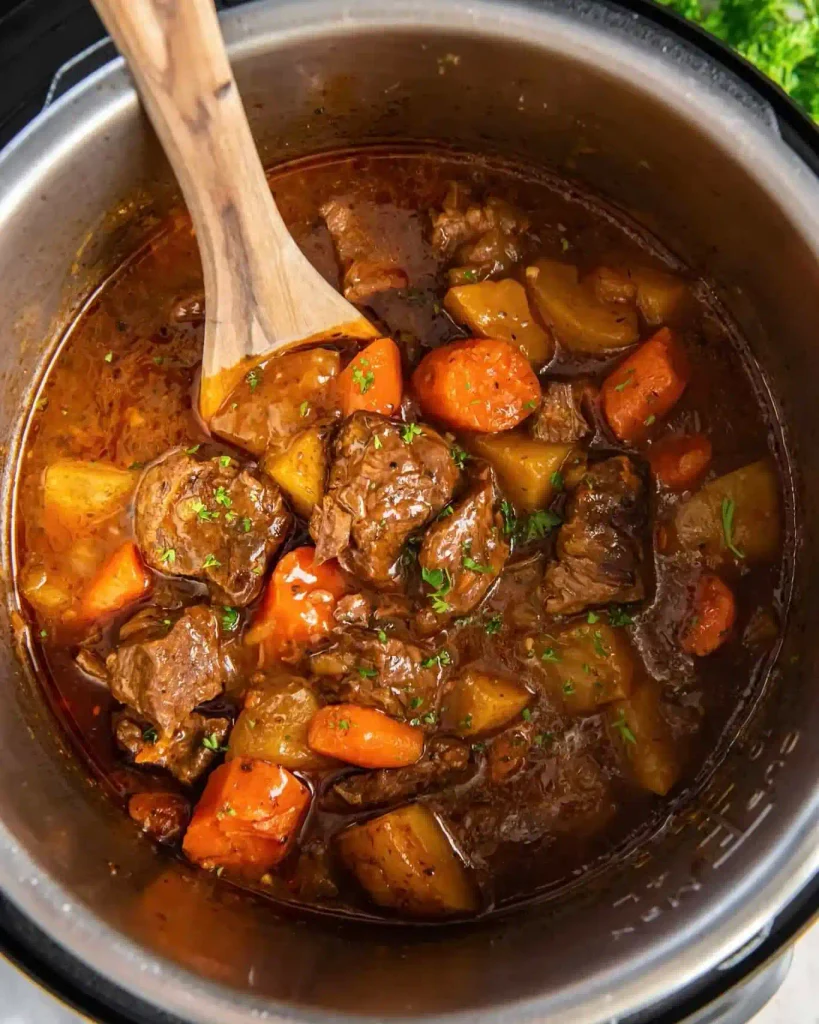
[AI IMAGE PROMPT: A deep cast iron Dutch oven filled with glossy, dark brown beef stew, tender beef chunks, carrots, and potatoes visible, steam rising, set on a white marble countertop, warm kitchen light, 45 degree angle, garnished with chopped parsley.] [IMAGE PLACEHOLDER — alt-text: “Beef stew in a cast iron Dutch oven on white marble counter” | filename: “classic-beef-stew-dutch-oven.jpg” | orientation: horizontal]
Why You’ll Love This Beef Stew Recipe
- One pot, minimal cleanup. Everything from searing to simmering happens in a single Dutch oven, so there’s one thing to wash at the end.
- Deep flavor without exotic ingredients. Tomato paste, a splash of red wine or beef broth, and a proper sear do the heavy lifting, no hard to find items required.
- Freezes beautifully. This stew holds its texture in the freezer for up to three months, making it a genuine meal prep option.
- Forgiving timeline. A little extra simmer time only makes the beef more tender, so it’s hard to overcook this into failure.
- Stretches a budget cut of beef. Chuck roast is one of the cheaper cuts at most grocery stores, and long cooking turns its toughness into an advantage.
Ingredient Selection Tips
Look for chuck roast with visible marbling running through it rather than a lean, uniform piece. That fat renders slowly during the simmer and bastes the meat from the inside, which is exactly what keeps it from drying out over two hours of cooking. At the produce section, pick carrots and potatoes that are firm with no soft spots, since they’ll hold their shape better through a long simmer. If your grocery store sells beef bones or oxtail cheaply, tossing one or two into the pot alongside the stew meat adds extra body to the broth for almost no cost.
Recipe Snapshot
| Servings | Difficulty | Course | Cuisine | Prep Time | Cook Time | Rest Time | Total Time | Calories |
| 6 | Easy | Main Course | American | 20 minutes | 2 hours 10 minutes | 10 minutes | 2 hours 40 minutes | 420 |
Ingredients
For the stew:
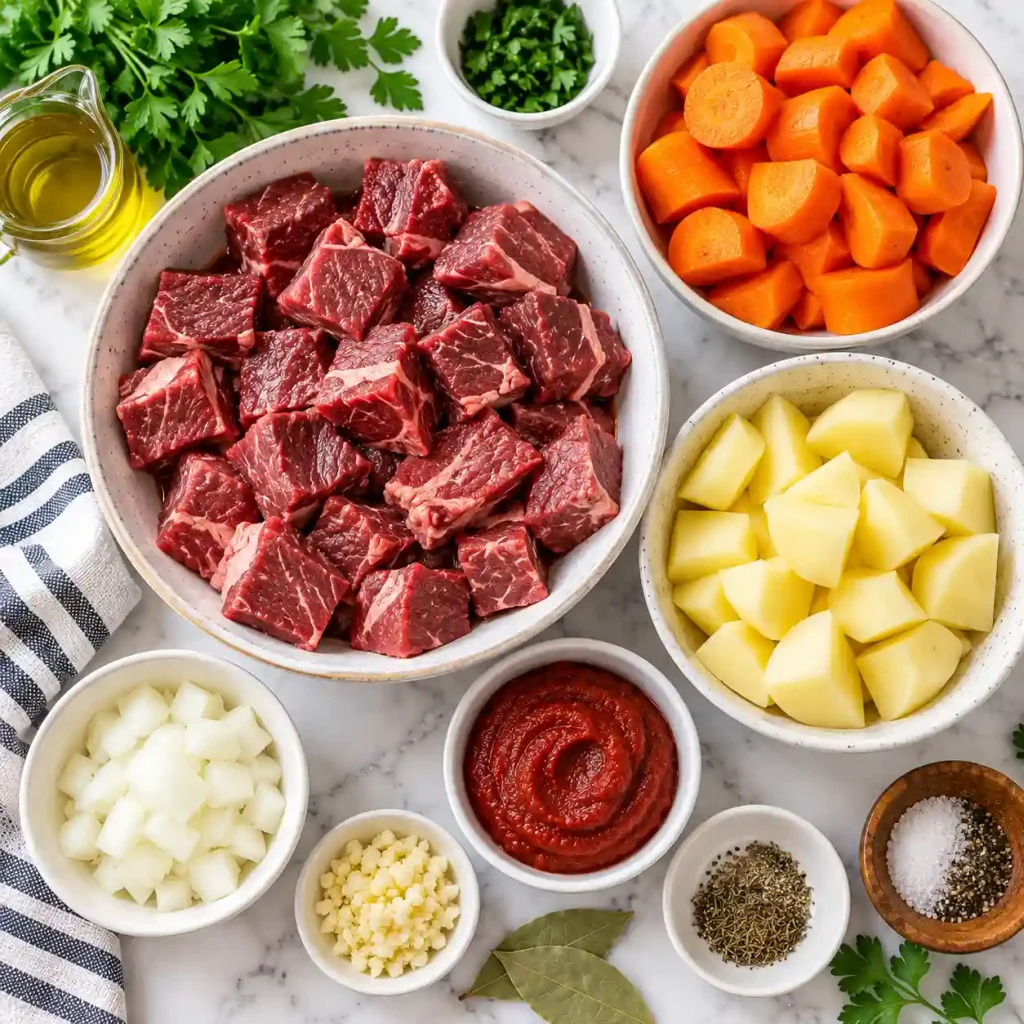
- 2 lbs chuck roast, cut into 1.5 inch cubes — the fat content here is what keeps the meat from turning stringy after a long simmer
- 3 tablespoons all purpose flour — coats the beef and thickens the gravy as it cooks
- 2 tablespoons neutral oil (such as vegetable or canola)
- 1 large yellow onion, diced
- 3 garlic cloves, minced
- 2 tablespoons tomato paste — builds a deep, savory base without making the stew taste like tomato sauce
- 1 cup dry red wine (or substitute additional beef broth for an alcohol free version)
- 4 cups low sodium beef broth
- 2 bay leaves
- 1 teaspoon dried thyme
- 4 medium carrots, peeled and cut into thick rounds
- 3 medium Yukon gold potatoes, cut into 1.5 inch chunks — their waxy texture holds together better than russets over long cooking
- 1 cup frozen peas
- Salt and black pepper, to taste
Read Also: Juiciest Classic Meatloaf Recipe
Recipe Timing
Twenty minutes of prep covers trimming and cubing the beef, chopping vegetables, and getting everything measured out before the pot ever hits the stove. Once the searing starts, the cook time runs a little over two hours between browning, simmering, and the final vegetable addition. The ten minute rest at the end lets the gravy settle and thicken slightly off the heat, which matters more than it sounds like it would.
Allergen & Dietary Disclosure
This recipe contains no dairy, eggs, nuts, or gluten sources beyond the flour used to coat the beef. For a gluten free version, swap the all purpose flour for an equal amount of cornstarch, added toward the end of cooking instead of at the start. This recipe has not been tested in a certified allergen free kitchen, so anyone with a severe allergy should double check every packaged ingredient’s label directly.
Equipment Needed
- Heavy bottomed Dutch oven — even heat distribution prevents the bottom from scorching during the long simmer
- Tongs — makes turning the beef cubes during searing much easier than a fork
- Wooden or silicone spoon — needed for scraping up the browned bits stuck to the pot after searing
- Sharp chef’s knife — cutting the chuck into even cubes helps everything cook at the same rate
Preparation
Pull the chuck roast out of the fridge about 20 minutes before cooking so it isn’t ice cold when it hits the pan. Pat the cubes dry with paper towels, since a wet surface steams instead of browning. Toss the beef in the flour along with a generous pinch of salt and pepper, shaking off any excess before it goes into the pot.
Step-by-Step Instructions
Step 1: Sear the beef in batches Heat the oil in the Dutch oven over medium high until it shimmers, then add the floured beef in a single layer, working in two or three batches so the pieces don’t crowd each other. Let each batch sit undisturbed for about 3 minutes per side until a deep brown crust forms, then transfer to a plate.
Chef’s Note: Crowding the pot is the single biggest reason home cooks end up with gray, boiled looking beef instead of a proper crust. The extra few minutes it takes to work in batches pays off in flavor later.
Step 2: Build the base Lower the heat to medium and add the diced onion to the same pot, stirring occasionally for about 5 minutes until it softens and turns translucent. Add the garlic and cook for another 30 seconds, just until it smells fragrant.
Step 3: Deepen the flavor with tomato paste Stir the tomato paste directly into the onions and let it cook for 1 to 2 minutes, which toasts the paste slightly and takes the raw edge off its flavor.
Chef’s Note: This short toasting step is easy to skip, but it’s what keeps the finished stew from tasting flat or one dimensional.
Step 4: Deglaze with wine Pour in the red wine and use the spoon to scrape up every browned bit stuck to the bottom of the pot. Let it bubble for about 2 minutes, reducing slightly, before moving on.
Step 5: Return the beef and add broth Add the seared beef back to the pot along with any juices that collected on the plate, then pour in the beef broth. Drop in the bay leaves and thyme, and bring everything up to a gentle boil.
Note: Handle raw beef and its juices carefully, washing hands, cutting boards, and any surfaces that touched it before continuing.
Step 6: Simmer low and slow Reduce the heat until the liquid holds at a bare simmer, barely bubbling rather than boiling hard. Cover with the lid slightly ajar and let it cook for 1 hour 30 minutes, checking once or twice to make sure the liquid hasn’t dropped too low.
Step 7: Add carrots and potatoes Stir in the carrots and potatoes, then continue simmering uncovered for another 35 to 40 minutes, until a fork slides into a potato chunk with almost no resistance and the beef pulls apart easily.
Step 8: Finish with peas and rest Stir in the frozen peas during the final 3 minutes of cooking, just long enough to heat through without turning gray. Remove the pot from the heat, discard the bay leaves, and let the stew sit uncovered for 10 minutes before serving so the gravy thickens slightly.
[AI IMAGE PROMPT: Close up 45 degree angle of beef cubes searing in a stainless steel pan, deep brown crust forming, a few visible caramelized edges, white marble countertop in the background, warm kitchen light, steam faintly visible.] [IMAGE PLACEHOLDER — alt-text: “Beef chunks searing until browned in a pan” | filename: “searing-beef-for-stew.jpg” | orientation: horizontal]
Read Also: Easy Beef Stroganoff
Expert Tips & Tricks
- My biggest early mistake: I used to skip patting the beef dry, and every batch steamed instead of browning. Five minutes with paper towels changes the entire result.
- Make ahead friendly: This stew actually tastes better on day two, once the flavors have had time to settle overnight in the fridge.
- Storage shortcut: Portion leftovers into individual containers while still warm-ish, since cold stew thickens into a gravy that’s harder to divide evenly.
- Texture trick: If the gravy looks thin after step 7, mash one or two of the potato chunks against the side of the pot, which naturally thickens the liquid without adding more flour.
- Time saver: Cutting all the vegetables while the beef sears means almost no downtime between steps.
- Wine substitute: A tablespoon of balsamic vinegar stirred into the broth mimics some of the acidity wine would normally add, for an alcohol free version that still has depth.
Common Mistakes & Troubleshooting
| Problem | Why It Happens | How to Fix or Prevent It |
| Beef turns out tough after 2 hours | The simmer was too hot, breaking down connective tissue unevenly | Keep the liquid at a bare simmer, not a rolling boil, and give it more time rather than more heat |
| Gravy is thin and watery | Not enough flour coating, or the lid was kept on too tightly during the simmer | Mash a potato chunk into the broth, or mix a tablespoon of flour with cold water and stir it in during the last 10 minutes |
| Vegetables turn to mush | Carrots and potatoes added too early alongside the beef | Add them partway through, as directed in Step 7, not at the very start |
| Stew tastes flat | Tomato paste wasn’t toasted, or the pot wasn’t deglazed properly | Toast the paste briefly in Step 3 and scrape every browned bit off the bottom during deglazing |
| Beef sticks and burns during searing | Pot wasn’t hot enough before the meat went in, or too much meat was added at once | Wait until the oil visibly shimmers and always work in batches |
Storage, Reheating, Freezing, Make-Ahead
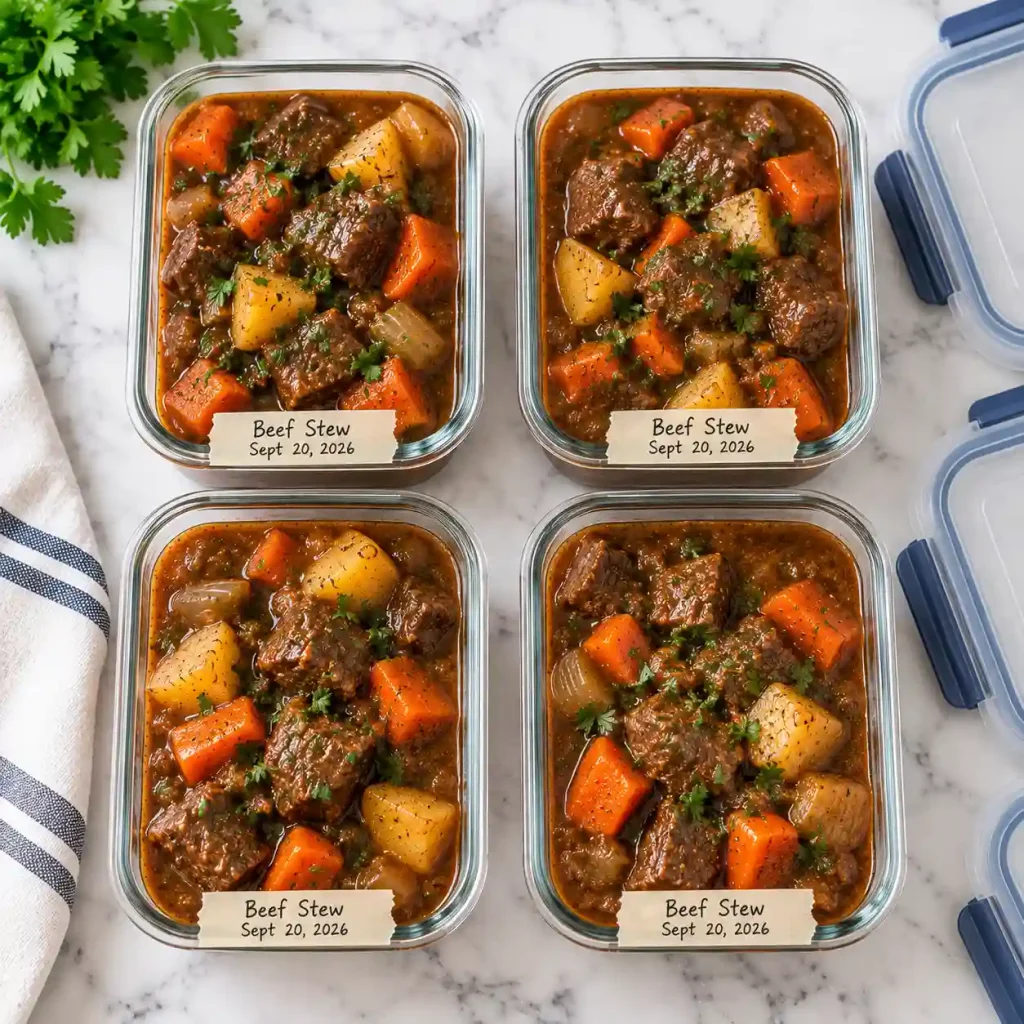
Refrigerator: Store cooled stew in an airtight container for up to 4 days.
Freezer: Freezes well for up to 3 months in a freezer safe container, leaving about an inch of headspace since the liquid expands as it freezes. Potatoes can turn slightly grainy after freezing, so some cooks prefer to leave them out and add fresh potatoes when reheating.
Reheating: Warm gently on the stovetop over medium low heat, stirring occasionally, adding a splash of broth or water if the gravy has thickened too much in the fridge.
Make Ahead: The stew can be fully cooked up to 2 days in advance, and the flavor genuinely improves as it sits.
My own habit is labeling containers with the date before they go in the freezer, since a stew this dark is nearly impossible to identify by sight alone six weeks later.
Variations & Substitutions
- Spicy version: Stir in half a teaspoon of crushed red pepper flakes along with the thyme for background heat that builds as it simmers.
- Kid friendly version: Skip the wine entirely and use extra beef broth, and dice the vegetables smaller so every bite has a bit of everything.
- Vegetarian version: Replace the beef with cubed mushrooms and extra firm tofu, and swap the beef broth for a rich vegetable broth built up with extra tomato paste and soy sauce.
- Gluten free version: Use cornstarch instead of flour to coat the beef, or skip the coating and thicken the gravy at the end with a cornstarch slurry.
- Root vegetable swap: Parsnips or turnips can stand in for some of the potatoes for a slightly earthier, more peppery flavor.
Serving Suggestions
- Serve over a scoop of mashed potatoes or buttered egg noodles to soak up the gravy
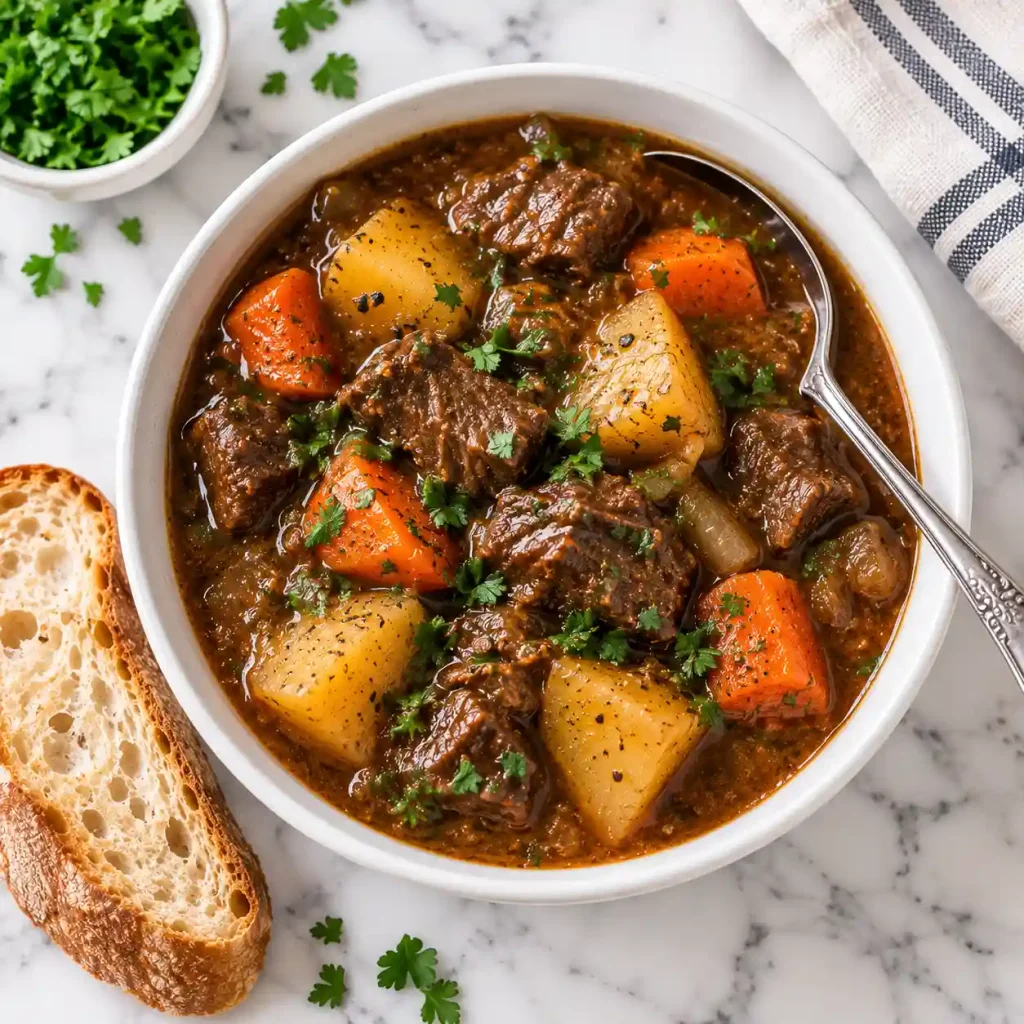
- A thick slice of crusty bread on the side works for scraping the bowl clean
- Top each bowl with fresh chopped parsley or chives for a bit of brightness
- Pair with a simple green salad with a sharp vinaigrette to cut through the richness
- A glass of the same red wine used in the pot rounds out the meal nicely
- For a full spread, see [INTERNAL LINK: homemade dinner rolls recipe] alongside the stew
Nutrition Information
Serving size: approximately 1.5 cups, 6 servings per recipe
| Nutrient | Amount |
| Calories | 420 |
| Protein | 32g |
| Carbohydrates | 28g |
| Fiber | 4g |
| Sugar | 5g |
| Fat | 18g |
| Saturated Fat | 6g |
| Cholesterol | 95mg |
| Sodium | 480mg |
This stew is a solid source of iron and vitamin A, largely from the beef and carrots. These numbers are estimates only and will shift depending on the specific brands and cuts used, along with how closely measurements are followed.
Why This Recipe Works
Chuck roast is full of collagen, a connective tissue that’s tough when raw but slowly melts into gelatin over a couple hours of low, wet heat. That gelatin is what gives the finished gravy its silky, slightly sticky texture, rather than the thin, watery broth you’d get from simmering a leaner cut for the same amount of time.
Searing the beef before it ever touches liquid triggers the Maillard reaction, the browning process that builds hundreds of new flavor compounds on the meat’s surface. Those compounds dissolve into the broth as the stew simmers, which is a large part of why a properly seared stew tastes noticeably deeper than one where the beef goes straight into liquid raw.
Staggering when the vegetables go in matters just as much as the beef. Carrots and potatoes break down fast once they’re tender, so adding them partway through rather than at the very start keeps them intact instead of dissolving into the gravy by the time the beef is finally done.
Read Also: Classic Lasagna Recipe
Frequently Asked Questions
FAQ Source Note: The following questions reflect typical search patterns and common reader questions around beef stew, based on general recipe research rather than a specific live search session.
Can I make beef stew in a slow cooker instead?
Yes. Sear the beef and build the base on the stovetop as described, then transfer everything to a slow cooker and cook on low for 7 to 8 hours, adding the potatoes and carrots about 2 hours before the end so they don’t turn mushy.
Why is my beef stew still tough after 2 hours?
Tough beef after a long simmer usually means the heat was too high, causing the liquid to boil rather than simmer gently. A hard boil actually toughens the muscle fibers before the collagen has time to break down, so lowering the heat and giving it more time solves this rather than pulling it off the stove sooner.
Can I use stew meat instead of chuck roast?
Pre-cut stew meat works, though it’s often trimmed from various cuts and can cook unevenly. Whole chuck roast cut by hand into uniform cubes tends to give more consistent, predictable results.
How do I thicken beef stew without flour?
Mash a cooked potato chunk against the side of the pot and stir it back in, or mix a tablespoon of cornstarch with two tablespoons of cold water and stir the slurry into the simmering stew during the last 10 minutes.
Can I freeze beef stew with potatoes in it?
Yes, though the potatoes can turn slightly grainy in texture after thawing. Some cooks prefer to freeze the stew without potatoes and stir in fresh ones during reheating for a better texture.
Is beef stew gluten free?
Not as written, since the beef is coated in wheat flour before searing. Swapping the flour for cornstarch, or thickening the gravy separately with a cornstarch slurry, makes this beef stew recipe gluten free.
What red wine works best in beef stew?
A dry red like a Cabernet Sauvignon or Merlot works well, since their tannins hold up through hours of simmering. Avoid sweet wines, which can throw off the savory balance of the finished stew.
Conclusion
This is the beef stew I go back to whenever the weather turns and a pot of something slow and rich sounds right. The method stays the same every time: sear hard, build the base properly, and let patience do most of the actual cooking.
Once you’ve made this beef stew once, the ratios and timing tend to stick in your head, and it becomes one of those recipes you can make from memory on a random Tuesday.
If you loved this recipe, save it to your Comfort Food Recipes Pinterest board so you can find it easily later!
Classic Beef Stew
Ingredients
Method
- Instructions:
- Toss beef cubes with flour, salt, and pepper.
- Sear beef in hot oil in batches until browned on all sides; set aside.
- Cook onion until soft, then add garlic for 30 seconds.
- Stir in tomato paste and cook 1 to 2 minutes.
- Pour in wine, scraping the pot bottom, and simmer 2 minutes.
- Return beef to the pot, add broth, bay leaves, and thyme; bring to a boil.
- Reduce to a bare simmer, cover partially, and cook 1 hour 30 minutes.
- Add carrots and potatoes; simmer uncovered 35 to 40 minutes until tender.
- Stir in peas for the final 3 minutes, then rest 10 minutes before serving.
Notes
- Stew tastes better after resting overnight in the fridge
- Freezes well for up to 3 months, though potatoes may soften in texture
- Swap flour for cornstarch to make this gluten free
- Mash a potato chunk into the gravy for extra thickness without added flour