Irresistible Peanut Butter Cookies With Just 7 Ingredients

The smell arrives before the cookies do: warm, nutty, a little toasty, drifting out of the oven and pulling everyone toward the kitchen. By the time the timer goes off, someone is already standing at your elbow, asking if they are ready yet.
These peanut butter cookies skip the flour and the creamed butter, which is why they work so well. You get seven ingredients, one bowl, and no dough chilling. The edges turn crisp while the middle stays soft and chewy, and the whole batch takes about 32 minutes from first stir to cooling rack. If you can stir a bowl, you can make these.
Why You’ll Love These Peanut Butter Cookies
- Seven pantry ingredients: You probably own everything already, so a craving never turns into a grocery run.
- One bowl, no mixer: A sturdy spatula does all the work, which leaves almost nothing to wash.
- No chilling time: The dough goes straight from the bowl to the oven, so you are eating cookies in about half an hour.
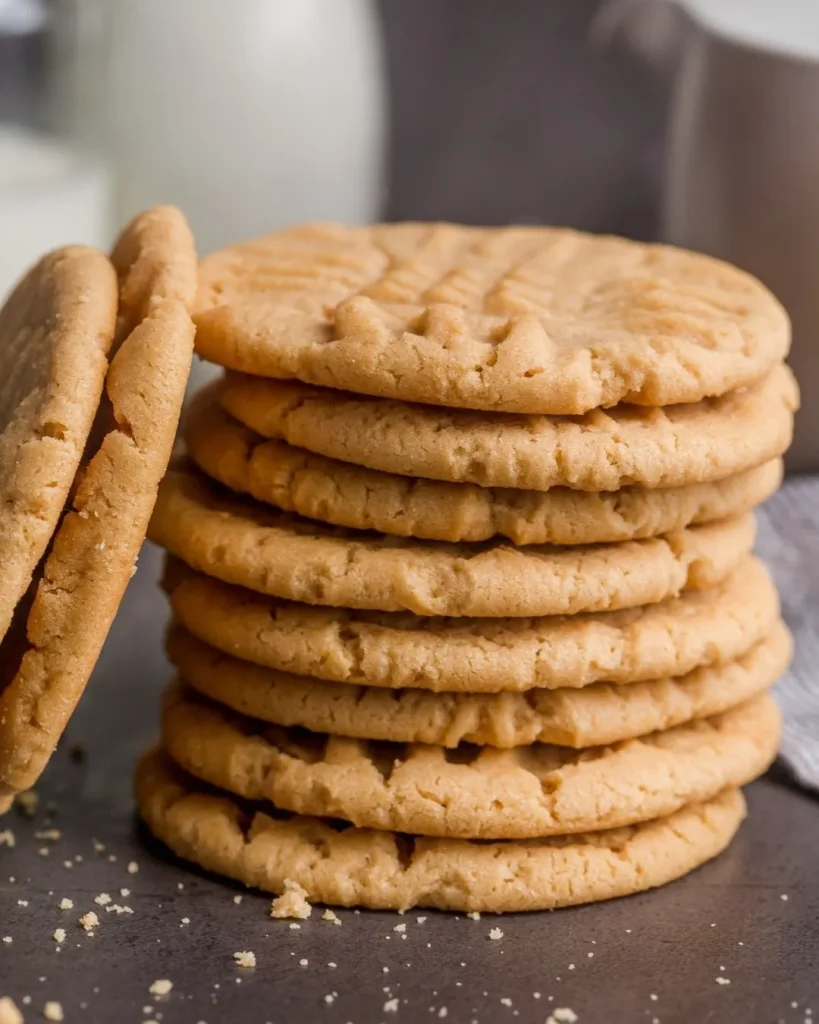
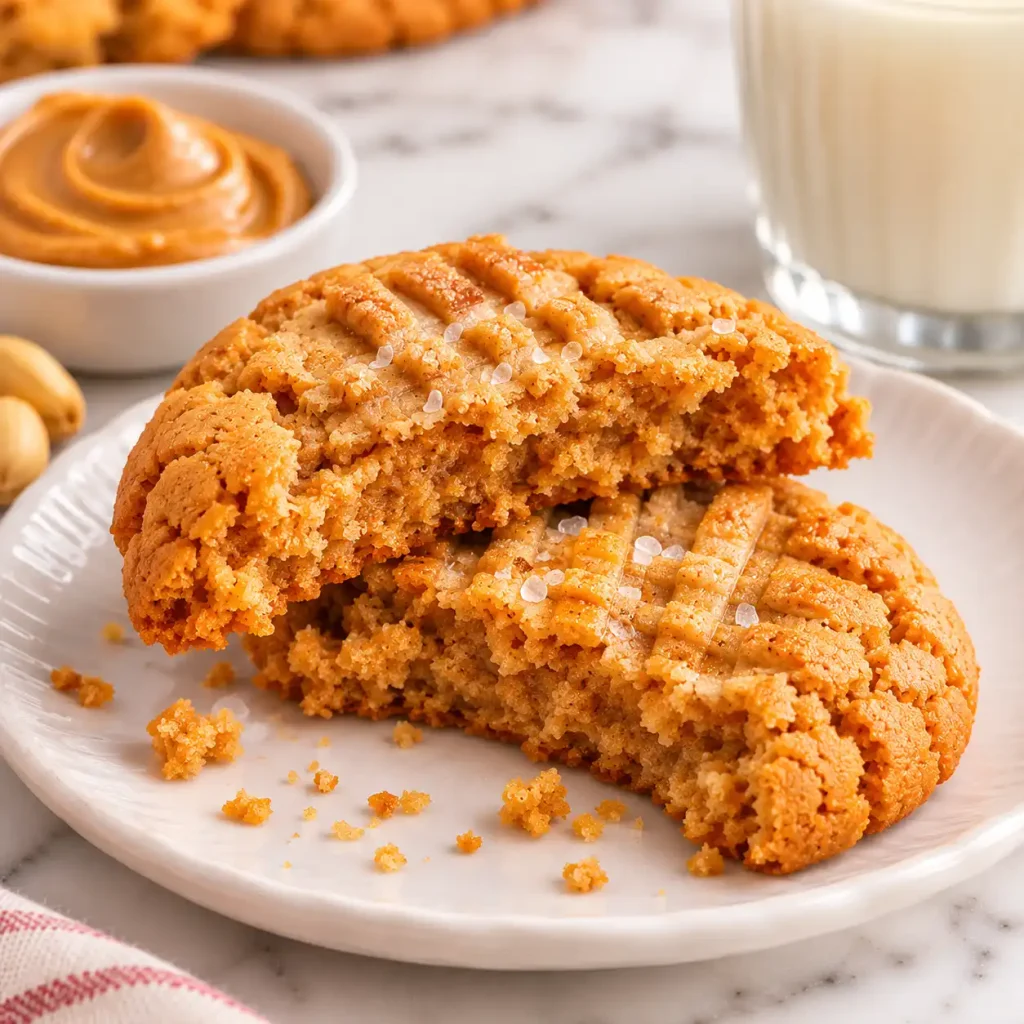
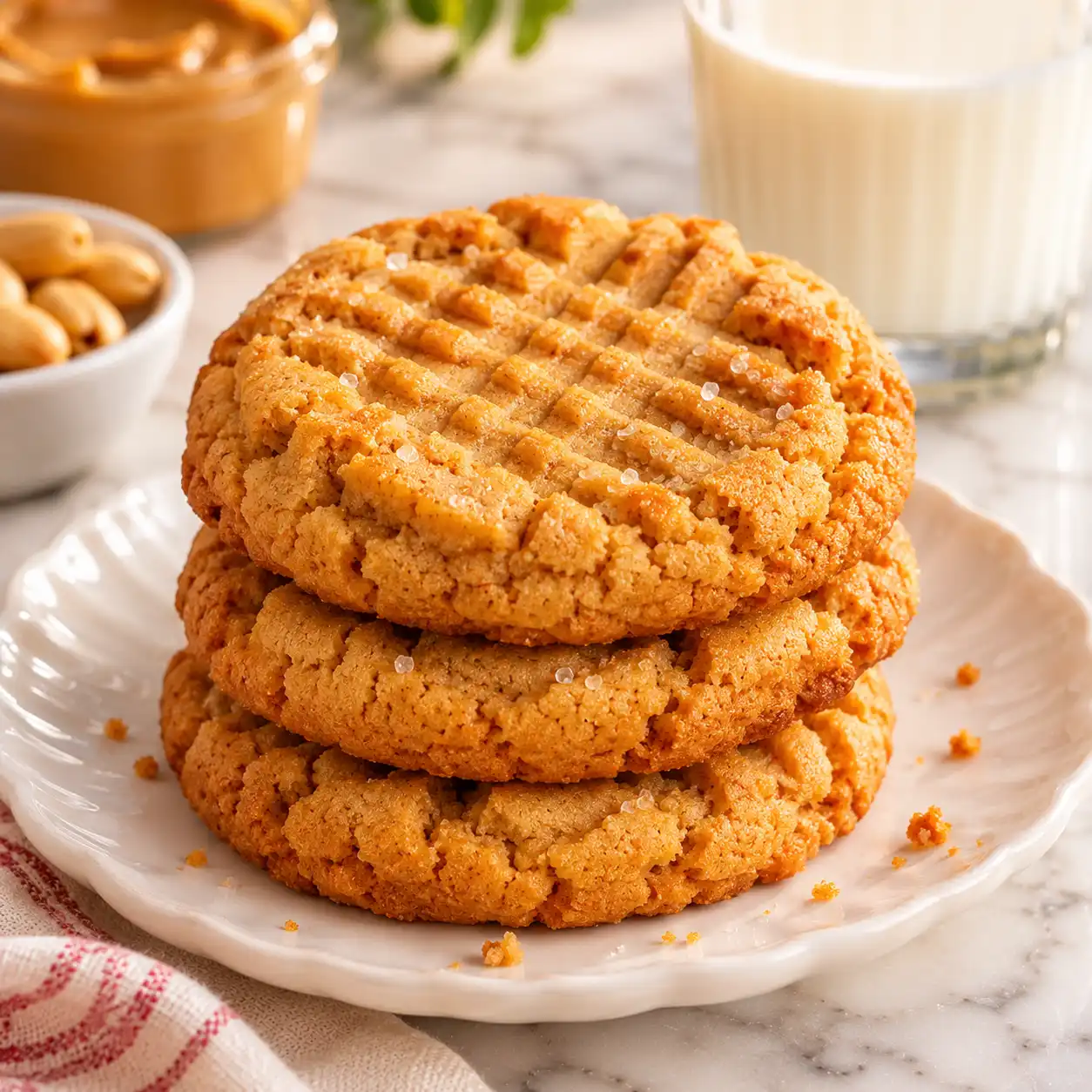
- A texture that holds up: With no flour, the cookies bake crisp at the edges and tender in the center instead of turning cakey.
- Easy to double: The recipe scales cleanly, so you can bake one batch tonight and freeze a second for later.
Ingredient Selection Tips
Reach for a creamy, shelf stable peanut butter, the kind that does not separate in the jar. Its oil is blended in, so the dough stays thick and the cookies keep their shape. Check the date on your baking soda too. If a pinch does not fizz in a spoonful of vinegar, buy a fresh box, because old soda leaves cookies dense and flat. Choose brown sugar that is still soft and damp, not packed into a rock.
Recipe Snapshot
| Servings | Difficulty | Course | Cuisine | Prep Time | Cook Time | Rest Time | Total Time | Calories |
| 18 cookies | Easy | Dessert | American | 10 minutes | 12 minutes | 10 minutes | 32 minutes | 140 per cookie |
Ingredients for Peanut Butter Cookies
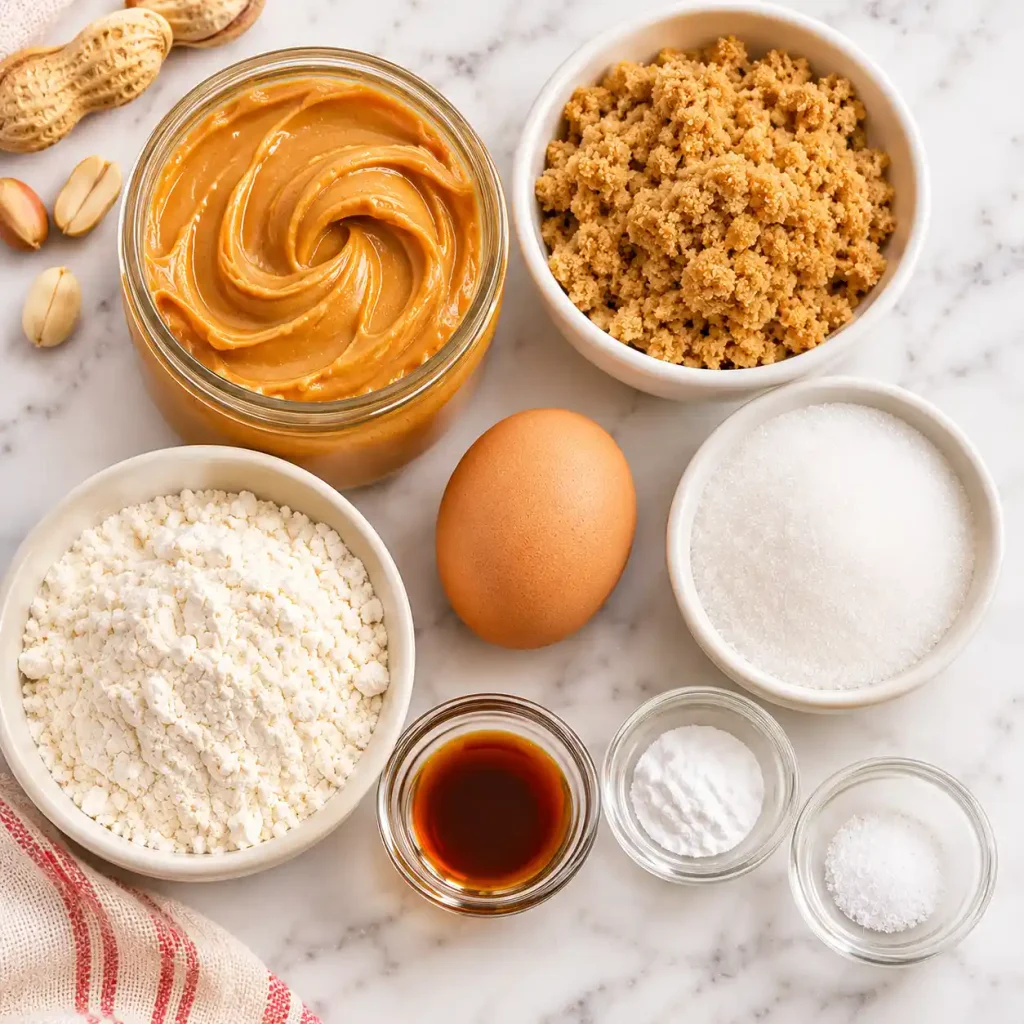
- 1 cup (260 g) creamy peanut butter: This is the backbone of the dough. It supplies the fat, flavor and structure that flour usually provides.
- 1/2 cup (100 g) packed light brown sugar: The molasses in it holds moisture, which keeps the centers soft and chewy.
- 1/2 cup (100 g) granulated sugar: It adds sweetness and helps the edges set crisp.
- 1 large egg, at room temperature: It binds everything together. A cold egg can make the peanut butter seize into clumps.
- 1 teaspoon vanilla flavoring (alcohol free): It rounds out the nutty flavor without adding a sharp edge.
- 1 teaspoon baking soda: It gives the cookies lift and encourages deeper browning.
- 1/4 teaspoon fine salt: It keeps the sweetness from tasting flat.
Substitution note: For an egg free batch, stir 1 tablespoon ground flaxseed into 3 tablespoons water, wait 5 minutes, and use that in place of the egg. The cookies will be a little more fragile, so let them cool on the tray longer.
Read Also:
Recipe Timing
Plan on 10 minutes at the counter, mostly stirring and rolling. The cookies bake for 12 minutes, then need another 10 minutes of cooling, 5 on the tray and 5 on a rack, before they hold together. That brings you to 32 minutes total, and most of it is hands off.
Allergen and Dietary Notes
These cookies contain peanuts and egg. They use no wheat flour, so they are naturally gluten free in design, but check your peanut butter and baking soda labels for cross contact warnings. For an egg allergy, use the flax egg above. For a peanut allergy, these cookies are not suitable, and swapping in another nut or seed butter changes the texture. If anyone eating has a severe allergy, read every label and consult their doctor before baking.
Equipment Needed
- Light colored baking trays: Dark pans run hotter and brown the bottoms before the centers finish.
- Parchment paper or a silicone mat: The sugary dough sticks to bare metal, and either one makes cleanup easy.
- 1 tablespoon cookie scoop: Even portions bake at the same pace, so no cookie ends up burnt while another stays raw.
- A dinner fork: You will need it for the signature crisscross pattern.
- Wire cooling rack: Air flowing underneath keeps the bottoms from turning soggy.
- Sturdy silicone spatula: The dough is thick, and a flimsy spoon makes mixing a chore.
Preparation
Move an oven rack to the middle position and heat the oven to 350°F (175°C). Lay a sheet of parchment on each of two baking trays. Measure the peanut butter by spooning it into a dry measuring cup and leveling the top, or weigh out 260 g for accuracy. If your egg is cold, rest it in a cup of warm tap water for 5 minutes. Keep the baking soda, salt and vanilla within reach so mixing goes quickly.
Step by Step Instructions
Step 1: Start the base
Drop the peanut butter into a mixing bowl and add the brown sugar and granulated sugar. Stir with a spatula for about 1 minute, until no dry streaks remain and the mixture looks thick and slightly grainy.
Chef’s Note: Mixing the sugars into the peanut butter first lets the sugar begin to dissolve into the fat, which gives you a smoother dough and a more even bake.
Step 2: Add the egg and vanilla
Crack in the egg and pour in the vanilla. Stir for 30 to 45 seconds, until the dough turns glossy and uniform with no visible egg. Wash your hands and the spatula after handling raw egg, and skip tasting the dough.
Step 3: Mix in the leaveners
Sprinkle the baking soda and salt across the top. Stir for another 30 seconds, until the dough looks evenly tan and feels soft like thick modeling clay.
Chef’s Note: Baking soda clumps easily in sticky dough. Spreading it over the surface before stirring prevents bitter pockets in the finished cookies.
[AI IMAGE PROMPT: Thick glossy peanut butter cookie dough, soft tan and creamy, in a white ceramic mixing bowl as a white silicone spatula folds in the last streaks of sugar, on a white marble counter. Warm kitchen light, side lit for texture, low angle at table level.]
[IMAGE PLACEHOLDER | alt text: “Creamy peanut butter cookie dough in a white mixing bowl with a spatula” | filename: “peanut-butter-cookies-dough-mixing.jpg” | orientation: horizontal]
Step 4: Portion the dough
Scoop level tablespoons of dough, about 28 g each, and roll them between your palms into smooth balls. You should end up with 18. Space nine on each tray, 2 inches apart, because they spread as they bake.
Step 5: Press the pattern
Press the back of a fork gently into each ball, then turn it 90 degrees and press again. Flatten each cookie to roughly 1/2 inch thick, with deep ridges and no cracked edges.
Chef’s Note: Flattening matters because these dough balls are dense. Left round, the outsides brown before the middle cooks through.
Step 6: Bake the cookies
Slide one tray into the oven and bake for 10 to 12 minutes. You are looking for set, amber edges and tops that look puffy and slightly dry, while the centers still seem soft. Rotate the tray after 6 minutes if your oven runs unevenly, then bake the second tray the same way.
[AI IMAGE PROMPT: Fork pressing crisscross lines into round peanut butter cookie dough balls on a white marble pastry board, rows of pale tan rounds waiting beside a light aluminum baking tray lined with parchment. Warm kitchen light, 45 degree food photography angle, soft texture visible.]
[IMAGE PLACEHOLDER | alt text: “Fork pressing crisscross marks into peanut butter cookie dough balls” | filename: “peanut-butter-cookies-fork-pressing.jpg” | orientation: horizontal]
Step 7: Rest, then move
Leave the cookies on the hot tray for 5 minutes. They will feel too soft to lift at first, then firm up as they cool. Slide them onto a wire rack for another 5 minutes before eating.
Chef’s Note: The cookies keep baking from leftover heat in the tray, and the fats stiffen as they cool. Moving them early is the main reason these peanut butter cookies break.
Callout: Pull the tray when the centers still look a little underdone. They finish setting while they rest, and this is what keeps them soft instead of crunchy.
Read Also:
Expert Tips and Tricks
- Underbake slightly: Take the tray out when the middles still look soft. Peanut butter cookies firm up a lot as they cool.
- My overbaking mistake: The first time I made these, I waited until the centers looked fully done in the oven. They cooled into hard discs. Now I trust the timer and the soft look.
- Cool the trays between batches: A hot tray melts the fat in the dough early and makes the cookies spread thin.
- Make ahead: Roll the dough into balls, press the pattern, and refrigerate them on a tray for up to 24 hours. Bake straight from the fridge and add a minute or two.
- Storage tip: Add a small piece of bread to the cookie container. It trades its moisture for the cookies’ and keeps them soft for days.
- Time saver: Double the dough and freeze half as shaped balls, so a warm cookie is always 15 minutes away.
Common Mistakes and Troubleshooting
| Problem | Why It Happens | How to Fix or Prevent It |
| Cookies crumble when lifted | They were moved too soon, or the peanut butter was dry | Rest them 5 minutes on the tray and use creamy, shelf stable peanut butter |
| Thin, greasy puddles | Natural peanut butter with loose oil, or a hot tray | Use a no separation brand and cool trays between batches |
| Hard, dry cookies | Baked too long (my own early mistake) | Stop at 10 to 12 minutes and pull them while centers look soft |
| Dough cracks while rolling | Peanut butter was cold and stiff | Let the dough rest 5 minutes and warm it in your hands |
| Bitter or soapy taste | Baking soda was not mixed in evenly | Sprinkle it over the dough and stir until fully blended |
Storage, Reheating, Freezing and Make Ahead
Room Temperature
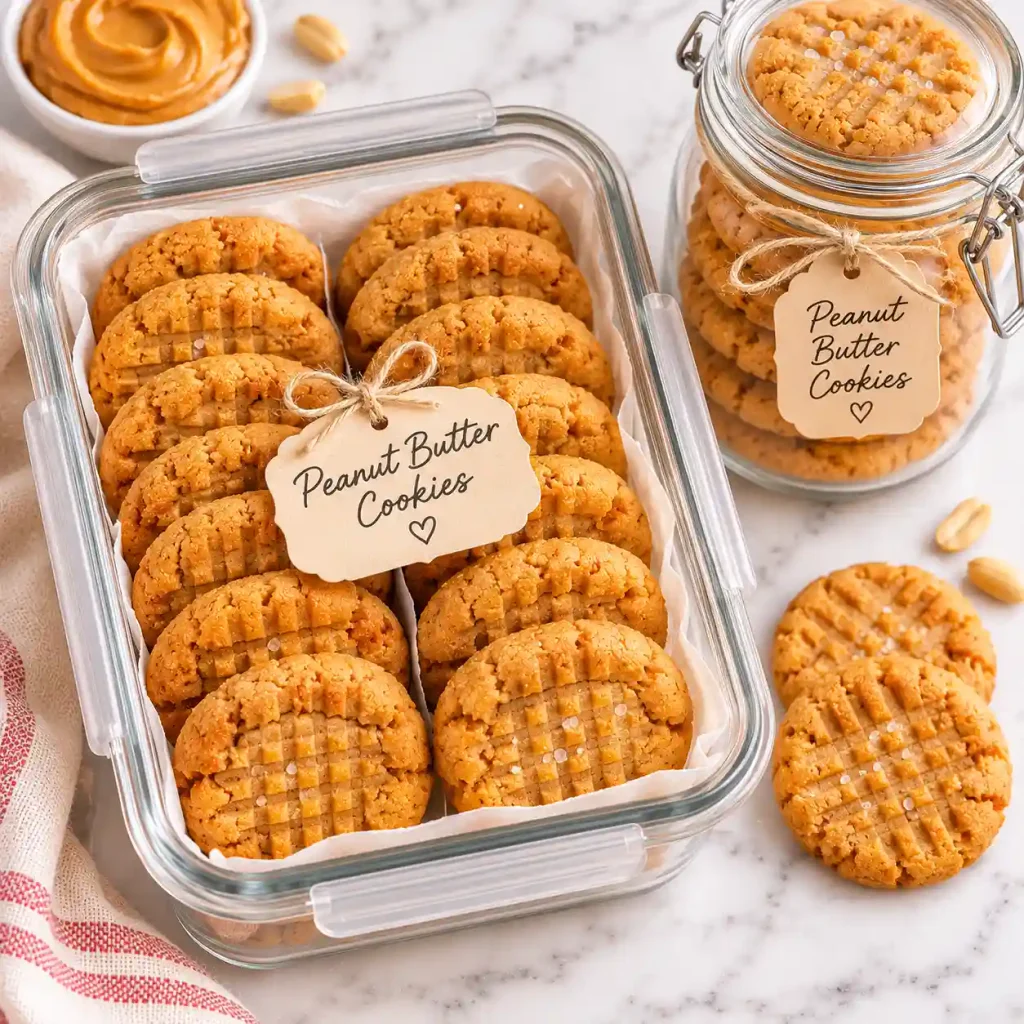
Keep cooled cookies in an airtight container at room temperature for up to 5 days.
Freezing Baked Cookies
Layer cookies between sheets of parchment in a freezer container and freeze for up to 3 months. Thaw on the counter for 30 minutes.
Freezing Dough
Freeze shaped dough balls on a tray for 1 hour, then move them to a freezer bag for up to 3 months. Bake from frozen at 350°F (175°C) for 12 to 14 minutes.
Reheating
Warm a cookie in the microwave for 8 to 10 seconds, or in a 300°F (150°C) oven for 3 minutes, to bring back that fresh baked softness.
Variations and Substitutions
- Chocolate chip: Fold in 1/2 cup chocolate chips at the end of mixing for a classic peanut butter and chocolate pairing.
- Crunchy version: Use crunchy peanut butter for roasted peanut pieces and extra bite.
- Sea salt finish: Sprinkle a few flakes of sea salt on each cookie right after baking so the salt sits on top and stays crisp.
- Thumbprint cookies: After baking, press a small dent into each warm cookie and fill it with a spoonful of fruit jam.
- Mini cookies: Use 1 teaspoon of dough per ball and bake 7 to 8 minutes for small, kid friendly bites.
Serving Suggestions
- Cold milk or iced coffee: The creamy drink balances the sweet, salty crunch of fresh peanut butter cookies.
- Ice cream sandwiches: Press a scoop of ice cream between two cookies. [INTERNAL LINK: homemade vanilla ice cream recipe]
- Chocolate drizzle: Melt a handful of chocolate chips and zigzag it over cooled cookies.
- Cookie platter: Serve them next to other bakes at holiday gatherings. [INTERNAL LINK: chocolate chip cookies recipe]
- Fruit on the side: Sliced apples or bananas add freshness next to a rich cookie.
- Gift tins: Stack cooled cookies in a tin with parchment between layers. [INTERNAL LINK: cookie gift packaging ideas]
Nutrition Information
Serving size: 1 cookie | Servings per recipe: 18
| Nutrient | Amount |
| Calories | 140 |
| Protein | 4 g |
| Carbohydrates | 13 g |
| Fiber | 1 g |
| Sugar | 11 g |
| Fat | 8 g |
| Saturated Fat | 1.5 g |
| Cholesterol | 10 mg |
| Sodium | 165 mg |
Peanut butter also contributes small amounts of magnesium, niacin and vitamin E. These values are estimates and can shift depending on the brands you buy and how you measure.
Why This Recipe Works
Peanut butter is already a mix of fat, protein and ground peanut solids. That combination gives the dough enough structure to hold together without flour, and the fat keeps the crumb tender. The egg adds extra protein that sets in the oven, which is what lets the cookies firm up as they cool.
The two sugars play different roles. Granulated sugar dries out at the edges and creates a crisp rim. Brown sugar holds onto moisture, so the center stays soft and chewy.
Baking soda is slightly alkaline, which speeds browning and gives the cookies a deeper toasted flavor. It also releases a bit of gas as it heats, so the cookies rise slightly before they settle. Pulling them while the centers are soft lets residual heat finish the job gently.
Read Also:
Frequently Asked Questions
FAQ source note: These questions reflect typical People Also Ask style patterns and common cooking forum questions. Live search was not used.
Why are my peanut butter cookies crumbly?
Crumbly cookies usually come from moving them too early or from using dry, natural peanut butter. Leave the cookies on the hot tray for a full 5 minutes so they can firm up. Stick with creamy, shelf stable peanut butter, and measure it accurately. Too little egg or too much baking can also make the texture sandy.
Can I make peanut butter cookies ahead and freeze them?
Yes. Shape the dough into balls and freeze them on a tray until solid, then move them to a freezer bag for up to 3 months. Bake straight from frozen at 350°F (175°C) for 12 to 14 minutes. You can also freeze baked cookies for the same length of time and thaw them on the counter.
Can I use natural peanut butter?
You can, but the results change. Natural peanut butter has loose oil that makes the dough greasy and the cookies spread thin. If it is all you have, stir it very well, drain off excess oil, and bake one test cookie first. For the best peanut butter cookies, use a shelf stable brand.
How do I know when peanut butter cookies are done?
Look for set, amber edges and puffy tops that appear slightly dry, with centers that still look soft. That usually takes 10 to 12 minutes at 350°F (175°C). They will seem underdone, but they finish setting on the tray. If the tops look fully firm in the oven, they will cool too hard.
Are these peanut butter cookies gluten free?
The recipe contains no wheat flour, so it is gluten free by design. Cross contact can still happen in factories, so check the labels on your peanut butter, baking soda and vanilla. If gluten is a serious medical concern, look for products marked gluten free and talk with your doctor.
Can I use crunchy peanut butter instead of creamy?
Yes, and it works well. Crunchy peanut butter adds small roasted peanut pieces that give the cookies a bit of bite. The dough may feel slightly looser, so flatten each ball a little more firmly and bake for the same 10 to 12 minutes. Watch the edges for color.
Conclusion
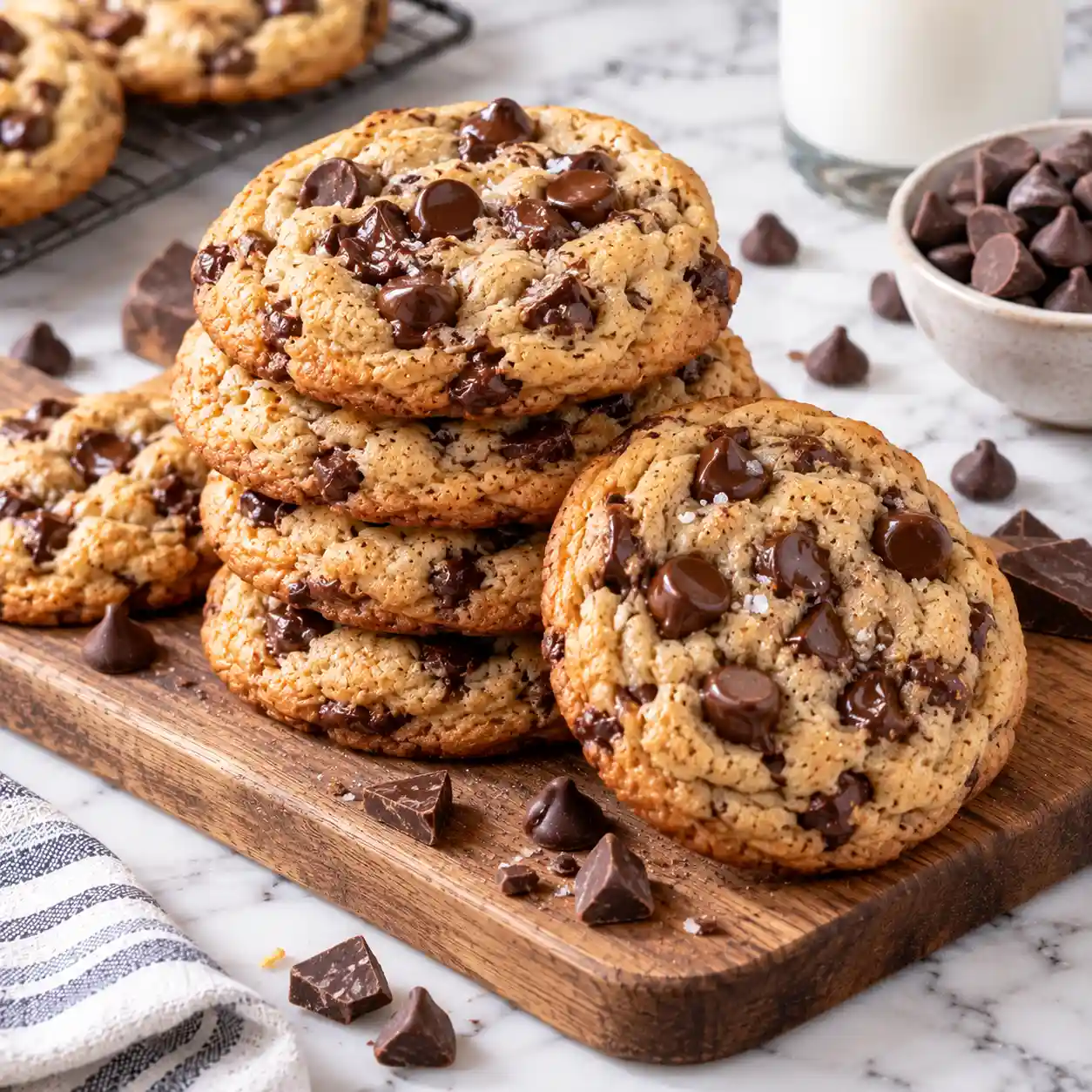
The best part of this recipe is how little it asks of you. Seven ingredients, a single bowl, and a short bake give you a cookie that tastes like it took much more effort. Pull them while the centers still look soft, and you will get that chewy bite every time.
I keep a bag of frozen dough balls in the freezer for the nights when a warm cookie sounds like the only good idea. Once you have made these peanut butter cookies a couple of times, you will likely stop measuring and start doing it by feel.
If you loved this recipe, save it to your cookie recipes Pinterest board so you can find it easily later!
Easy Peanut Butter Cookies
Ingredients
Method
- Instructions:
- Position a rack in the middle of the oven and heat to 350°F (175°C). Cover two trays with parchment.
- Combine the peanut butter, brown sugar and granulated sugar in a bowl and stir about 1 minute into a thick, grainy paste.
- Beat in the egg and vanilla until the dough looks glossy and even. Wash hands after touching the raw egg.
- Scatter the baking soda and salt over the dough, then stir 30 seconds until fully blended.
- Roll level tablespoons of dough into 18 balls and place nine per tray, spaced 2 inches apart.
- Press each ball with a fork twice, at right angles, flattening to about 1/2 inch thick.
- Bake one tray at a time for 10 to 12 minutes, until the edges are set and the tops look puffy and dry.
- Let the cookies sit on the tray for 5 minutes, move them to a rack for 5 more, then serve.
Notes
- Use shelf stable creamy peanut butter for the best shape.
- Cookies keep 5 days airtight at room temperature or 3 months in the freezer.
- Shaped dough balls can be chilled up to 24 hours before baking.
- For an egg free version, use 1 tablespoon ground flaxseed mixed with 3 tablespoons water.